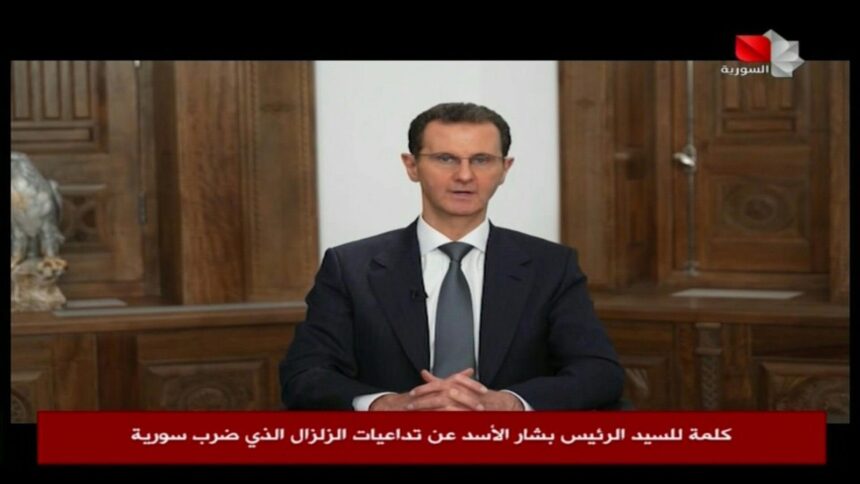

Former Syrian President Sentenced for Crimes Against Humanity
A criminal court in Damascus has sentenced former President Bashar al-Assad and his brother Maher to death in absentia for crimes against humanity. This landmark ruling represents the first death penalty issued against Assad following his ousting, signaling a significant step in the pursuit of justice for his alleged atrocities.
Details of the Conviction
The Fourth Criminal Court convicted Assad of premeditated murder involving multiple victims, including children, alongside charges of torture, arbitrary detention, and crimes against humanity. Judge Fakhr al-Din al-Aryan characterized Assad as “the highest decision-maker,” emphasizing that he utilized state institutions as tools for these atrocities.
In addition to the death sentences for the Assad brothers, eight other individuals were also sentenced, including Assad’s cousin Atef Najib, who is the only defendant currently in custody. Six fugitive former officials were also included in the ruling, with the court issuing arrest warrants and calling for international prosecution for those still on the run.
Context Surrounding the Ruling
This verdict is significant as it follows nine hearings attended by various stakeholders, including Syria’s attorney general and the head of the National Transitional Justice Commission. Abdul Basit Abdul Latif, the commission’s chief, hailed the ruling as “an important milestone on the path to justice,” emphasizing that it serves as a starting point rather than the conclusion of the judicial process.
Bashar al-Assad has been in power since 2000, succeeding his father Hafez al-Assad. His government faced immense international scrutiny and criticism over widespread human rights violations, including mass killings, torture, enforced disappearances, and attacks on civilians during the ongoing civil war. The regime’s use of chemical weapons has been condemned by multiple human rights organizations and Western governments.
Transition of Power in Syria
After fleeing to Russia on December 8, 2024, Assad’s departure marked the end of over five decades of Baath Party rule in Syria. A transitional administration led by President Ahmad al-Sharaa was formed in January 2025, with plans to implement mechanisms for accountability regarding crimes committed during Assad’s tenure. Tuesday’s ruling is the most consequential legal determination made by the transitional government to date, as it aims to address the scars left by decades of oppression.
Why It Matters
The conviction of Bashar al-Assad highlights the growing international momentum towards accountability for state-sponsored violence and human rights violations. As global awareness of such crimes increases, the legal framework surrounding transitional justice will play a pivotal role in shaping responses to similar situations worldwide. For legal experts, human rights advocates, and international policy makers, this verdict serves as a critical case study in the pursuit of justice amid geopolitical complexities and the often slow progress of legal redress.
Frequently Asked Questions
What were the charges brought against Bashar al-Assad?
Bashar al-Assad was charged with premeditated murder, torture, arbitrary detention, and crimes against humanity as per the ruling by the Fourth Criminal Court in Damascus.
What does “death in absentia” mean?
“Death in absentia” refers to a legal ruling where a person is sentenced to death without being physically present in court, in this case, as Bashar al-Assad has fled to Russia.
What is the significance of this ruling for Syria?
This ruling marks a significant step towards accountability for crimes committed during Assad’s nearly 25 years in power. It reflects growing calls for justice and may influence future governance and human rights legislation in the region.
How has the international community responded to Assad’s regime?
The international community, including the UN and various human rights organizations, has repeatedly condemned Assad’s regime for mass killings, torture, and the use of chemical weapons, calling for accountability and supporting efforts towards transitional justice.