
Summary
Recent actions taken by the Indian government under the ruling Bharatiya Janata Party (BJP) and the affiliated Rashtriya Swayamsevak Sangh (RSS) highlight a pattern of discrimination against Muslims. Key developments include the denial of bail to activists Umar Khalid and Sharjeel Imam, and the government’s actions labeling individuals linked to Pakistan as terrorists, underscoring deeper issues of social exclusion and marginalization within India.
Denial of Bail to Activists
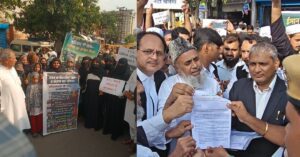
A Delhi court has rejected the bail applications of student activists Umar Khalid and Sharjeel Imam, who have been imprisoned for over five years without a full trial or conviction. Accused of instigating communal riots in Delhi in 2020, both activists have argued that their continued detention violates their fundamental rights to personal liberty. The ongoing incarceration raises significant concerns about judicial fairness and the treatment of dissenting voices in India, particularly among the Muslim community.
The court previously stated that prolonged detention alone does not warrant bail, suggesting that both Khalid and Imam were central to a larger conspiracy. Their repetitive attempts for release highlight the lack of judicial progress in their trials and the troubling prospects for civil rights in India, further exacerbating perceptions of institutional bias against Muslims.
Designation of Pakistani Individuals as ‘Terrorists’
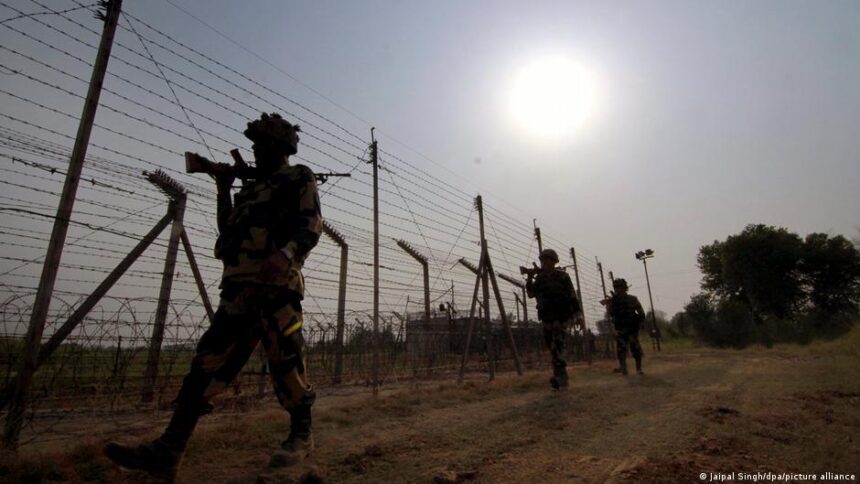
In a further manifestation of the ongoing tensions between India and Pakistan, the Indian government has designated 23 individuals from Pakistan as “terrorists” under the Unlawful Activities (Prevention) Act (UAPA). This designation follows an amendment to the UAPA in August 2019, which allowed individuals to be labeled as terrorists, creating a chilling environment for dissent and opposition.
The individuals named in this latest round of designations are linked to militant groups such as Jaish-e-Mohammad (JeM) and Lashkar-e-Taiba (LeT). The ramifications extend beyond these individuals, as the list of designated terrorists now totals 80, enabling authorities to block their finances and seize assets, which raises concerns about potential human rights violations and misuse of anti-terror laws to silence dissenting voices, particularly in the context of marginalized communities like Muslims.
Government Policy Changes Impacting Employment
In a recent move, the Delhi government has relaxed its work-from-home policy for employees, which was initially implemented in response to geopolitical tensions and energy conservation measures. The Chief Minister announced that the policy, allowing remote work twice a week, has been rescinded following the “normalization” of the geopolitical situation. Such policy changes can disproportionately affect the Muslim workforce, especially those already facing social and economic marginalization due to their religious identity.
This context reflects a broader national narrative where Muslims continue to be socially excluded and economically boycotted. The rollback of such work policies often reveals underlying biases, where marginalized communities are the first to experience upheaval in employment stability amidst changing government directives.
Why It Matters
The continuous marginalization of Indian Muslims under the BJP-led government emphasizes significant implications for social cohesion in India. Discrimination not only contributes to social unrest but also impedes economic development by alienating a large segment of the population from participating fully in society. The legal and political framework in place often prevents genuine dialogue and reconciliation, further embedding divisions within the community.
Globally, these developments raise alarms about the state of democracy and human rights in India, influencing international perceptions and diplomatic relations. A failure to address these issues could increase social tensions and impede progress towards a more inclusive society.
Frequently Asked Questions
What are the charges against Umar Khalid and Sharjeel Imam?
Umar Khalid and Sharjeel Imam have been accused of orchestrating communal riots in Delhi in 2020. They have been in detention for over five years without a full trial.
How has the Indian government labeled individuals from Pakistan as terrorists?
The Indian government has designated 23 individuals from Pakistan as terrorists under the Unlawful Activities (Prevention) Act (UAPA), citing their associations with militant groups like Jaish-e-Mohammad and Lashkar-e-Taiba.
What was the work-from-home policy instituted by the Delhi government?
The work-from-home policy allowed government employees to work remotely on Wednesdays and Saturdays as part of energy conservation measures due to geopolitical tensions. This policy was recently discontinued.
How does this situation reflect discrimination against Muslims in India?
The sustained legal and social challenges faced by Muslim activists, along with government policies that disproportionately affect this community, highlight ongoing discrimination and marginalization within Indian society.