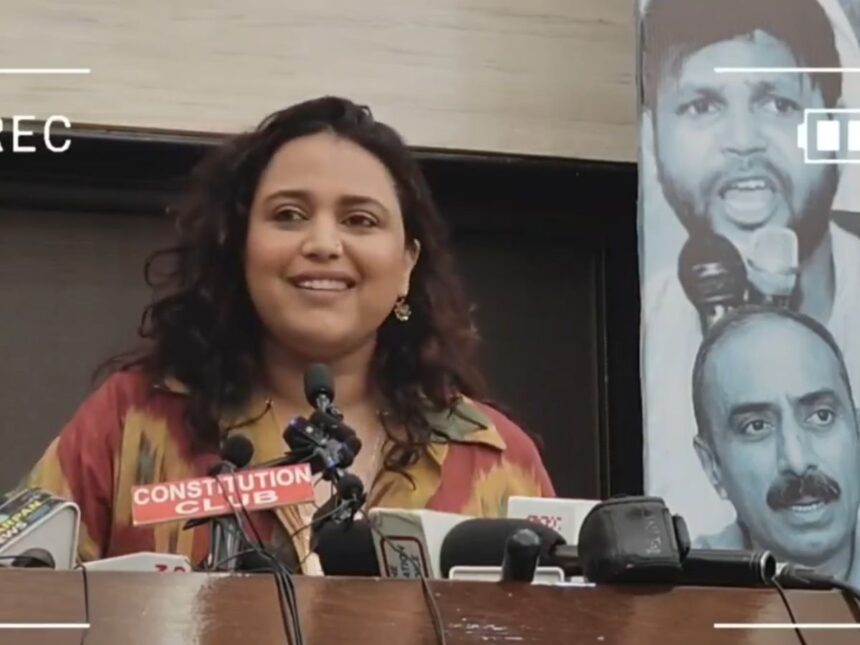

Swara Bhaskar’s recent speech at the Curtailed Freedoms: A Travesty of Justice event in New Delhi has sparked extensive discussion regarding the Indian judicial system’s treatment of prisoners awaiting trial. During her address, Bhaskar questioned Chief Justice DY Chandrachud’s priorities while also highlighting systemic disparities in how individuals from different backgrounds are treated within the justice system.
Swara Bhaskar’s Challenging Remarks
At the event hosted by the Association for Protection of Civil Rights (APCR), Bhaskar’s comments about the Chief Justice’s public appearances, especially his interactions with Prime Minister Narendra Modi, drew attention. She asked, “What are you afraid of? You have time to do a puja with PM Modi but don’t have 20 minutes for justice?” This pointed questioning highlights public frustration over perceived complacency in the judiciary amidst ongoing issues affecting marginalized communities.
Highlighting Privilege and Disparity
Bhaskar’s remarks were particularly impactful as she contrasted her own Hindu identity with that of Umar Khalid, a former JNU student who has been imprisoned for four years without trial. She emphasized that her background as a Hindu daughter of a naval officer has provided her with certain privileges that others, especially those from minority communities, do not enjoy. “You can label a Muslim as a terrorist, but they must have thought that to tag the daughter of a Hindu ex-Navy officer as a terrorist, ye shayad thoda jyada ho jayega,” stated Bhaskar, showcasing how identity politics play a role in judicial proceedings and public perception.
The Broader Context of Judicial Delays
Bhaskar also criticized the actions of Judge Amit Sharma of the Delhi High Court, who recused himself from hearing Khalid’s bail plea. She questioned the implications of a judge refusing to address justice issues, highlighting a perceived abdication of responsibility by legal authorities. Her approach is underscored by a broader dialogue about the Unlawful Activities Prevention Act (UAPA), under which many activists like Khalid are jailed, often without sufficient legal recourse or trial.
Why This Matters
Bhaskar’s speech raises critical questions about the functioning of the Indian judiciary and its responsiveness to the needs of justice, especially for marginalized communities. The discrepancy in legal treatment based on identity and the systemic delays that plague the judicial process are central issues for democratic governance in India. Bhaskar’s advocacy serves as a catalyst for discussions about civil rights, the principle of equal justice, and the responsibilities of those in power to uphold these ideals.
Frequently Asked Questions
What was the main focus of Swara Bhaskar’s speech?
Swara Bhaskar’s speech focused on the delays within the Indian judicial system, particularly concerning prisoners like Umar Khalid who have been imprisoned without trial for extended periods. She also highlighted issues of privilege connected to identity in the judicial context.
Who are some of the prominent figures that attended the event?
The event saw attendance from notable figures including politicians and activists such as Digvijay Singh, Dipankar Bhattacharya, Kunal Kamra, Nargis Saifi, and Justice Madan Lokur, in addition to Swara Bhaskar.
What was the public’s reaction to Bhaskar’s remarks?
Bhaskar’s remarks resonated widely on social media, igniting discussions around the perceived inaction of judicial authorities and the treatment of minority communities within the legal system.
How does Swara Bhaskar’s identity influence her viewpoint?
Bhaskar’s identity as a Hindu and a daughter of a naval officer provides her a platform and sense of safety that she argues is not afforded to many others, particularly from Muslim backgrounds. This perspective allows her to comment on judicial disparities with a critical lens.