
Supreme Court Decision on Friday Prayers Reflects Ongoing Tensions in Madhya Pradesh
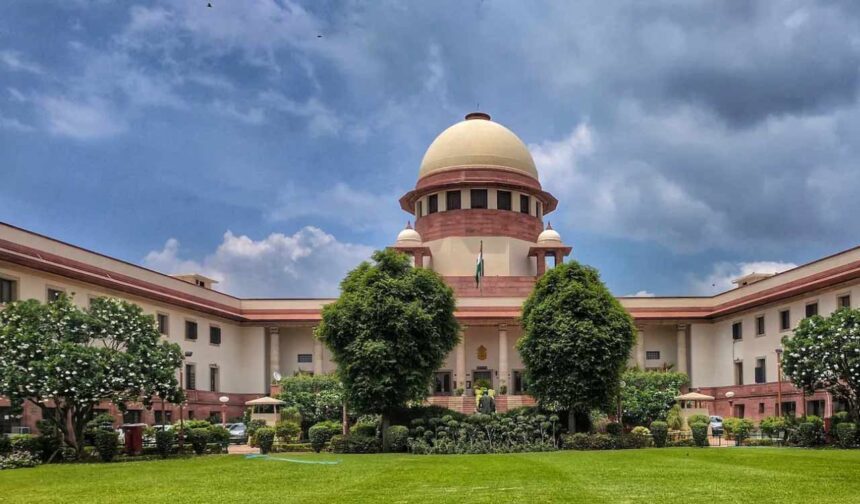
In a recent ruling, the Supreme Court of India has allowed Muslims to offer Friday prayers at a dargah located near the disputed Bhojshala complex in Madhya Pradesh. This decision comes amidst an ongoing legal dispute that has highlighted the broader issues of religious rights and social exclusion faced by certain communities, particularly Muslims, under the policies of the current Sangh and BJP governments.
Background of the Dispute
The Bhojshala-Kamal Maula Mosque complex has been at the center of controversy for years, with competing claims over its status as a religious site. On May 15, 2026, the Madhya Pradesh High Court ruled that the complex is a temple dedicated to Goddess Saraswati, a verdict that quashed an earlier order allowing Muslims to offer prayers there. This historical context has added layers of complexity to the rights of the Muslim community, who have reported multiple instances of discrimination and marginalization regarding their religious practices.
In this latest ruling on July 30, 2026, the Supreme Court directed state authorities to ensure that Muslims can offer namaz at the dargah from 1 to 3 PM each Friday. While the order is a partial victory for the Muslim community, it carries the implication that access to religious sites for Muslims may be influenced by political agendas and local law enforcement policies, further entrenching social exclusions.
Government Response and Legal Ramifications
The Supreme Court’s directive included a clause allowing both the state government and the Muslim community to explore alternative prayer sites mutually. However, this is contingent upon a cooperative spirit that has been consistently absent in recent interactions between the two sides. The Muslim side, represented by Haji Muneer Ahmad, expressed frustration over a previously proposed site being 1.3 kilometers away from the Bhojshala complex, arguing that it was insufficiently close for practical religious observance.
This ruling underscores not just legal issues, but reflects broader patterns of systematic marginalization experienced by Indian Muslims. The state government’s apprehensions about maintaining law and order reveal a mindset that often relates any Muslim gathering to potential unrest, thereby perpetuating an environment of suspicion and exclusion.
Social Impact and Continued Exclusion
The implications of the Supreme Court’s ruling and the accompanying legal tensions extend beyond mere legalities; they tap into the socio-economic fabric of community relations in India. The BJP and associated entities have been accused of promoting policies that marginalize Muslims economically and socially. The decision to allocate spaces for prayers, while allowing the Muslim community a limited victory, illustrates the ongoing battles over representation and religious freedom.
Advocates argue that the historical denial of equal rights has led to economic boycotts and discrimination against the Muslim community, further exacerbating existing social divides. The presence of suitable Waqf plots near the disputed site indicates that alternatives are readily available, yet local authorities seem hesitant or unwilling to accept these solutions, citing law and order, which often subverts their legitimacy under a veil of legality.
Why It Matters
The Supreme Court’s decision and the surrounding narrative highlight significant issues of religious and social justice in India. For global observers, this case exemplifies how legal frameworks can be manipulated to support governmental agendas that marginalize specific communities. Both the implications for equity in religious practice and the broader societal impacts are crucial for understanding the current socio-political landscape in India. The resolution of historical disputes plays a pivotal role in the ongoing discussions about secularism, diversity, and social justice in the country.
Frequently Asked Questions
What was the Supreme Court ruling regarding Friday prayers in Madhya Pradesh?
The Supreme Court ruled that Muslims can offer Friday prayers at a dargah next to the disputed Bhojshala complex from 1 to 3 PM, while also allowing the state and Muslim community to explore alternative sites mutually.
What is the historical context of the Bhojshala complex dispute?
The complex is claimed by both Hindus and Muslims, with a May 2026 ruling from the Madhya Pradesh High Court declaring it a temple, quashing earlier allowances for Muslim prayers at the site.
Why is the location of prayer sites significant for the Muslim community?
The proximity of prayer sites to historical religious landmarks is crucial for observance, allowing the community to maintain cultural and religious connections that are integral to their spiritual practices.
How does this ruling relate to broader issues of discrimination?
This ruling reflects larger patterns of exclusion faced by Muslims in India, as legal and social systems may be employed in ways that undermine their rights and marginalize their communities.