
Supreme Court Seeks Government Response on Controversial CJP Activities
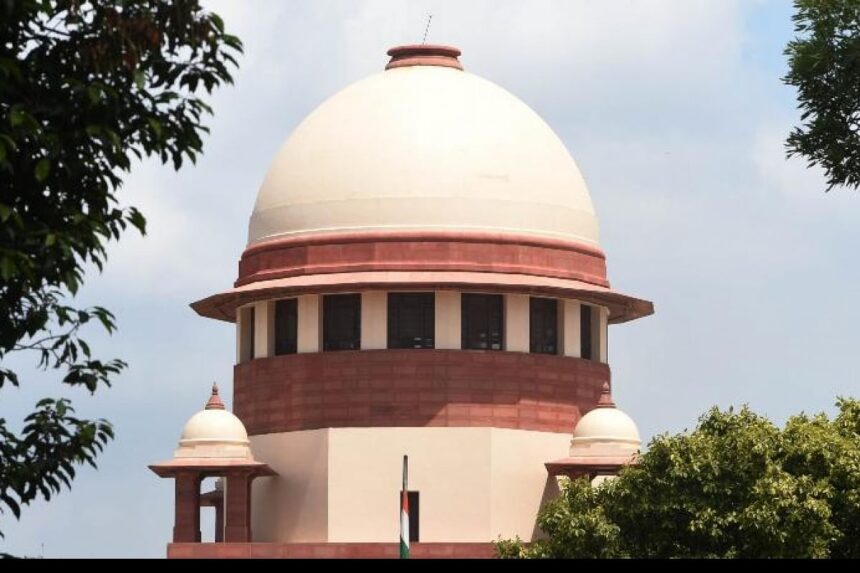
On August 11, 2023, the Supreme Court of India called for the Centre’s response to a petition requesting a Central Bureau of Investigation (CBI) probe into the Cockroach Janta Party (CJP) and its commercial exploitation of courtroom remarks. This inquiry was prompted by remarks made by Chief Justice Surya Kant during a session in May, which sparked a viral satirical movement that has since garnered attention for its political undertones.
Background of the “Cockroach” Remark and CJP’s Formation
The controversy began on May 15, 2023, when Chief Justice Surya Kant made a metaphorical reference to “cockroaches” while discussing issues relating to fake law degrees and unemployed youth. Though CJI Kant clarified the next day that his statement had been misquoted, the remark, and an accompanying clip, went viral on social media. This led to the formation of the CJP, a satirical political group that has leveraged the remark to criticize governmental accountability, particularly in light of alleged paper leaks in National Eligibility cum Entrance Test (NEET) examinations.
The CJP’s emergence highlights a growing trend of using courtroom statements as fodder for political discourse, a phenomenon that has raised questions about the boundaries of free speech and satire in contemporary India.
The Legal and Social Implications of the Petition
The petition, filed by advocate Raja Choudhary, argues that the isolated snippets of courtroom dialogue have been selectively clipped, imitated, and commercialized, transforming legal discourse into “viral spectacle.” This commercialization, according to the petitioners, strips these statements of their constitutional and procedural context. Advocate Rajesh Singh Chouhan, representing the petitioner, emphasized that the intention of the lawsuit is not to challenge satire or free expression but to protect the integrity of courtroom dialogue from organized commercial exploitation.
The petition specifically seeks a CBI investigation into the proliferation of fake law degrees, thereby connecting the metaphor used by CJI Kant to real-world implications for the rule of law and professional ethics in India’s legal system. It also references literary analogies, including Franz Kafka’s “Metamorphosis,” that reflect the degradation of professional standards in the legal field.
Current Status and Court Proceedings
The Supreme Court has yet to conduct a full hearing and has opted for a muted session that was only accessible to those present on-site, emphasizing the delicate nature of ongoing judicial discussions. The petition’s success could prompt broader consequences for political satire, free speech, and the use of courtroom utterances in public discourse. The involvement of CJP in protests against government actions, such as the resignation of the Union Education Minister, indicates the group’s potential impact on public policymaking and accountability.
Why It Matters
This situation illustrates the intersection of legal integrity and political expression in India. The commercialization of courtroom dialogue raises significant ethical and legal questions that demand serious scrutiny. As the political climate grows more polarized, understanding the dynamics at play can help inform discussions about the judiciary’s role in preserving democratic values, freedom of expression, and the rule of law. This inquiry may set precedents affecting not only traditional media but also new digital platforms where such theatrical expressions are commonplace.
Frequently Asked Questions
What is the Cockroach Janta Party (CJP)?
The CJP is a satirical political group that emerged following the viral circulation of a metaphor used by Chief Justice Surya Kant. It has engaged in protests and demonstrations, advocating for greater accountability in government actions.
What does the petition filed in the Supreme Court seek?
The petition calls for a CBI investigation into the activities of the CJP and the commercial exploitation of courtroom remarks, particularly focusing on issues surrounding the proliferation of fake law degrees.
Why did the Chief Justice clarify his “cockroach” remark?
The Chief Justice clarified his statement to address its misinterpretation after it went viral, indicating that he did not intend to demean professionals or the legal field but was expressing institutional frustration.
What are the potential implications of this case for free speech in India?
The case will likely explore the balance between freedom of expression and the integrity of legal proceedings, potentially impacting how courtroom dialogues are perceived and utilized in public discourse.