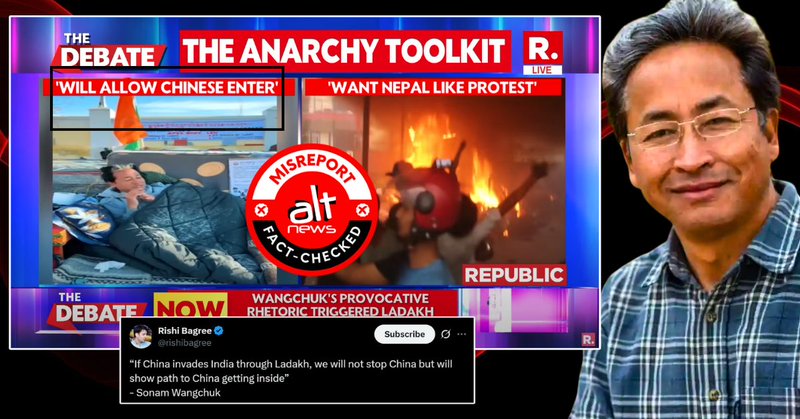

Recent claims circulating on social media have suggested that activist Sonam Wangchuk expressed a willingness to assist China in invading India. This assertion has been debunked, as it is based on a clipped video that misrepresents Wangchuk’s statements. Notably, the claim has resurfaced, propagated by pro-BJP influencers, and has been labeled false.
Understanding the Misrepresentation
The controversy began when a video featuring Sonam Wangchuk gained traction following violent incidents in Leh on September 24. In this video, he purportedly states intentions to support a Chinese invasion of India. However, multiple sources, including the fact-checking site Alt News, have clarified that this video was manipulated. It has been noted that the influencer Rishi Bagree shared this footage without proper context, leading to widespread misinformation.
The Context Behind the Statements
Sonam Wangchuk is a well-known education reformist and environmental activist based in Ladakh. He is recognized for advocating for the rights and development of local communities. The video in question has been falsely attributed with incendiary claims that distract from Wangchuk’s genuine concerns regarding regional development and environmental sustainability. The misuse of his words appears to serve political agendas rather than reflect his actual stance.
The Role of Social Media in Misinformation
In this digital age, social media has become a double-edged sword. While it serves as a platform for dialogue, it is also a breeding ground for misinformation. The selective sharing of videos and statements can distort public perception and amplify divisive narratives. In this instance, the pro-BJP narrative utilized a misleading representation of Wangchuk’s view on China to generate fear and cohesion among its base, thereby undermining constructive discourse.
Why This Matters
The implications of such misinformation are significant in the Indian political landscape. By twisting the words of influential figures like Sonam Wangchuk, there can be increased polarization and hostility among various segments of society. Furthermore, this incident reflects a broader trend where political factions utilize disinformation strategies to discredit opponents and manipulate public sentiment during a politically charged climate. Understanding the nuances of such claims is crucial, not only for informed citizenship but also for sustaining the fabric of democratic discourse in India.
Frequently Asked Questions
What was the original claim made about Sonam Wangchuk?
The claim suggested that Sonam Wangchuk announced he would help China invade India, which has been proven false.
Who shared the misleading information regarding Wangchuk?
The pro-BJP influencer Rishi Bagree shared a clipped video that misrepresented Wangchuk’s statements without proper context.
What was the reaction to the viral video?
The video led to significant backlash and drew attention to the issue of misinformation being prevalent in social media discourse.
Why is misinformation concerning figures like Sonam Wangchuk problematic?
Misinformation can provoke unnecessary polarization, stoke fear, and hinder productive dialogue, ultimately affecting societal cohesion and democracy.