
Summary of Current Political Commentary
In a recent tweet, political commentator Sakshi Narula critiques the coverage of Prime Minister Modi’s foreign trips by ANI, suggesting a formulaic approach that emphasizes visuals over substantive engagement. Her commentary reflects frustrations regarding the lack of transparency and interaction in Modi’s media portrayals during global visits.
Context on ANI’s Coverage
The Press Information Bureau and various media outlets play a critical role in shaping public perception of political leaders, especially during foreign trips. ANI, a key player in Indian news, is often scrutinized for its editorial decisions, particularly the choices it makes in framing political narratives. As India’s international engagements grow, so too does the interest in how these trips are reported—both domestically and abroad.
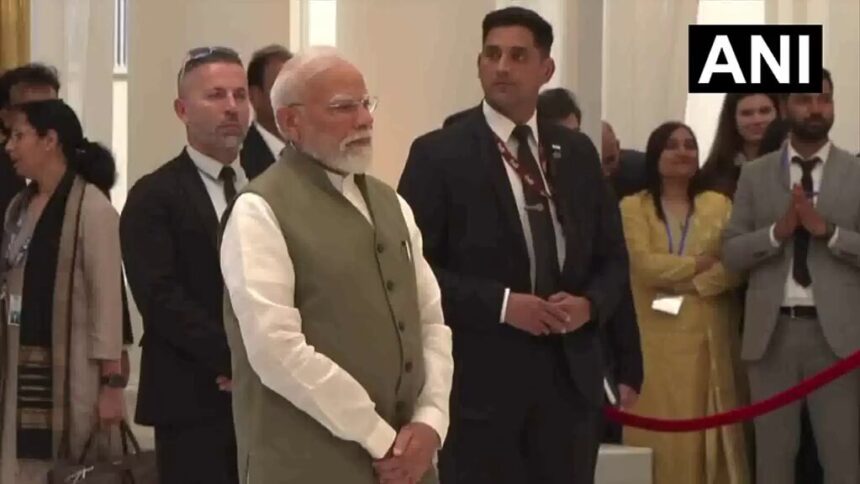
Media coverage during Modi’s foreign visits frequently features grand visuals and significant ceremonial components, designed to showcase India’s diplomacy and global perspective. However, Narula’s tweet highlights a perceived formula: a sequence of choreographed moments designed to bolster Modi’s image without addressing key criticisms or allowing open dialogue with the media.
Analysis of the Media Narrative
Narula points out that Modi’s foreign trips often open with visual spectacles—farewell scenes filled with cinematic music, depicting a charismatic leader on the world stage. This approach, while visually appealing, runs the risk of reducing complex international relations to mere spectacle, detaching the viewer from the substantial discourse that typically accompanies diplomatic engagements.
In her observations, the emphasis on showcasing Indian culture abroad, coupled with NRIs expressing their admiration for Modi, plays into a narrative of nationalism. However, the critique lies in how this coverage sidelines the voices of dissent or critical questions from journalists—many of whom find it challenging to engage directly with the Prime Minister due to the heavy editing of interviews and press interactions.
The Challenge of Media Transparency
Transparency in media coverage is essential for a functioning democracy. When political leaders are presented in a way that limits direct engagement with the press, public accountability may diminish. Narula’s comments spotlight a vital issue: the adequacy of press freedom in India and the challenges faced by journalists attempting to hold leaders accountable.
This curated media narrative could have implications for how policies and decisions are communicated to the public. The public’s understanding of international relations and Modi’s role may become overly shaped by the presentation of these foreign trips, rather than by informed debates and discussions that reflect a multitude of perspectives.
Why This Matters
The way political narratives are constructed has profound implications for democratic engagement in India. As Prime Minister Modi continues to strengthen India’s global profile, the media’s portrayal of these events may affect public perception and trust in government. Critiques like Narula’s serve as a reminder for both consumers of news and those in the industry about the importance of balanced representation, openness, and the active involvement of diverse voices in political discourse.
Moreover, understanding the dynamics of media portrayal helps voters navigate the complex political landscape, ensuring that they are not swayed solely by curated images but remain informed about policies and their impacts on society.
Frequently Asked Questions
What does Narula’s tweet imply about ANI’s reporting style?
Narula suggests that ANI’s coverage follows a predictable formula that emphasizes visual spectacle at the expense of substantive content, limiting critical media interactions with PM Modi.
Why is transparency in media coverage important?
Transparency ensures that political leaders remain accountable to the public. A diverse and open media landscape allows for informed public discourse, which is crucial in a democracy.
How does editing impact the portrayal of political leaders?
Editing can shape narratives by omitting critical questions or conversations, potentially leading to a skewed perception of reality and limiting public understanding of policies and their implications.
What is the relationship between media portrayal and public perception?
The way media portrays political events influences how the public perceives their leaders and policies. A well-rounded media narrative encourages informed discussions, while a heavily edited one may lead to misconceptions or a lack of critical engagement.