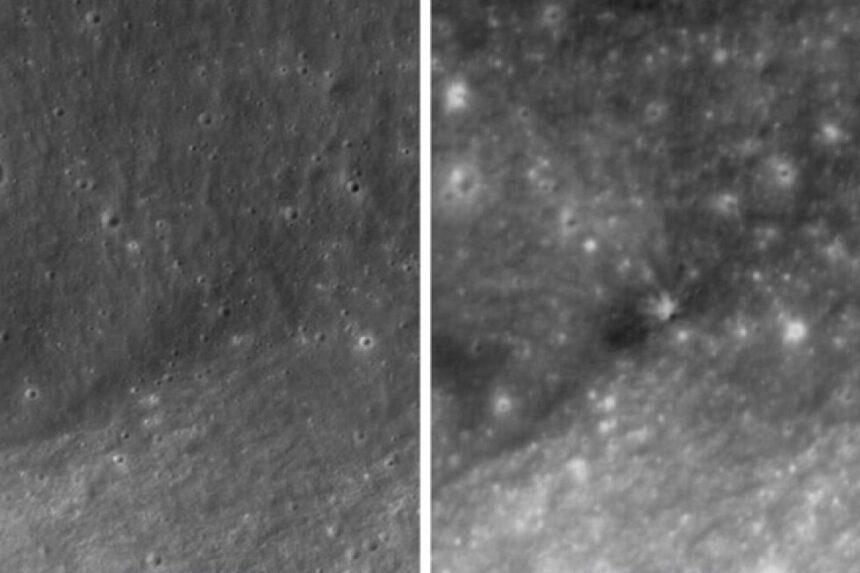

A South Korean satellite, Danuri, has successfully captured images of a recent crash site on the moon, marking the spot where a SpaceX rocket segment collided. This accident, which occurred inadvertently due to solar activity and gravitational forces, draws attention to the increasing interaction between private companies and space exploration.
The Incident: Details of the Moon Crash
The Korea Aerospace Research Institute’s Danuri spacecraft flew over the moon’s surface shortly after the unfortunate collision of the SpaceX Falcon 9 upper stage. This event took place on August 5, 2026, when the rocket segment struck the lunar surface at an astonishing speed of 5,400 mph (8,700 kph). The impact created a new crater, leaving behind a noticeably darker terrain where dust and rock were scattered.
Korean space officials have reported that the Danuri gathered images before and after the crash, providing valuable data for assessing the effects of the impact. The Korea Aerospace Research Institute released these striking before-and-after photographs, drawing interest from scientists and space enthusiasts alike.
Upcoming Observations from NASA
In a significant move, NASA’s Lunar Reconnaissance Orbiter is expected to fly over the crash site next week to gather more insights about the aftermath of the collision. The data collected from this observation will help researchers understand the impact on the moon’s surface and how such collisions can alter lunar geography.
This collaboration illustrates the growing alliance between space agencies and organizations like SpaceX, showcasing international interest in lunar exploration. The accident also underscores the challenges posed by operating in space, as even small mishaps can lead to significant consequences.
Elon Musk and SpaceX: What’s Next?
Elon Musk’s SpaceX, which launched the Danuri satellite in 2022 from Cape Canaveral, continues to venture into lunar and deep space exploration. This incident follows the company’s successful launch of private lunar landers the previous year. According to SpaceX representatives, the upper stage of the Falcon 9 rocket that collided with the moon was placed on an unintentional collision course due to solar activity and the gravitational pull of celestial bodies.
As private space exploration becomes more prevalent, it raises critical questions about the management of space debris and the precautions necessary for future missions. The incident has opened a dialogue on the importance of effective tracking and mitigation strategies to prevent similar occurrences in the future.
Why This Is Trending
This topic is currently trending in India and globally due to its implications for space exploration and the growing role of private enterprises like SpaceX in the industry. Indian space enthusiasts are curious about how accidents like this may impact future lunar missions, especially as India prepares for its own ambitious space initiatives. The sight of lunar imagery and the analysis it entails resonate with India’s aspirations to be a key player in space affairs.
Frequently Asked Questions
What caused the SpaceX rocket to crash into the moon?
The collision was an inadvertent occurrence triggered by a combination of solar activity and the gravitational forces acting on the rocket segment, which placed it on a collision course with the moon.
What will be observed during NASA’s upcoming flight over the crash site?
Nasa’s Lunar Reconnaissance Orbiter will primarily gather additional data on the impact site to analyze changes in the moon’s surface and understand the effects of the collision.
How does SpaceX play a role in modern space exploration?
SpaceX is a pioneer in private space travel, launching numerous missions that contribute to scientific knowledge, satellite deployment, and exploration, all while reducing costs associated with space travel.
Are there any safety precautions in place for lunar missions?
Yes, space agencies as well as private companies are continuously developing tracking systems and strategies to monitor space debris and prevent accidents. However, unforeseen events can still occur, highlighting the need for ongoing improvements in safety protocols.