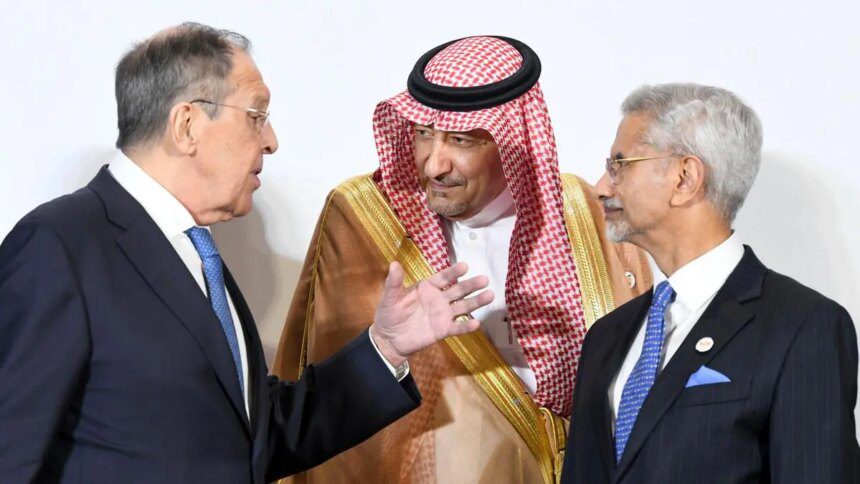

Sergey Lavrov confirmed on Friday that Russian crude oil exports to India have significantly increased, reinforcing a strategic partnership that continues to withstand global pressures and Western sanctions. Speaking during a media briefing at the BRICS Foreign Ministers’ Meeting in New Delhi, Lavrov highlighted clear records to substantiate the rise in oil supplies to India.
“We published this data in the global media. This information shows that oil supplies to India have increased, and this doesn’t depend on us, but on our Indian counterparts,” Lavrov remarked.
India’s continued purchase of discounted Russian oil, despite ongoing Western sanctions, underscores its focus on national interests, prioritizing cost-effective fuel sources to support one of the world’s fastest-growing economies. Moscow’s confidence in its energy relationship with India suggests a solidified status as a primary crude supplier, reflecting a larger transformation in the global oil market driven by geopolitical tensions and shifting international regulations.
In a pointed critique of U.S. energy policy, Lavrov accused Washington of seeking to monopolize global energy resources while systematically excluding Russian energy corporations like Lukoil and Rosneft from international supply chains. He asserted that the aim of U.S. leadership is to control “every significant energy supply route.”
Earlier, a Russian diplomat indicated that the U.S. had enacted doctrinal policies aimed at dominating global energy markets.
The BRICS Foreign Ministers’ Meeting, taking place from May 14 to 15, features Lavrov alongside Iranian Foreign Minister Seyed Abbas Araghchi. The summit is set against a complex backdrop of internal divisions within BRICS regarding the escalating tensions in West Asia and the crisis in the Strait of Hormuz.
As regional geopolitics rapidly evolve amid tensions involving Iran, Saudi Arabia, the United Arab Emirates, and the United States, India is attempting to navigate its diplomatic stance carefully, aiming to balance its strategic interests amid the competing demands of these international and regional powers.
The report was published on May 15, 2026.