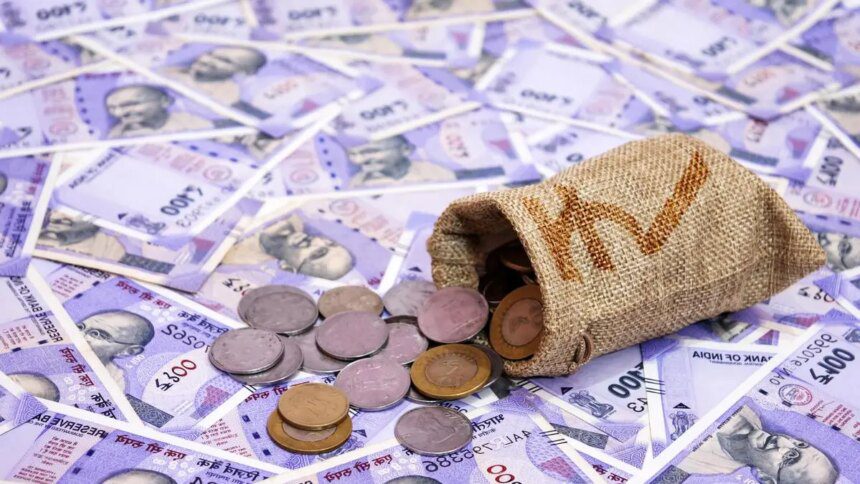

The Indian rupee fell to an all-time low on Tuesday, reflecting mounting external pressures, particularly driven by the escalating conflict in Iran, which has led to a sustained rise in oil prices and increased U.S. Treasury yields.
On this day, the rupee traded at 96.44 per U.S. dollar, surpassing its previous record low of 96.3875 set on Monday. Since the onset of the Iran conflict in late February, the currency has depreciated by 6%.
High crude oil prices, exacerbated by the ongoing U.S.-Iran standoff, coupled with reduced capital inflows, are widening India’s external imbalances, leaving the rupee increasingly vulnerable.
Economists forecast a significant widening of India’s current account deficit in the current fiscal year. Potential declines in remittances from the Middle East and the likelihood of subdued portfolio inflows, fueled by worries regarding India’s growth prospects, are contributing to external pressures.
According to estimates, India’s balance of payments is expected to record a deficit between $65 to $70 billion this year, marking a third consecutive year of deficits and underscoring ongoing challenges in the external sector.
HSBC noted that India faces a dual challenge in managing its current account deficit while attracting sustainable capital inflows. “The continued distribution of FX market pressure between currency weakness—which may lower the trade deficit over time—and the use of FX reserves should be beneficial,” the report stated.
The impact of high oil prices is already apparent in India’s external and inflation dynamics. India’s merchandise trade deficit grew to $28.38 billion in April, largely due to a surge in crude oil imports, reaching a six-month high. Concurrently, wholesale inflation in April accelerated to its highest level in three-and-a-half years, highlighting the transmission of increased energy costs throughout the economy.
Recent remarks by Prime Minister Narendra Modi advocating for fuel and foreign exchange conservation underline the economic pressures currently facing the nation.
U.S. Yields Add to Pressure
The rise in U.S. Treasury yields, driven by inflationary concerns, is further complicating the outlook for the rupee. The yield on U.S. 10-year bonds reached a one-year peak before easing on Tuesday, as investors increasingly priced in the likelihood of a Federal Reserve rate increase this year.
This environment is likely to challenge India’s ability to attract the required capital inflows to finance its current account deficit, analysts indicate.
Published on May 19, 2026.