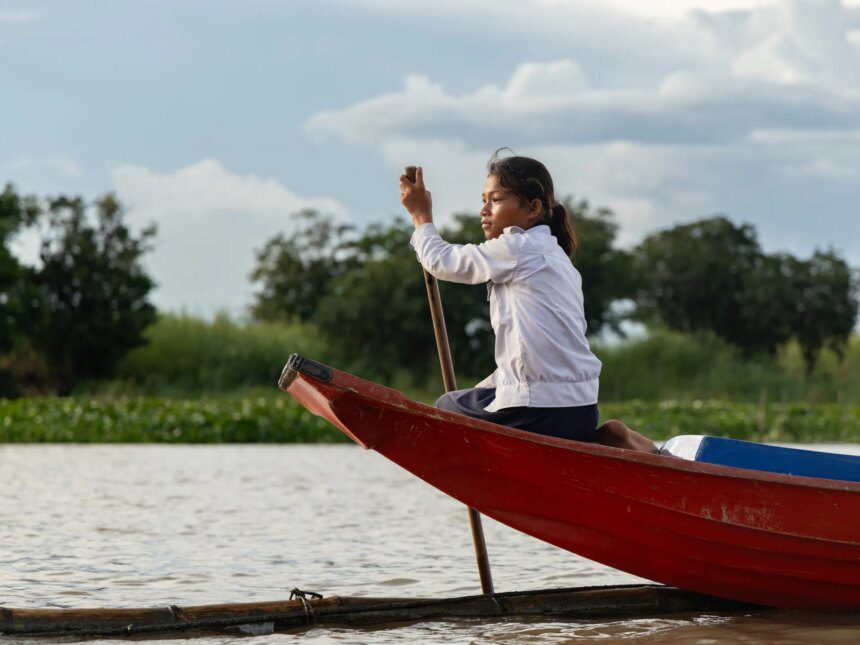

As global tensions rise, particularly from conflicts like the US-Israel war on Iran, rising fuel prices are adversely impacting education for vulnerable children across nations. In Cambodia, where many families are dependent on fragile means of livelihood, children’s schooling is being compromised. This situation echoes broader global trends affecting disadvantaged communities in India and beyond.
Fuel Prices and Education: A Dire Connection
In Cambodia’s Tonle Sap lake region, morning scenes revolve around small gas-powered boats navigating through floating homes to collect children for school. One of these children, Sou Sreynich, 13, experienced the dangers of the lake when her mother delayed her schooling until she was 10. The current geopolitical crisis has exacerbated these challenges, with soaring fuel prices making both travel and education less attainable for families.
Higher costs for fuel directly affect the ability of children like Sreynich to attend school. In a region where families primarily rely on fishing, the rising prices reduce income stability, compelling Sreynich to skip classes for work, such as gutting fish or harvesting chili peppers. The financial strain means her family cannot afford to travel to better fishing spots, leaving them trapped in a vicious cycle of poverty and educational disruption.
Global Impact of Local Wars
The consequences of local conflicts extend well beyond their immediate geography. A recent UNICEF report predicts that if the war in Iran continues, up to 23.4 million additional children could fall into poverty by year’s end, with approximately 80% located in Africa and Asia. Similar trends are observable in neighboring countries; for example, in Vietnam, sisters Ly, 16, and Nhi, 13, had to drop out of school to support their family after their father’s fishing job was jeopardized by skyrocketing diesel costs.
Such alarming shifts highlight a growing trend of financial “triage,” where families must choose between maintaining their children’s education or ensuring basic survival. This grim task often results in only some children remaining in school, while others are thrust into precarious labor markets susceptible to exploitation and trafficking.
Comparisons to India’s Educational Landscape
In India, rising fuel prices and economic instability due to global disruptions present similar challenges. Disadvantaged families in rural regions are often on the brink of financial collapse, facing tough decisions about education versus immediate survival needs. For example, in states like Odisha and Chhattisgarh, where many children are already struggling to complete school due to poverty, the ongoing global crisis could further diminish access to quality education.
With critical infrastructure often lacking in these regions, higher costs of transportation and supplies could lead to increased dropout rates. Moreover, if families are forced to prioritize labor over education, the well-being and future prospects of millions of children are at stake, mirroring the dire circumstances faced by those in Cambodia and Vietnam.
What This Means
The situation in Cambodia serves as a cautionary tale for India and other developing nations. As fuel prices continue to rise globally, the impact on education and child welfare becomes increasingly pronounced. For Indian families facing similar adversities, ensuring children’s education could become an even greater challenge. Policymakers must consider these global trends as they work to implement safeguards for vulnerable populations, to mitigate the cascading effects of financial instability on education and child protection.
Frequently Asked Questions
How are global conflicts affecting education in developing countries?
Global conflicts can lead to rising fuel prices, which heighten the financial strain on already vulnerable families. This often forces parents to choose between affording education or basic survival needs, leading to increased dropout rates.
What are the long-term effects of children dropping out of school?
Dropping out of school can result in a lack of educational attainment and skills, making these children more susceptible to poverty, exploitation, and human trafficking in adulthood.
What measures can be taken to support families facing financial difficulties?
Governments and NGOs can support affected families through financial aid, subsidized transportation for students, and community programs that offer vocational education alongside traditional schooling.
How can education systems adapt during crises?
Education systems can promote flexible learning solutions, such as remote learning, and implement community-based support programs to ensure continuity in education during times of economic crisis.