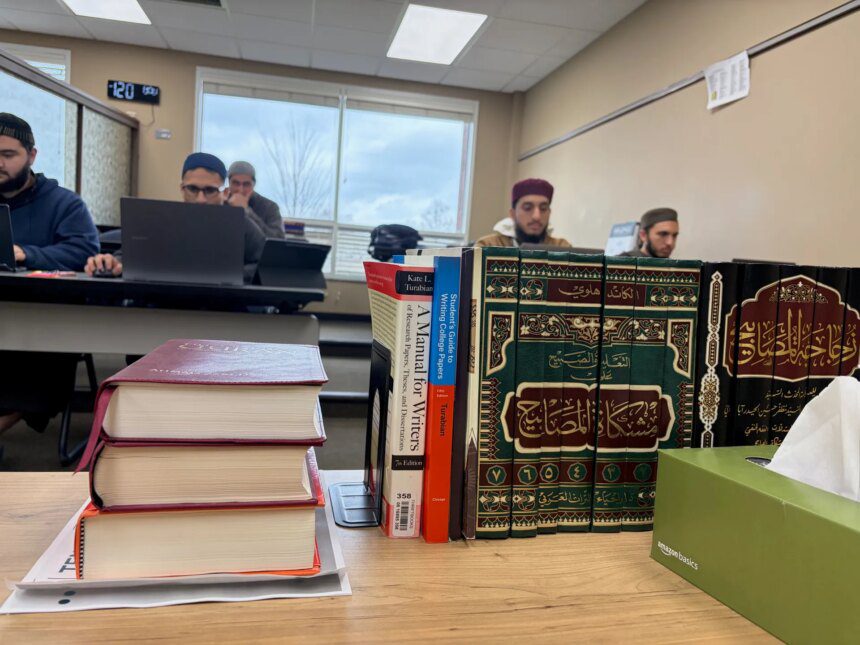

Darul Qasim, an Islamic educational institution in the Chicago area, has cultivated a generation of scholars who are now shaping their communities in profound ways. One such scholar is Imam Haroon Ahmed, who emphasizes the critical role of thoughtful engagement in the face of social and theological dilemmas, especially in turbulent times.
Impact on Community Leadership
Imam Haroon Ahmed, a graduate of Darul Qasim, currently oversees Islamic affairs at the Islamic Foundation, which includes managing its mosque and school. For Ahmed, the true measure of Darul Qasim’s influence is not in its institutional reach but in the individual lives it touches. His own development as a scholar and community leader was significantly shaped during his time at Masjid Uthman and Uthman Academy, where he engaged deeply with the needs of his community in Chicago’s western suburbs.
After the Jummah prayer, as the crowd disperses, Ahmed often remains to engage with those who have pressing questions. Many young individuals stay behind, seeking guidance on personal challenges that relate not only to their faith but also their identity in a multicultural society. Ahmed notes that these conversations often revolve around profound themes like suffering, faithfulness, and identity, mirroring questions faced by Muslim youth globally, including those in India.
Navigating Turbulent Times
Since the onset of the current conflict in Gaza on October 7, 2023, Ahmed has observed heightened scrutiny and emotional volatility within his community. Many young people are grappling with narratives of suffering and injustice amplified by social media. This creates a challenging environment where individuals are left questioning their identity; wondering how to reconcile their faith with broader socio-political issues.
“These conversations became especially pressing when many young people were wrestling not only with theology but with belonging and moral clarity,” Ahmed reflects.
Ahmed emphasizes the importance of “internal immunity,” a concept he developed during his studies at Darul Qasim. This idea encourages individuals to slow down discussions, think critically, and avoid reactive responses fueled by external pressures. By engaging in meaningful dialogues about faith and identity, young Muslims can better understand their place within the larger American context while also grounding their identity in their religious beliefs.
A Tradition of Intellectual Inquiry
Ahmed credits the teachings of historical scholars such as Shah Waliullah al-Dihlawi, who highlighted the interconnectedness of revelation, ethics, and human welfare. His ideas have influenced generations of scholars and continue to resonate with students at Darul Qasim today. This intellectual lineage encourages a holistic approach to understanding contemporary issues by situating them within a broader moral framework.
In parallel, another graduate, Lateef, reflects on the emotional complexities he faces in his career, working with patients at the end of life. For Lateef, the education he received has created a bridge between the various fields of knowledge, allowing him to engage with profound existential questions within a supportive community of peers. Every Saturday, he joins fellow students, professionals, and scholars who share similar concerns, highlighting the ongoing quest for understanding that transcends individual careers.
What This Means
The experiences of scholars like Ahmed and Lateef illustrate the importance of community and education in navigating identity crises and socio-political challenges, especially for young Muslims in diaspora. As India grapples with its own debates around faith and identity in a multi-religious society, the insights shared by these scholars could serve as valuable lessons. Understanding how youth engage with their faith amid external pressures can inform more supportive educational frameworks in India.
Frequently Asked Questions
What is Darul Qasim?
Darul Qasim is an Islamic educational institution located in the Chicago area focusing on providing comprehensive Islamic education and training to its students.
How does Imam Haroon Ahmed influence his community?
Imam Ahmed emphasizes thoughtful engagement with faith and identity, guiding young people in navigating complex social and theological dilemmas that arise in their lives.
What challenges do young Muslims face in today’s world?
Many young Muslims experience emotional volatility and scrutiny from various societal pressures, particularly in relation to identity, suffering, and belonging amidst ongoing global conflicts.
How can the teachings of historic scholars help today?
The teachings of scholars like Shah Waliullah al-Dihlawi provide a framework for understanding moral and ethical issues, helping contemporary youth navigate their faith within modern social contexts.