Chronic Under-investment in Buenaventura Following Earthquake
The coastal city of Buenaventura, Colombia, has been struck by an earthquake that has resulted in significant casualties and infrastructure damage. With over 540 homes collapsed, 3,416 damaged, and approximately 330 residents injured, local health facilities are severely stretched due to chronic under-investment in public resources.
Consequences of the Disaster
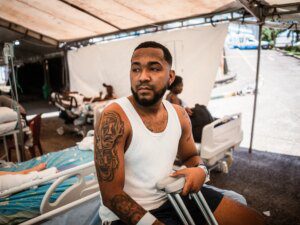
In the wake of the earthquake, the Luis Ablanque de la Plata District Hospital is overwhelmed. Several wards are out of operation, forcing injured residents to wait in tents set up in the hospital’s parking lot. Among them is Bryan Reyes, a 29-year-old shipyard worker who sustained three fractures while escaping the catastrophe.
Reyes expressed deep frustration with the health response, saying, “It is a total abandonment. It’s like the people here just don’t matter.” He highlighted the hospital’s resource shortages, indicating that the limited supplies were not just a temporary issue but a symptom of chronic neglect. “Before the earthquake struck, there was a strike at the hospital because the workers hadn’t been paid,” he revealed, illustrating the broader institutional failures that plague the area.
Poverty and Socioeconomic Disparities
Buenaventura has long been a site of socioeconomic disparities compared to other urban centers in Colombia, such as Cali. Recent government estimates illustrate that 15.4 percent of Buenaventura’s population lives in multidimensional poverty, which entails various deprivations beyond mere financial hardship, including insufficient access to education and healthcare.
In contrast, Cali’s rate of multidimensional poverty is significantly lower at 6.7 percent. Local studies from 2025 also paint a bleak picture of employment in Buenaventura, revealing that 72 percent of residents are struggling to find work. A staggering 70 percent reported having to reduce their meals to fewer than three a day due to lack of food, a harsh reality that compounds the impact of the recent earthquake.
The Role of Marginalization
Adding to the challenges faced by the community is a high percentage of Afro-Colombians, who make up 88.5 percent of Buenaventura’s population. This minority group has historically faced marginalization, contributing to the chronic under-investment seen in both social services and public infrastructure. The intersection of ethnicity and socioeconomic status creates a vulnerable community, particularly during crises such as the recent earthquake.
What This Means
The situation in Buenaventura serves as a cautionary tale for Indian cities grappling with similar issues of under-investment and social inequality. Urban areas in India, particularly those with significant marginalized populations, may find parallels in the challenges of disaster preparedness and response. The deeply entrenched poverty and neglect, as demonstrated by the health crisis following the earthquake, highlight the importance of investing in local infrastructure to ensure resilience against natural disasters.
Moreover, as India faces its own climate challenges, the need for robust public health systems and equitable resource allocation becomes paramount. Lessons can be learned from the institutional failures visible in Buenaventura to avoid crises that exacerbate existing social inequities.
Frequently Asked Questions
What caused the earthquake in Buenaventura?
The earthquake in Buenaventura has been attributed to geological activity common in the region, which is prone to seismic events. Factors contributing to earthquakes include tectonic plate movements, which are prevalent in Colombia due to its location along the Pacific Ring of Fire.
How does Buenaventura’s poverty compare to other Colombian cities?
Buenaventura’s rate of multidimensional poverty stands at 15.4%, significantly higher than Colombia’s urban center of Cali, which has a rate of only 6.7%. This disparity reflects ongoing issues of inequality and lack of investment in public infrastructure.
What is multidimensional poverty?
Multidimensional poverty includes various indicators of well-being, not solely financial income. It encompasses factors such as access to education, healthcare, adequate nutrition, and basic services, providing a holistic view of community deprivation.
How can the situation in Buenaventura improve?
Improving the situation in Buenaventura will require substantial government investment in healthcare, education, and public services. Addressing the root causes of poverty and marginalization is essential, alongside immediate disaster response measures to assist those affected by recent events.