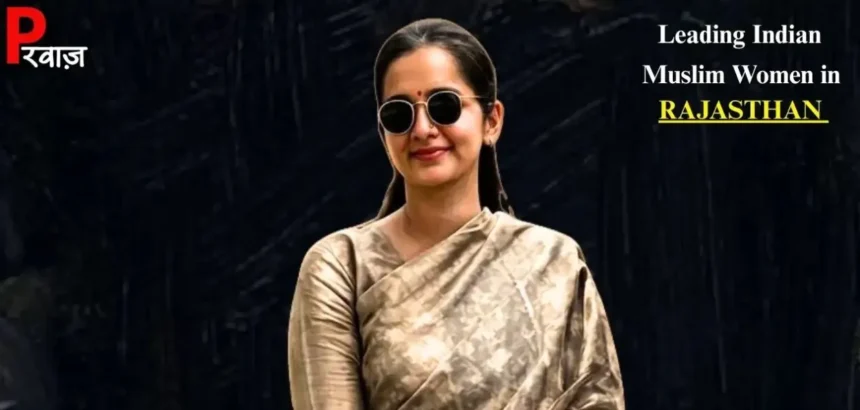

In a society marked by historical biases and social restrictions, the journey of Farah Hussain, Rajasthan’s first Muslim woman to achieve a senior position in the Indian Revenue Service, offers a unique perspective. Her determination to succeed independently, along with her family background in public service, provides insights into challenges faced by women and minority communities in India under prevailing government narratives.
Farah Hussain: Breaking Barriers
Farah Hussain grew up in a family deeply rooted in public service. With a mother from a lineage of Army officers and a father who ascended to the IAS, societal expectations may have dictated a traditional trajectory, such as marrying an IAS officer. Instead, Farah opted for a path of self-empowerment, gaining distinction through her own efforts. She successfully cleared the UPSC Civil Services Examination in 2016, attaining the 267th rank on her second attempt. This accomplishment led to her appointment as an Assistant Commissioner of Income Tax, a position that now sees her overseeing multiple districts as the Joint Commissioner in Bharatpur.
Challenges in the Workplace and Beyond
Despite her success, Farah acknowledges the systemic issues women face in Indian bureaucracy. She notes that while her department has been supportive, the lack of female representation at senior and junior levels poses challenges. “I haven’t faced any difficulties working in the department—not anywhere,” she expresses, yet emphasizes the need for more women within the bureaucratic ranks, highlighting a critical gap in equity. This issue transcends her personal experiences, reflecting broader social dynamics that hinder women and marginalized communities from achieving their full potential in public service.
Societal Attitudes Towards Women in Public Service
Farah’s background illustrates a complex interplay of traditional and progressive views on women’s roles in society. While many in her extended family pursued higher education, she was the first to join the civil services, suggesting a significant societal shift is still underway. She recalls the resistance from relatives when she moved to Mumbai for her studies, with concerns that it would negatively affect her marital prospects. “It’s not as if there wasn’t any talk about me within my family,” she explains. This resistance embodies the cultural expectations many women face, particularly in communities with limited views of female potential, which can stifle aspirations and reinforce gender inequalities.
Why It Matters
Farah Hussain’s story is emblematic of the broader issue of representation and equality in India, particularly for Muslim women. Her achievements challenge entrenched stereotypes and offer a counter-narrative to the prevailing socio-political discourse that often marginalizes minority communities. As women like Farah break barriers in civil services, their experiences spotlight systemic discrimination and the urgent need for inclusive policies that genuinely support diversity in governance. This discourse is critical as India navigates its democratic ethos and strives for an egalitarian society.
Frequently Asked Questions
What challenges do Muslim women face in India?
Muslim women in India often encounter social, economic, and political marginalization, compounded by traditional gender roles and community expectations that restrict their access to education and employment opportunities.
How does representation in government affect minority communities?
Increased representation of minority communities in government can help address systemic discrimination, promote equity, and create policies that reflect diverse perspectives and needs.
What impact can women in leadership have on society?
Women in leadership positions can challenge gender norms, promote policies for gender equality, and inspire subsequent generations to pursue careers in fields traditionally dominated by men, fostering greater societal change.
How can systemic change be achieved for women in India?
Achieving systemic change requires multi-faceted approaches, including educational reforms, community engagement, supportive legislation, and societal shifts in attitudes towards women’s roles, all aimed at dismantling barriers to equality.