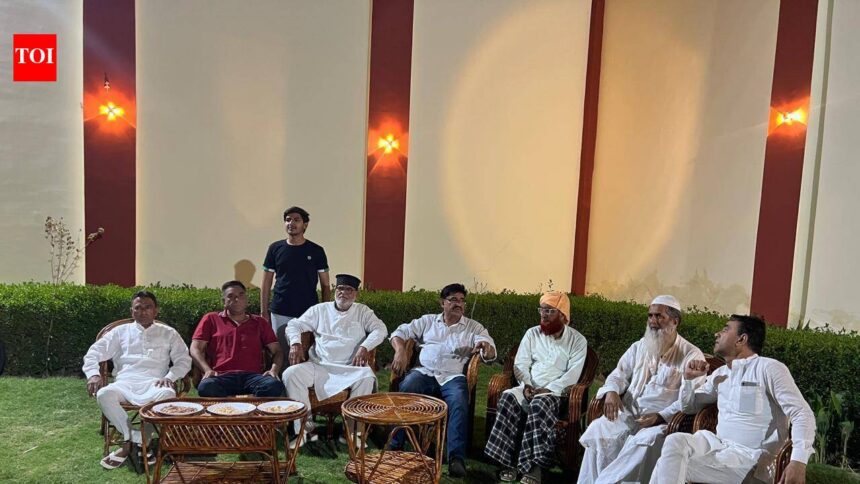

The Rajasthan Waqf Board is raising alarms over a series of recent mosque demolitions in the state, primarily attributed to allegations of security concerns by government authorities. Chairman Khanu Khan Budhwali is urging mosque committees to bolster their legal preparedness and documentation as a defense against what he describes as discriminatory actions against Muslim religious sites under the current BJP-led government.
Recent Events Prompting Alarm
In a meeting held on Sunday, Chairman Khanu Khan Budhwali called for immediate action from mosque committees throughout Rajasthan. He emphasized the need to incorporate advocates into their management and to rigorously verify property documents. His concerns arise in the wake of recent demolitions reported in Jaipur, Barmer, and Jaisalmer. Budhwali accused local authorities of ignoring legitimate documentation while issuing demolition notices, citing that these actions seem targeted specifically against mosques and madrassas in border districts.
Claims of Targeted Discriminatory Practices
Budhwali pointed out that the demolitions of several mosques over the past month suggest a systematic bias from the Bhajan Lal Sharma government. He alleged that demolition orders are primarily rooted in national security rhetoric, affecting religious sites disproportionately. Reports indicate that notices were served to 11 mosques and associated properties, which Budhwali has categorized as illegal actions stripped of lawful backing. The timelines set for responding to these notices have also left little room for communities to seek legal recourse, further compounding the issue.
Recommendations for Mosque Management
In light of these ongoing challenges, Budhwali has called upon mosque committees to fortify their defenses through documentation and physical security measures. He has recommended the installation of CCTV cameras to monitor official visits, ensuring transparency in any dealings with government entities. Additionally, Budhwali urged the establishment of dedicated communication channels, such as letterboxes, to keep meticulous records of all official correspondence. He believes that enhanced vigilance and legal readiness can significantly mitigate the risks posed to Waqf properties.
Why It Matters
The situation in Rajasthan is emblematic of broader trends impacting religious minorities in India, particularly Muslims. Increasingly, such demolitions are not merely localized events but indicative of systemic discrimination against Muslim communities. This has implications for social cohesion, community trust in legal systems, and the safety of religious expressions across the country. The installation of legal frameworks and surveillance mechanisms is no longer just a matter of precaution; it underscores the need for minority communities to safeguard their cultural and historical sites amid rising political tensions.
Frequently Asked Questions
What are the recent actions taken by the Rajasthan Waqf Board?
The Rajasthan Waqf Board, led by Khanu Khan Budhwali, has urged mosque committees to improve their legal readiness and documentation in response to the demolition of mosques in several districts, citing governmental discrimination against Muslim properties.
Why have these demolitions been characterized as discriminatory?
Budhwali alleges that the demolitions occurring under the guise of national security appear to specifically target mosques and madrassas, suggesting a systemic bias by the ruling BJP government against Muslim communities.
What measures are being recommended for mosque committees?
Mosque committees are advised to induct legal experts into their management bodies, verify all property documentation, install CCTV for accountability, and maintain dedicated communication channels for all official correspondence.
What implications do these events hold for the Muslim community in India?
The demolitions and the subsequent legal challenges highlight the precarious position of Muslim communities in India, especially regarding their religious sites. This situation signifies a growing trend of marginalization which poses risks to social cohesion and cultural heritage.