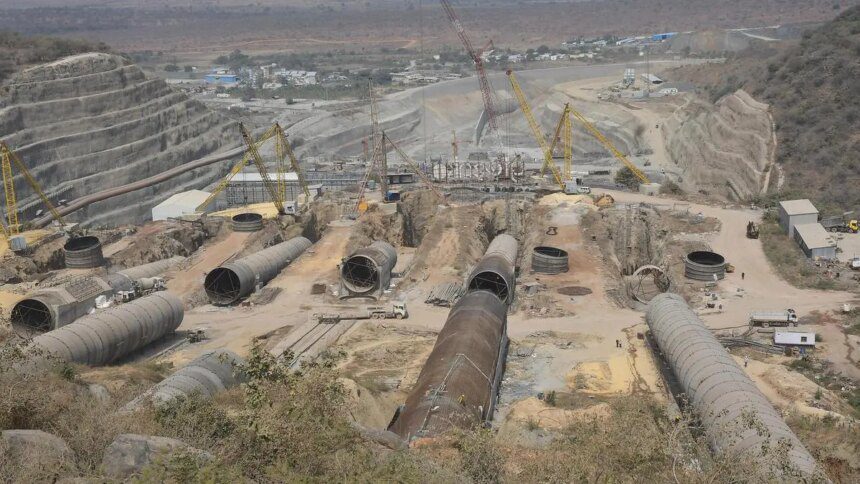

GE Vernova has announced a significant order from Megha Engineering and Infrastructures Ltd (MEIL) to supply nine reversible Francis turbines for the Upper Sileru pumped hydro storage project (PSP). These turbines play a dual role in PSPs, functioning both as motors for pumping water and as turbines for generating electricity. This latest order follows a smaller agreement GE secured for the 125 MW Kundah project.
The acquisition underscores India’s reliance on foreign suppliers for this critical technology, as major competitors in this field include Austria’s Andritz Hydro and Germany’s Voith Hydro. Andritz has previously supplied equipment for projects such as Tata Power’s Bhivpuri and Torrent Power’s Saidongar-Karjat, while Voith Hydro has been contracted for the Upper Indravathi project in Odisha.
Currently, Bharat Heavy Electricals Limited (BHEL) is the sole Indian company claiming to possess the relevant technology, though it has yet to announce any order wins. Currently, India operates around 5 GW of pumped storage plants, with an additional 13 GW under construction and 9.5 GW approved for development. The Central Electricity Authority’s ‘Long-term national resource adequacy plan for 2026-27 to 2035-36’ indicates a requirement for the construction of 94 GW of additional pumped hydro storage facilities.
In related developments, The Energy and Resources Institute (TERI) has projected that India could harness nearly 2,129 GW of agri-photovoltaic (agriPV) potential. AgriPV systems involve the simultaneous use of land for agriculture and solar power generation, allowing both farmers and energy producers to benefit from existing farmland.
Utilizing a GIS-based approach, the TERI study assessed cropland suitability across India, applying various criteria such as solar radiation, land slope, soil quality, flood risk, ecological limits, and crop compatibility. The assessment identified 47.35 million hectares of restricted cropland, with 2.835 million hectares deemed highly suitable for agriPV alongside specific crops. Horticultural crops, including fruits, vegetables, spices, and medicinal plants, were identified as the most compatible for these dual-use systems.
Estimations based on a power density of 0.42–0.75 MW per hectare suggest that India’s agriPV potential stands between 1,192 and 2,129 GW, positioning it among the largest globally. Half of this potential is concentrated in several states, including Maharashtra, Rajasthan, Andhra Pradesh, Madhya Pradesh, Karnataka, and Uttar Pradesh.
According to TERI, the implementation of agriPV offers a sustainable, climate-resilient strategy for meeting increasing energy demands without displacing agricultural activities. The findings intend to facilitate the transition from pilot projects to a more coordinated national strategy, integrating food and energy production effectively.