
Platinum demand for vehicle production in India rose by 1 percent in the first quarter of 2026 compared to the same period last year, as noted in the World Platinum Investment Council (WPIC) report for Q1 2026. Conversely, demand for platinum jewellery fabrication saw a significant decline, dropping by 15 percent, marking the lowest level in ten quarters.
The Indian vehicle production landscape is predominantly skewed towards pickups and SUVs, which require higher quantities of platinum group metals (PGM) to satisfy stringent emissions standards. Projections for the overall year suggest a growth of 2 percent in platinum demand, influenced by the revised Goods and Services Tax (GST 2.0) framework. This policy lowers the tax on eligible light-duty vehicles from 28 percent to 18 percent, thereby stimulating production of both pure internal combustion engine (ICE) and hybrid vehicles.
However, the report does not account for the recent import duty hike to 15.4 percent, implemented last week. This doubling is anticipated to elevate the costs associated with emission-control systems for cleaner internal combustion vehicles, particularly impacting diesel SUVs and strong hybrid cars that utilize greater amounts of platinum in their catalytic converters. Despite these challenges, the report remains optimistic about India as a key market for platinum, forecasting resilience and growth in both the automotive and jewellery sectors.
Jewellery fabrication demand fell by 15 percent year-on-year to 45,000 ounces, the lowest level since Q3 2023. Factors contributing to this decline include weak export performance, depreciation of the Indian rupee, market corrections, and disruptions tied to the Iran conflict that have led to increased insurance premiums.
Despite this 15 percent drop in Q1, the WPIC projects a 5 percent increase in jewellery fabrication demand for the year. This growth is expected to be fueled by expansions from corporate retailers and rising consumer interest. Additionally, the widening price gap between gold and platinum may lead retailers to bolster their platinum inventories, particularly in lightweight designs, diamond-studded jewellery, and bi-metal pieces.
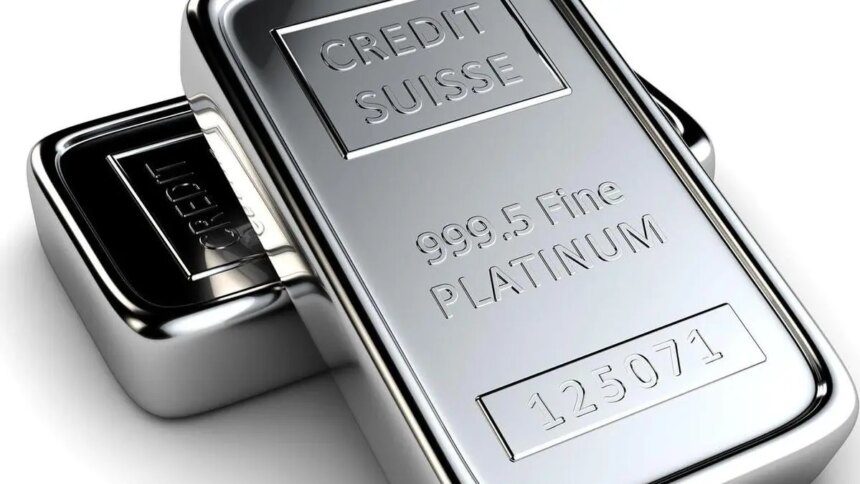
There is also cautious optimism regarding retail dealers’ ability to sell platinum bars and coins due to manufacturers establishing dedicated facilities. The report anticipates that investors will consider platinum coins for diversification within their portfolios, particularly in light of volatile equity markets and geopolitical tensions. Some local jewellers reportedly liquidated unsold gold and silver inventory in late 2025 and early 2026 to shift their product focus toward platinum investment options.
Globally, the WPIC anticipates a platinum market deficit of 297,000 ounces in 2026, marking the fourth consecutive year of deficit due to supply shortages. Interestingly, a surplus production of 268,000 ounces was noted in Q1, contrasting with a deficit of 658,000 ounces in the same period last year. This surplus is attributed to investment outflows and robust mine supplies, which rose by 22 percent to 1,320,000 ounces. Recycling of platinum also increased by 9 percent in Q1, totaling 1,826,000 ounces.
Forecasts indicate that total global platinum demand will decline by 9 percent year-on-year to 7,674,000 ounces in 2026. Investment demand is expected to drop by 54 percent due to high prices leading to profit-taking, while industrial demand has rebounded by 83 percent, spurred by heightened glass demand related to new fibreglass capacities supporting AI infrastructure and printed circuit board production. Automotive demand is projected to decrease by 2 percent, with jewellery demand down by 12 percent this year, especially in China, where demand plummeted by 42 percent in Q1.
Published on May 18, 2026.