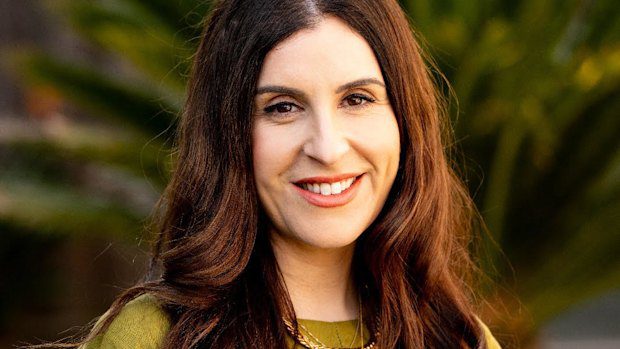
The Adelaide Festival has dropped Palestinian-Australian writer Dr Randa Abdel-Fattah from the Adelaide Writers’ Week programme, citing concerns over “cultural sensitivity” following last month’s Bondi shootings, a decision that has sparked widespread outrage, with critics calling it “an example of anti-Palestinian racism” and censorship.
In a statement, the Adelaide Festival Board said it had informed Dr Abdel-Fattah that it would not proceed with her scheduled appearance at next month’s event.
“As the Board responsible for the Adelaide Festival organisation and all Adelaide Writers’ Week events, staff, volunteers and participants, we have today advised scheduled writer Dr Randa Abdel-Fattah that the Board has formed the judgment that we do not wish to proceed with her scheduled appearance at next month’s Writers’ Week,” the statement said.
The Board noted that while it did not suggest that Dr Abdel-Fattah or her writings had any connection to the Bondi tragedy, “given her past statements we have formed the view that it would not be culturally sensitive to continue to programme her at this unprecedented time so soon after Bondi.”
Abdel-Fattah had been scheduled to speak about her new book, Discipline.
Responding to her removal, the Sydney-based Macquarie University academic issued a strongly worded statement, calling the decision “a blatant and shameless act of anti-Palestinian racism and censorship”.
“This is a despicable attempt to associate me with the Bondi massacre,” she said, adding that the Festival Board had “stripped me of my humanity and agency” and reduced her to “an object onto which others can project their racist fears and smears”.
She said the Board’s reasoning suggested that her “mere presence” was being deemed “culturally insensitive”. “I, a Palestinian who had nothing to do with the Bondi atrocity, am somehow being treated as a trigger for those in mourning, as if my very presence is threatening and ‘unsafe’,” she said.
Referring to Israel’s war on Gaza, Abdel-Fattah said that after “two years of Israel’s live-streamed genocide of Palestinians”, Australian arts and cultural institutions continued to show “utter contempt and inhumanity” towards Palestinians. “The only Palestinians they will tolerate are silent and invisible ones,” she said.
She said she remained confident that the writing community and the wider public would respond “with principle and integrity”, as they had when she was previously targeted in a similar manner during the Bendigo Writers Festival controversy.
“In the end,” she said, “the Adelaide Writers’ Festival will be left with panellists who demonise a Palestinian out of one side of their mouths while waxing lyrical about freedom of speech from the other.”
The Jewish Council of Australia has condemned the Adelaide Festival’s decision to remove Dr Randa Abdel-Fattah from the Adelaide Writers’ Week programme, calling it “cynical and deplorable” and “deeply concerning”.
In a statement, the organisation said the move “exemplifies anti-Palestinian racism and the scapegoating of Palestinians in the supposed name of Jewish safety”.
Meanwhile, The Australia Institute, announced that it is withdrawing its support and sponsored events from this year’s Adelaide Writers’ Week following the decision of the board overseeing the Adelaide Festival and the literary event.
In a statement, the think tank said it had long valued being part of the festival, which it said had historically promoted “bravery, freedom of expression and the exchange of ideas”.
“Censoring or cancelling authors is not in the spirit of an open and free exchange of ideas,” the statement said, explaining its decision to pull out of the event.
In a growing backlash against the decision, a large number of prominent writers and public intellectuals have announced their withdrawal from the Adelaide Writers’ Week in solidarity with Dr Randa Abdel-Fattah.
Those who have pulled out include Barbara PocockProfessor Percival Everett, Distinguished Professor M. Gessen, Professor Yanis Varoufakis, Professor Zadie Smith, Professor Kenneth Roth, Professor Clare Wright, Professor Chelsea Watego, Professor Peter Greste, Dr Micaela Sahhar, Dr Evelyn Araluen, Dr Melissa Lucashenko, Dr Amy McQuire, Dr Bernadette Brennan, Dr Emma Shortis, Dr Peter FitzSimons, Michelle de Kretser, Helen Garner, Chloe Hooper, Sarah Krasnostein, Hannah Ferguson, Amy Remeikis, Tasma Walton, Hannah Kent, Kate Mildenhall and Maxine Beneba Clarke, among many others.
Writer Jane Caro has also announced that she is withdrawing from this year’s Adelaide Writers’ Festival in protest against the removal of Dr Randa Abdel-Fattah.
In a statement, Caro said she had accepted the invitation “with real excitement,” but opposed the “censoring of any writer who deals with complex and controversial issues forthrightly” and described the Adelaide Festival Board’s decision as “an attack on the very things that make writers’ festivals the amazing events they are”.
“I would like to send my support to Dr Randa Abdel-Fattah,” she said, while also expressing sympathy for the festival’s director, Dr Louise Adler, and the staff who had worked on the event. “It must be devastating to watch all that hard work and enthusiasm crumble,” she said.
Warning that “authoritarianism is rising all around us”, Caro said it “thrives on controlling, squashing and censoring ideas it does not like”.
South Australian politician Tammy Franks MLC has criticised the Adelaide Festival’s decision to remove Dr Randa Abdel-Fattah from the Adelaide Writers’ Week programme, warning that it has “disturbing implications” for artistic freedom and democracy.
In a statement, Franks said she had long supported and attended Writers’ Week and even volunteered for the event in the past, but said the Board’s decision had deeply troubled her. “I fear the disturbing implications this decision has for artistic freedom, anti-racism, and public accountability in South Australia’s cultural institutions,” she said.
“Our democracy is fragile, and the arts play a role politicians cannot. When artists are excluded or censored, it bodes ill for the health of our democracy,” she added.
Franks said the Festival Board’s justification was “deeply confounding and concerning”, noting that while it had publicly acknowledged that Dr Abdel-Fattah and her work had no connection to the Bondi tragedy, she was still removed because of her “past statements” and a claimed need for “cultural sensitivity”.
“This sets a dangerous precedent. It suggests that in moments of political or social tension, voices critical of power are feared and demonised rather than debated. That is not building community cohesion, it is enforcing censorship,” she said.
Stressing that the Adelaide Festival is publicly funded, Franks said it had a responsibility to uphold free expression, equity, and artistic independence.
She said she supported the writers who have announced a boycott of the festival in solidarity with Abdel-Fattah and said she would join them.
Journalist Caitlin Johnstone has also criticised the decision, saying the rationale behind it amounts to treating her very identity as “culturally insensitive”.
“The whole argument for cancelling Randa Abdel-Fattah appears to be that her existence as a Palestinian is culturally insensitive to Australian Jews,” Johnstone said, noting,“She is Palestinian and believes Palestinians are human beings, so platforming her is being described as something that ‘would not be culturally sensitive’.”
The post Outrage after Adelaide Festival drops Palestinian-Australian author Randa Abdel-Fattah appeared first on Maktoob media.