Breaking India News Today | In-Depth Reports & Analysis – IndiaNewsWeekBreaking India News Today | In-Depth Reports & Analysis – IndiaNewsWeek
  • Home
  • Nation
  • Politics
  • Economy
  • Sports
  • Entertainment
  • International
  • Technology
  • Auto News
Reading: Critical Crisis Strikes: The Biggest Threat to the International Space Station
Share
Breaking India News Today | In-Depth Reports & Analysis – IndiaNewsWeekBreaking India News Today | In-Depth Reports & Analysis – IndiaNewsWeek
  • Home
  • Nation
  • Politics
  • Economy
  • Sports
  • Entertainment
  • International
  • Technology
  • Auto News
© 2024 All Rights Reserved | Powered by India News Week
Trending Now: Stay updated with the latest breaking news from India and around the world
This Is the Worst Thing That Could Happen to the International Space Station
Breaking India News Today | In-Depth Reports & Analysis – IndiaNewsWeek > Technology > Critical Crisis Strikes: The Biggest Threat to the International Space Station
Technology

Critical Crisis Strikes: The Biggest Threat to the International Space Station

Technology Desk By Technology Desk February 25, 2026 5 Min Read
Share
SHARE

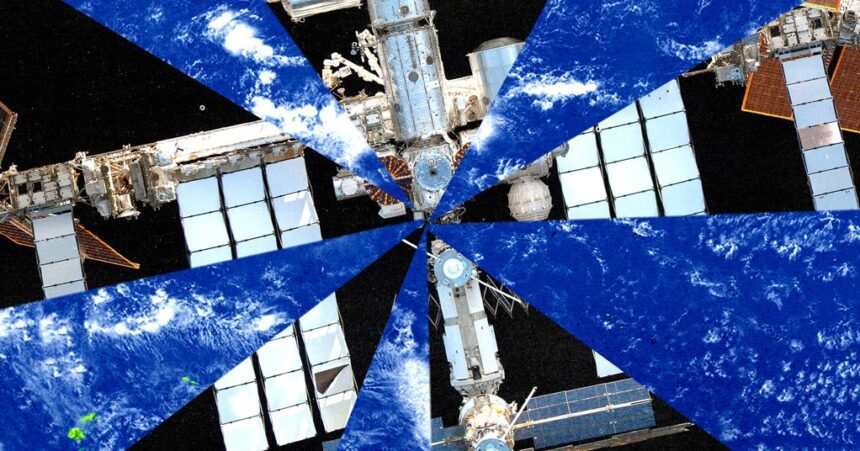
But in the worst worst-case scenario, we don’t have any control. Instead, the station will crack through the atmosphere. Sure, many pieces will likely end up in the ocean, but some might hit people, possibly in a town or a city. The station could break apart across thousands of miles and multiple continents. This would be exceedingly hard to anticipate. As NASA puts it, “Calculating the probability of this penetration cascading into loss of deorbit capability has a very large range of variables, making predictions ineffective.”

This almost certainly won’t happen to the ISS. At the same time, it’s a far more extreme version of the only way an American space station has ever come down. In 1979, after years spent vacant in orbit, Skylab, the US’s first space station, started sinking toward the atmosphere, where it threatened to fall and drop molten spacecraft parts on Earth. At that point, NASA officials had to remotely wake up its computers and, with only limited control of the station, direct it over a location that would endanger the fewest humans.

In the months before, space agency officials were in frequent contact with the State Department, which disseminated the latest predicted trajectories to embassies across the world. In these situations, oops doesn’t cut it: When one of the Salyuts, a Soviet space station model, was deorbited a few decades ago, flaming bits were littered across Argentina, scaring people and requiring the deployment of at least a few firefighters, according to local newspaper reports.

The ISS is far bigger than either the Salyuts or Skylab. In an uncontrolled deorbit, pieces of debris “up to car and train size,” say experts on the official ISS space station advisory committee, will rain down from the sky. NASA confirms this would pose “a significant risk to the public worldwide.”

over. Thus concludes my anxiety-ridden spiral. Here are the facts as they stand in 2026:

As far as WIRED can tell, no one has ever died because a piece of space station hit them. Some pieces of Skylab did fall on a remote part of Western Australia, and Jimmy Carter formally apologized, but no one was hurt. The odds of a piece hitting a populated area are low. Most of the world is ocean, and most land is uninhabited. In 2024, a piece of space trash that was ejected from the ISS survived atmospheric burn-up, fell through the sky, and crashed through the roof of a home belonging to a very real, and rightfully perturbed, Florida man. He tweeted about it and then sued NASA, but he wasn’t injured.

For this story, WIRED reviewed dozens of NASA documents, including backup plans and contingencies for emergencies, and spoke to more than a dozen people, including three astronauts who’ve visited the ISS, and no one seemed that freaked out. One astronaut said the most worrisome scenario that actively crossed his mind in orbit was getting a toothache. The ISS has had some emergencies, including a first-ever medical evacuation in January, but generally things have been remarkably stable. In fact, one of the most impressive things about the ISS is that nothing very dramatic has ever happened to it. No experiment has gone too haywire. It hasn’t been hit by an asteroid.


TAGGED:EducationTechnology
Share This Article
Twitter Copy Link
Previous Article Rinku Singh set to return to India squad ahead of Zimbabwe clash Rinku Singh Poised for Comeback in India’s Upcoming Clash Against Zimbabwe
Next Article IND vs ZIM pitch report: How will surface at MA Chidambaram Stadium in Chennai play in T20 WC? Chennai’s MA Chidambaram Stadium: T20 World Cup Pitch Analysis and Insights
Leave a comment Leave a comment

Leave a Reply Cancel reply

Your email address will not be published. Required fields are marked *

Latest News

WABA to Discuss Duplex Regulations at Goddard City Council Meeting

June 15, 2026

Shashi Tharoor Discusses AI’s Role in Addressing Muslim Exclusion in Society

June 15, 2026

Rubika Takes Over News ki Pathshala as Sushant Sinha Steps Down

June 15, 2026

Aroldis Chapman Demands Apology from Yankees GM Amid Controversy

June 15, 2026

AIMIM Secures Release of Bengali Muslim Women and Children in Maharashtra

June 15, 2026

Three-Year-Old Girl Dies After Assault in Tiruvallur; Migrant Worker Arrested

June 15, 2026

You Might Also Like

Five key networking trends that will define 2025
Technology

2025’s Networking Landscape: Five Transformative Trends to Watch

5 Min Read
TikTok Is Already Back Online
Technology

TikTok Resumes Service After Brief Interruption: What You Need to Know

5 Min Read
How to Use Signal Encrypted Messaging
Technology

Mastering Secure Communication with Signal Encrypted Messaging

5 Min Read
Roku Tests Showing Ads Before the Home Screen Loads
Technology

Roku Experiments with Ad Pre-Rolls Before Loading Home Screen

4 Min Read

About IndiaNewsWeek

IndiaNewsWeek is your trusted source for breaking news, in-depth analysis, and comprehensive coverage of India and the world. We deliver accurate, timely reporting across politics, economy, sports, entertainment, and technology.

contact@indianewsweek.com

Quick Links

  • Nation
  • Politics
  • Economy
  • International
  • Sports
  • Entertainment

More Sections

  • Technology
  • Auto News
  • Education
  • About Us
  • Contact
  • Privacy Policy

Stay Connected

Follow us on social media for the latest updates and breaking news.

Facebook
X (Twitter)
YouTube
Follow US
© 2026 IndiaNewsWeek. All Rights Reserved.
Welcome Back!

Sign in to your account

Lost your password?