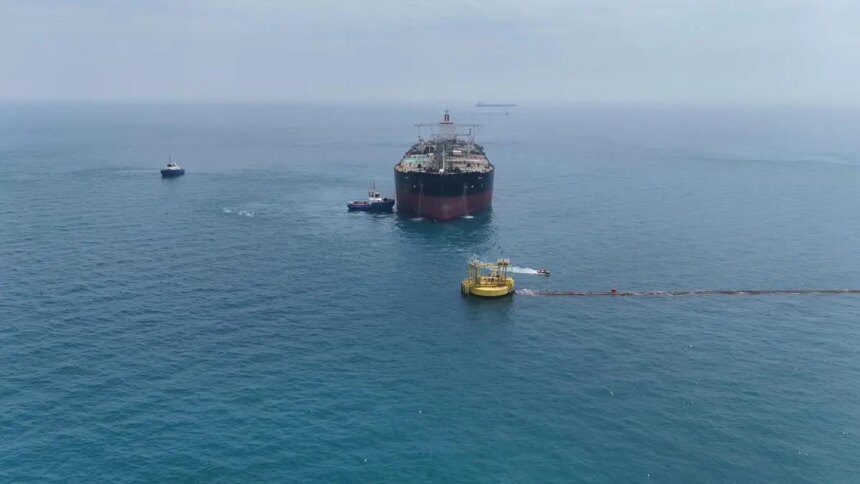

Oil prices increased significantly amid escalated tensions in the Strait of Hormuz, following an Iranian drone attack on a tanker and U.S. efforts to evacuate vessels stranded in this crucial maritime corridor. Brent crude surged over 5% to surpass $114 a barrel but later experienced volatility, with futures peaking after Iranian reports suggested two missiles struck an American patrol boat, a claim that U.S. Central Command subsequently refuted.
The situation intensified after President Donald Trump announced that the U.S. would guide ships through Hormuz, presenting it as a “humanitarian gesture.” In retaliation, Iran warned that U.S. forces would face attack if they entered the strait and indicated it has “redefined the control zone” for shipping, expanding its regulatory reach in the region.
The U.S. announcement coincided with rising tensions, as the Abu Dhabi National Oil Company reported that its tanker Barakah, which was not carrying cargo, was targeted by two Iranian drones off the Omani coast. Additionally, UK Maritime Trade Operations reported an assault on a bulk carrier by small boats.
U.S. Central Command confirmed that two American-flagged merchant vessels successfully navigated the strait and stated that military efforts are ongoing to restore commercial activities. Despite this, none of the five U.S.-flagged commercial vessels in the Persian Gulf had activated their Automatic Identification Signals for weeks by the end of February.
These risks emerge following weeks of deadlock and unsuccessful attempts at negotiating peace, with Iran maintaining strict control over Hormuz and the U.S. enforcing a blockade on Iranian ports to limit oil exports. The stalemate has prolonged significant supply disruptions in the oil market, with movement nearly halted and attacks on commercial vessels persisting.
“The market is clearly nervous that the events today further weaken the prospect of a reopening of the strait,” noted Jens Naervig Pedersen, a strategist at Danske Bank AS. Hormuz, a critical chokepoint for approximately 20% of global oil shipments, has seen prices surge and triggered fuel shortages worldwide, raising fears of inflation and slower economic growth, posing political challenges for Trump.
U.S. Central Command announced it would offer military support, including guided-missile destroyers and aircraft, to enhance safety for vessels transiting the strait. However, shipowners and managers expressed the need for more definitive details and reassurances regarding safety from Iranian attacks and potential mines.
“Not many believe that the Strait will reopen anytime soon,” remarked Arne Lohmann Rasmussen, chief analyst at A/S Global Risk Management Ltd., emphasizing that the U.S. initiative marks its first military effort to reopen this vital route. He added that market players would vigilantly observe Iran’s response.
Trump mentioned ongoing discussions with Tehran that could lead to positive outcomes but provided no further insights. Iran reacted coolly to the U.S. plan, asserting that any U.S. interference would breach the ceasefire, according to Ebrahim Azizi, head of the Iranian parliament’s National Security Commission. Iran’s newly defined control zone extends from south of Mount Mobarak to south of the UAE’s Fujairah, and from west of Qeshm Island to Umm al-Quwain in the UAE, as reported by the semi-official news agency Tasnim.
In related developments, OPEC+ agreed to a modest increase in June production quotas, aiming to convey a message of business continuity following the exit of the United Arab Emirates, with Abu Dhabi promoting its own growth initiatives.
Published on May 4, 2026.