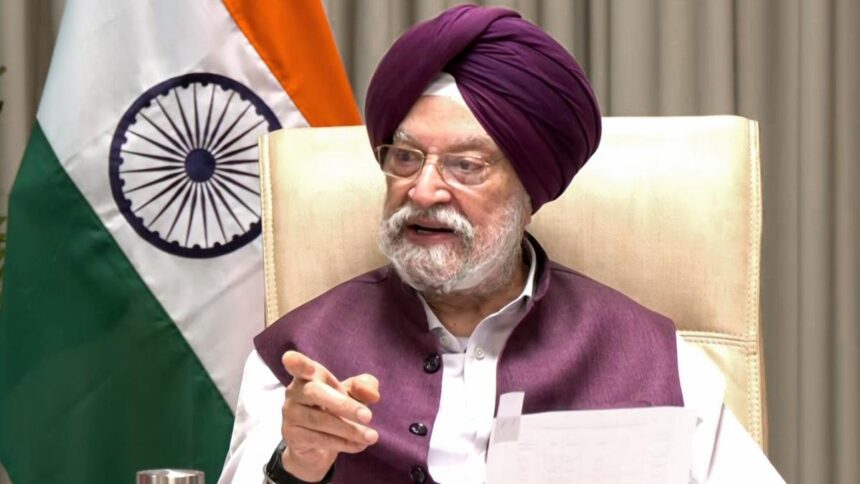

Union Minister for Petroleum and Natural Gas, Hardeep Singh Puri, confirmed that recent tests conducted on E20 fuel revealed minimal contamination, with only four cases found among over 107,000 retail outlets across India. As OMCs ramp up testing and focus on offshore exploration, Puri emphasized the need for proactive measures to ensure fuel quality and supply security amid global uncertainties.
Rigorous Testing for E20 Fuel Quality
In response to concerns about the contamination of E20 fuel, Puri detailed that the oil marketing companies (OMCs) have undertaken a substantial testing initiative beginning mid-July. Each day, they are collecting up to 2,000 samples from retail outlets. This effort aims to ensure that the new ethanol-blended fuel meets quality standards.
Addressing attendees at the CII’s International Energy Conference and Exhibition, the Minister noted that only four incidents of contamination had been detected thus far. Puri’s remarks came in light of a letter from the Society of Indian Automobile Manufacturers (SIAM) that raised alarms about potential issues in the fuel quality. He indicated that significant measures were already in place before the letter’s arrival, highlighting the commitment of OMCs to maintain strict quality control.
Challenges and Innovations in Oil Exploration
Puri also shed light on the National Offshore Exploration Scheme, commonly referred to as Samudra Manthan. The strategy aims to attract private investment into India’s exploration and production sectors. Currently, India operates two drilling rigs with plans to increase capacity, acknowledging that each rig incurs significant daily operational costs.
This move towards enhancing domestic oil production capabilities is vital for a country that remains heavily reliant on imports to meet its energy needs. The Minister pointed out that while exploration comes with high financial risks, it is essential for India’s long-term energy security, especially considering the rising global demand for oil and gas.
Supply Security Amid Geopolitical Tensions
The ongoing conflict in West Asia has raised global concerns over energy security, particularly through critical transit points like the Strait of Hormuz. Puri reassured that despite disruptions, India maintained a steady supply of crude oil and liquefied petroleum gas (LPG), diversifying its sources to ensure that not a single retail outlet ran out of fuel during this tumultuous period.
With an extensive network of over 107,000 retail outlets catering to approximately 70 million customers daily, India’s strategic approach has proven successful in mitigating supply risks. This capacity to react swiftly to external pressures underscores the importance of resilience in national energy policy.
What This Means
The proactive measures discussed by Minister Puri highlight the government’s commitment to safeguarding fuel quality and supply stability amid both domestic and international pressures. This will benefit Indian consumers by ensuring that any new fuels introduced, such as E20, are safe and reliable. Furthermore, enhancing domestic production capability through offshore exploration is crucial for reducing import dependency and enhancing energy security, especially as global energy markets become increasingly volatile.
Frequently Asked Questions
What is E20 fuel?
E20 fuel is a blend of 20% ethanol and 80% petrol, designed to reduce pollution and reliance on fossil fuels in India.
Why is fuel testing important?
Testing ensures that the fuel being sold is free from contaminants that could harm vehicles and impact consumer safety.
How many retail outlets does India have?
India has approximately 107,000 retail outlets serving around 70 million customers every day.
What steps is the government taking to ensure energy security?
The government is promoting domestic exploration initiatives, diversifying oil supply sources, and rigorously testing fuel quality to ensure uninterrupted supply.