
Recent events at Columbia University highlight escalating tensions surrounding pro-Palestine activism in the U.S., as law enforcement authorities employ advanced surveillance tactics against participants in this protest movement. This crackdown raises significant concerns about civil liberties, the role of state surveillance, and the dissent climate in universities.
The Vandalism Incident and Surveillance Response
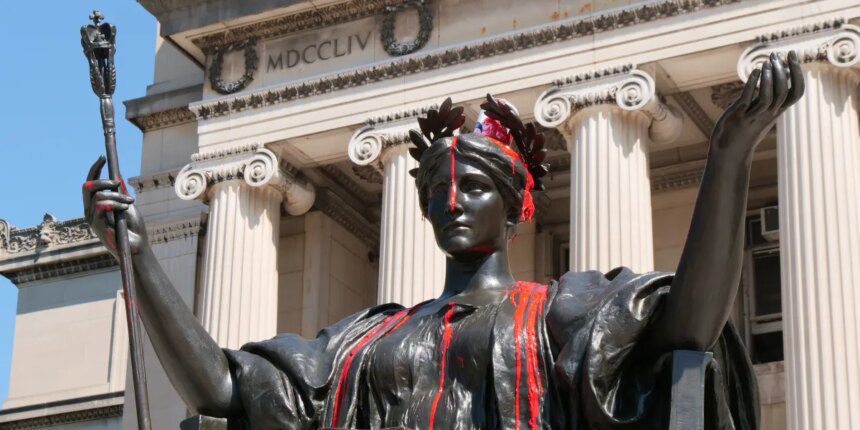
In September 2024, amid heightened pro-Palestine demonstrations at Columbia University, an activist vandalized the iconic Alma Mater statue by splattering it with red paint. This act quickly escalated into a major law enforcement operation. The NYPD utilized extensive surveillance methods, including facial recognition technology and a network of cameras, to identify Jakhi Isaiah, a New Jersey-based activist accused of the vandalism.
The growing reliance on surveillance technology to monitor and prosecute dissent has raised alarm within civil rights circles. Bina Ahmad, a civil rights attorney, remarked, “It deliberately sends a very chilling message that you better not dissent,” emphasizing the disproportionate resources allocated for such minor offenses. For many, this incident exemplifies a broader trend of state repression against political activism in the United States.
The Backdrop of Activism
The protests at Columbia and other campuses stemmed from outrage over Israel’s actions in Gaza, which many activists have characterized as genocide. Following the initial demonstrations, the university transitioned to virtual classes due to unrest, underscoring the potency of the student-led movement that continues to resonate across America.
In light of the violence in Gaza and the growing visibility of pro-Palestine activism, both student bodies and law enforcement officials are grappling with the implications of increased protest activity. The situation has created a national discourse on the limits of free speech and the consequences activists face amidst governmental scrutiny.
Heightened Federal Attention
In mid-2025, following Isaiah’s arrest during a separate anti-ICE protest, scrutiny shifted towards him as law enforcement began to link him to an arson incident involving NYPD vehicles. This renewed focus prompted a revived investigation into the vandalism case at Columbia. Internal documents reveal a coordination between state and federal agencies to target activists like Isaiah, indicating a troubling convergence of efforts to suppress dissent.
As Isaiah faces myriad charges related to both the vandalism and arson incidents, the implications for broader movements against state policies—particularly concerning Palestine—are significant. Isaiah articulates a fear that those connected to him through activism may also face repercussions, stating, “If they hadn’t found me, they probably would have kept going through that list.”
Why This Is Trending
Interest in this topic has surged among Indian audiences for several reasons. First, India’s growing engagement with global human rights issues, particularly in relation to Palestine, resonates with the youth and activist communities. Additionally, discussions surrounding police surveillance and the stifling of dissent are particularly relevant in the Indian context given recent protests against government actions, drawing parallels to the situation in the U.S. Educational institutions have historically been hubs of activism, and the repressive measures described resonate with many in India who advocate for various causes.
Frequently Asked Questions
What was the incident involving the Alma Mater statue at Columbia University?
The incident involved an activist, Jakhi Isaiah, splattering red paint on the Alma Mater statue as a symbolic protest against perceived injustices connected to the Gaza conflict. This act led to extensive law enforcement surveillance efforts to identify and charge the perpetrator.
What methods did the NYPD use to identify the suspect?
The NYPD utilized advanced surveillance tools, including facial recognition technology and various cameras positioned around the campus and city, to track Isaiah’s movements before and after the vandalism incident.
How has the activism landscape changed in the U.S. since 2024?
Since 2024, there has been a marked increase in pro-Palestine activism across U.S. campuses, often met with a backlash involving heightened surveillance and police actions against demonstrators. The situation has prompted discussions surrounding civil liberties and the extent of government oversight of activism.
What implications does this have for future activism?
The use of surveillance technology to monitor activists can have a chilling effect on political dissent, making individuals wary of participating in protests due to fears of legal repercussions. This situation calls into question the balance between security measures and the protection of free speech.