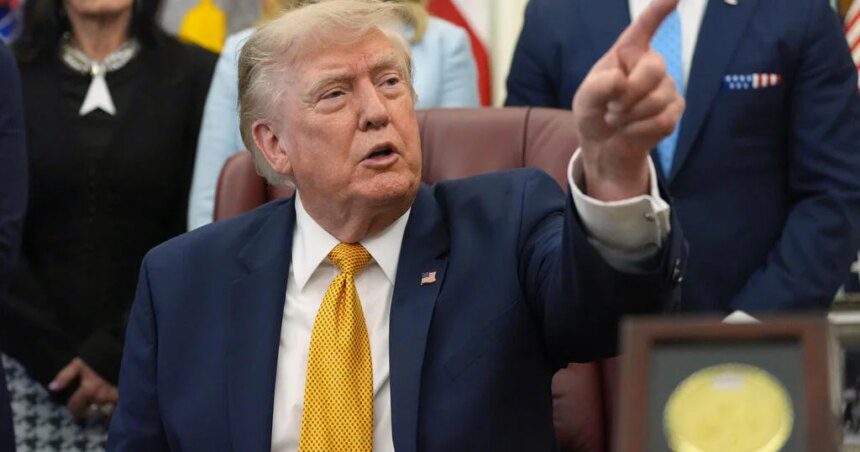

In recent developments, President Donald Trump labeled Iranian leadership as “unbelievably duplicitous” following their rejection of his claims about upcoming U.S.-Iran talks. This situation escalates amid ongoing tensions and raises questions about the diplomatic pathways available to both countries.
Trump’s Statement: Talks and Claims
On a Sunday evening, President Trump announced that he had called off significant military strikes against Iran at the behest of Gulf allies and in the interest of giving diplomacy a chance. He stated that U.S.-Iran negotiations would resume on Monday afternoon and suggested that a deal was close. “Nothing gets through to Iran, unless we want it to,” Trump asserted, emphasizing the need for a definitive resolution—either a substantial agreement or “total surrender.”
However, Iran swiftly refuted Trump’s assertions, declaring that no discussions were arranged between the two nations. Their leadership claimed to be engaged solely in talks with Oman concerning the Strait of Hormuz, a crucial shipping channel. The confusion highlights the complexities in U.S.-Iran relations, where differing narratives fuel mistrust.
Iran’s Stance: A Denial of Discussions
Iran’s firm denial of any scheduled talks with the U.S. underscores the nation’s strategic approach to diplomacy. In a nuanced response, Iranian officials emphasized their current negotiations with Oman, which are focused solely on regional security and the stability of the Strait of Hormuz. This reliance on Oman as an intermediary indicates Tehran’s priority on engaging neighboring countries rather than the U.S. directly.
Furthermore, Iranian officials have actively characterized the recent U.S. claims as distractions from America’s internal challenges, portraying the situation as a diplomatic tactic rather than a genuine desire to foster dialogue. This perspective serves to bolster national pride and reinforce the existing political narrative against U.S. influence in the region.
The Broader Implications of This Diplomatic Standoff
The dialogue—or lack thereof—between the U.S. and Iran has significant ramifications not just for the two nations but for global geopolitics. The tensions have implications for oil prices and regional stability, which affect countries, including India, that are reliant on oil imports. Iran’s strategic location near critical maritime routes heightens the stakes in the current standoff.
As the narrative continues to evolve, the potential for conflict or cooperation will also directly impact the Asian geopolitics landscape. The ceasefire in military actions from the U.S. and Iran’s diplomatic overtures could lead to an opening for dialogue. However, skepticism remains high on both sides, fueling further uncertainty. For nations observing the developments closely, particularly India, the unfolding drama could yield crucial lessons about the complexities of international diplomacy.
Why This Is Trending
This topic is attracting considerable attention in India and globally due to the potential ramifications of U.S.-Iran relations on the region’s security and oil markets. Given India’s dependence on oil imports from the Gulf, fluctuations in diplomatic relations can lead to direct economic impacts. Additionally, the Indian audience is keen on understanding how global power dynamics shape regional politics, especially as nations navigate their interests in this evolving landscape.
Frequently Asked Questions
What did President Trump say about Iran’s leadership?
President Trump criticized the Iranian leadership as “unbelievably duplicitous,” accusing them of misleading claims regarding their willingness to engage in talks with the U.S.
Why did Trump call off military strikes against Iran?
Trump stated that he cancelled extensive military actions against Iran because of pleas from Gulf allies and the desire to pursue diplomatic avenues instead.
What was Iran’s official response to the claims of negotiations with the U.S.?
Iran denied that any talks were planned with the U.S. and maintained that they were only in discussions with Oman concerning the Strait of Hormuz.
What are the implications of U.S.-Iran relations for India?
The relationship influences global oil prices and regional stability, which are particularly significant for India, given its dependence on oil imports from the Gulf region.