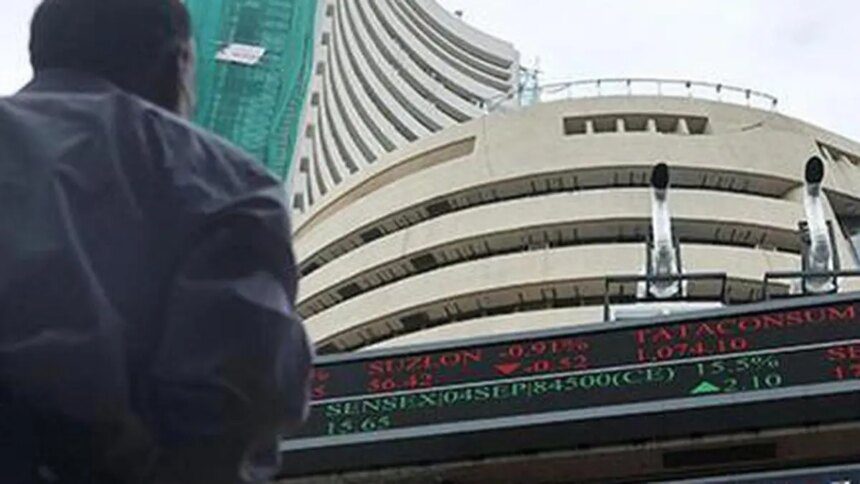

Indian stock markets faced significant turbulence on August 27, 2026, with benchmark indices experiencing a steep decline. The Sensex plummeted nearly 2,500 points in a highly volatile closing session, resulting in a loss of over 3% and marking the weakest close in six sessions.
Market Performance and Key Drivers
On Thursday, markets turned lower for the second consecutive day, following a pattern of broad-based selling, particularly in sectors like PSU banks, metals, and financial stocks. The Sensex closed at 76,933.59, down 0.70%, while the Nifty 50 settled at 24,090.85, off 116 points or 0.48%. This downturn was accentuated during the Closing Auction Session (CAS), which accounted for a drastic 2,500-point dip in the Sensex within minutes, reflecting a chaotic trading environment on the monthly F&O expiry day.
In contrast, the Bankex experienced extreme fluctuations, with the 65,000 Put option skyrocketing from ₹6 to ₹1,000 in mere minutes. Such volatility has left traders bewildered, hinting at heightened uncertainty in the market.
Sector-specific Movements and Investor Reactions
The session highlighted a stark divide between market sentiment and actual performance. Despite positive global cues—such as Nvidia’s unexpected revenue surge and favorable movement in Asian markets—Indian markets failed to capitalize. HDFC Bank emerged as a significant detractor amid concerns over a class-action lawsuit in the US, while widespread selling pressures hit stocks like Hindalco and Reliance.
Conversely, Adani Enterprises and Kotak Mahindra Bank bucked the trend, emerging as notable gainers. Between sectors, pharma and consumer durables showed resilience, while providing defensive plays against sell-offs in industries like cement and media.
The broader market didn’t perform as poorly as the indices suggested. The Nifty Midcap 100 and Nifty Smallcap 100 ended just marginally lower, indicating some underlying strength. However, the overall market breadth remained negative, with 313 of the Nifty 500 stocks closing lower, illustrating widespread caution among investors.
Macroeconomic Factors and Future Outlook
Rupee performance also reflected market sentiment, closing 13 paise weaker at 95.54 against the US dollar, influenced by month-end dollar demand and evolving market dynamics. Additionally, commodities experienced mixed reactions; gold retreated from recent highs, while Brent crude found minor recovery despite ongoing geopolitical considerations affecting supply.
As foreign investors returned and positive monsoon outcomes persisted, the overall economic outlook remained cautiously optimistic. However, elevated crude prices and geopolitical issues signal a choppy market ahead. Investors are now looking for indications from U.S. Federal Reserve Chair Kevin Warsh at the upcoming Jackson Hole symposium for cues on monetary policy, which could have significant implications for global market sentiments and domestic capital flows.
What This Means
The current market turbulence underscores a broader trend of volatility, posing challenges for investors. The extreme fluctuations in closing auction sessions not only reveal underlying market uncertainties but also highlight a need for investors to adopt a more cautious, sector-specific approach amid mixed global cues. Though certain sectors may demonstrate resilience, a concerted focus on broader economic indicators and market conditions will be crucial for navigating this environment.
Frequently Asked Questions
What caused the recent drop in the Sensex?
The Sensex dropped significantly due to broad-based selling in sectors such as PSU banks and financials, combined with a chaotic closing auction session that saw extreme volatility on F&O expiry day.
How have global markets reacted to similar conditions?
Despite some positive developments in global markets, Indian markets have not mirrored these trends, primarily due to sector-specific issues and investor concerns domestically.
What can investors expect in the near term?
Investors are advised to focus on sector-specific movements and economic indicators. The upcoming U.S. Federal Reserve announcement may influence market conditions, while July IIP data could affect industrial sentiment locally.
How are macroeconomic factors influencing the market?
Macroeconomic factors like elevated crude prices, shaky geopolitical conditions, and currency fluctuations impact investor sentiment and contribute to overall market volatility.