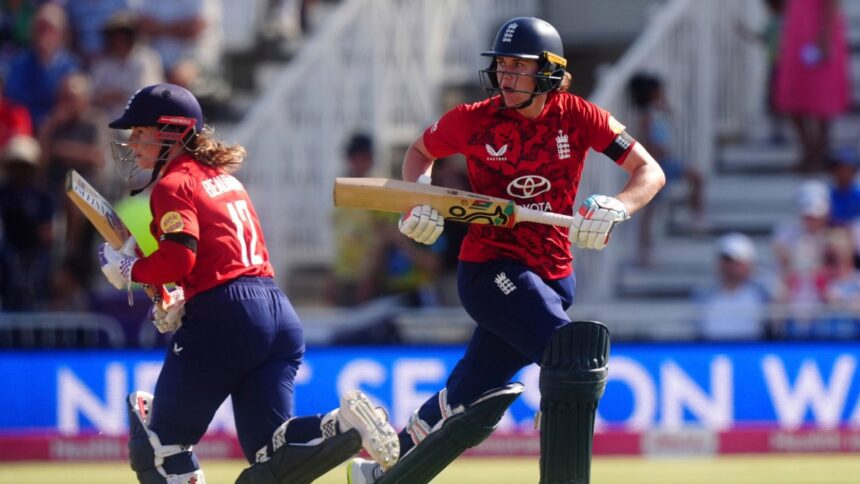

In a significant moment for women’s cricket, Nat Sciver-Brunt, captain of the England women’s cricket team, is set to play purely as a batter in the first matches of the 2026 Women’s T20 World Cup due to an ongoing calf injury. Her participation comes as England prepares to face Sri Lanka in their opening match on June 12, signaling her first ICC tournament as captain and a critical phase for her team.
Injury Impact on England’s Line-Up
Nat Sciver-Brunt, who led her team through the T20 World Cup, is returning from a lengthy absence from international cricket, having missed crucial series against India earlier in the year due to her injury. This precautionary measure to avoid aggravating her calf injury means that Sciver-Brunt will focus solely on batting in the initial phase of the tournament. As a pivotal player for England, her performance will be closely watched as they aim to reclaim their standing in women’s cricket.
Sri Lanka’s Strategic Decision at Toss
In another development, Sri Lanka won the toss and opted to field first, a decision made by captain Chamari Athapaththu based on uncertain weather conditions and a confidence in her bowling unit. Introducing young players like Malki Madara and Mithali Ayodhya into the mix marks a strategy geared towards long-term team development. Athapaththu’s emphasis on youth signifies Sri Lanka’s commitment to nurturing talent for future competitions, crucial for a team looking to enhance its competitive soul.
England’s Tactical Adjustments and Team Composition
England’s decision to field three spinners—Charlotte Dean, Sophie Ecclestone, and Linsey Smith—demonstrates their strategic thinking tailored to the pitch conditions expected in Birmingham. Additionally, the promotion of Amy Jones to open alongside Danni Wyatt-Hodge reflects England’s tactical flexibility, especially with Alice Capsey taking a central role following Sophia Dunkley’s omission. This lineup showcases both established skills and emerging talent, highlighting England’s comprehensive approach as they navigate the tournament.
What This Means
For Indian cricket fans, Sciver-Brunt’s limited bowling capacity may offer a slight edge, as England’s batting strength is temporarily hampered. Additionally, the emergence of young Sri Lankan talents could pose an unpredictable risk in their matches, including potential encounters against India later in the tournament. As India looks to solidify its cricketing pedigree, observing these strategic maneuvers by key teams like England and Sri Lanka will be insightful for understanding the evolving landscape of women’s cricket.
Frequently Asked Questions
Why is Nat Sciver-Brunt only batting and not bowling?
Nat Sciver-Brunt is not bowling initially due to a calf injury sustained in April 2026, which required her to focus solely on batting to prevent further injury.
What impact does Sciver-Brunt’s injury have on England’s team performance?
Sciver-Brunt’s injury means that England will miss out on her all-round capabilities in the early matches, potentially affecting their middle-order batting and bowling strategies.
Who is the captain of Sri Lanka’s women’s cricket team?
Chamari Athapaththu is the captain of the Sri Lanka women’s cricket team, leading them in the Women’s T20 World Cup.
What was the strategic decision made by Sri Lanka when they won the toss?
Sri Lanka opted to bowl first after winning the toss, a decision influenced by the pitch conditions and recent rain, aimed at taking advantage of the bowling conditions.