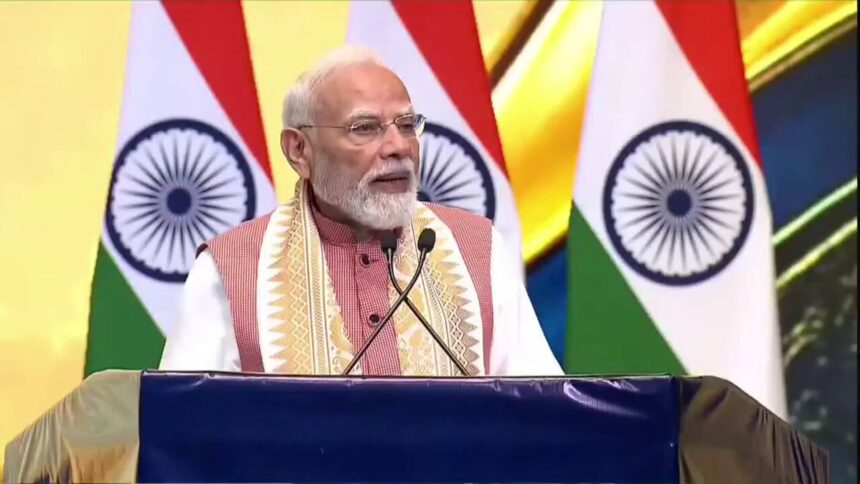

In a recent tweet, political commentator Mohammed Zubair highlighted what he perceives as a curious numerical connection between important dates related to Indian Prime Minister Narendra Modi and Indonesian President Prabowo Subianto. Zubair pointed out that both leaders have birthdays or significant dates that numerically reduce to the same value—eight—sparking a discussion on patterns and coincidences in political narratives.
Understanding the Dates
Prime Minister Narendra Modi was born on September 17, which, when broken down (1+7), sums to 8. Similarly, Zubair noted that Indonesia celebrated its Republic Day on January 26, 2022. This date also reduces to 8, as 2+6 equals 8. Through this lens, Zubair connected these seemingly random numerical coincidences, juxtaposing Modi’s date with that of Prabowo Subianto, who shares the day of September 17 as his birthday.
This numerical analysis could be interpreted in various ways. For some, it may simply illustrate an interesting math pattern, while others might view it as a means of reinforcing the ties between India and Indonesia, particularly under Subianto’s leadership. Such observations can ignite conversations about political symbolism and how cultural contexts contribute to leaders’ public personas.
Political Context of the Observations
The commentary by Zubair comes against a backdrop of growing diplomatic relations between India and Indonesia. Both countries have been exploring closer ties through trade, cultural exchanges, and strategic cooperation in international forums. Zubair’s tweet, while humorous, might also reflect his keen awareness of how often numbers and dates can be employed in political rhetoric to symbolize unity or shared values.
Furthermore, in analyzing the significance of both leaders, it is noteworthy that Modi and Subianto have engaged in state visits and discussions emphasizing mutual respect and collaboration. Hence, Zubair’s observation, albeit numerical in nature, subtly hints at a larger political narrative concerning Indo-Indonesian relations.
Public Reaction and Commentary
The tweet by Zubair quickly garnered attention, leading to a mix of reactions on social media. Commentators frequently dissect the intertwining of politics and numerology, especially in a nation as numerically superstitious as India. Many users responded with humor, while others engaged in deeper discussions about the implications of sharing significant dates between leaders.
The observation serves as a reminder of how political narratives can leverage such coincidences for strategic messaging. It entertains the consideration of whether such connections might actually influence public perception or political discourse. Zubair’s light-hearted take adds a layer of accessibility to political conversation, showcasing how digital discourse can blend numbers, politics, and pop culture to engage a broader audience.
Why This Matters
The interplay of dates and numbers in political discourse holds significance for Indian readers, especially in the context of Modi’s leadership style, which often incorporates symbolism and narrative-building to create a connection with the populace. Zubair’s comments underscore how politicians can be intertwined with concepts that transcend politics, reaching into areas such as culture and numerology.
This incident can also be reflective of public sentiment regarding Modi and his leadership, allowing space for light-hearted commentary that might resonate amidst serious political analysis. Such observations, although humorous in nature, can develop into larger discussions about the relationship between politicians, their public images, and the role numbers play in reinforcing their narratives in an increasingly connected digital age.
Frequently Asked Questions
What prompted Mohammed Zubair’s tweet?
Zubair’s tweet highlighted a coincidence where both PM Modi and President Prabowo Subianto have dates that numerically reduce to 8, raising humorous and critical observations about political symbolism.
Why are dates and numbers significant in politics?
Dates and numbers can symbolize relationships, unity, or deeper connections between leaders and their countries, often used in narratives to strengthen political ties and create shared cultural references.
How do shared birthdays affect diplomatic relations?
Although sharing a birthday doesn’t directly affect diplomatic relations, such coincidences can surface in discussions reinforcing cultural ties, shared values, and mutual respect between countries.
What are the implications of Zubair’s analysis?
Zubair’s analysis reflects not only a humorous take on numerology but also highlights the soft power of public discourse in shaping perceptions in political narratives, particularly among youth and digital platforms.