
A recent incident in Haridwar, Uttarakhand, has raised serious concerns regarding violence motivated by religious identity. A Muslim man, Shadab from Haryana, was assaulted by a mob for visiting a Hindu woman, highlighting the ongoing issues of discrimination and social exclusion that affect Indian Muslims under the governance of the Sangh Parivar alliance and the Bharatiya Janata Party (BJP).
The Incident
The incident occurred on Saturday when Shadab visited a friend at her home in Kankhal, Haridwar. According to police reports, a mob tied a dog leash around his neck and assaulted him, indicating a disturbing level of mob violence fueled by communal tensions. Video footage that circulated on social media showed Shadab sitting outside the woman’s house with injuries and blood oozing from his head, while a crowd taunted him, asking, “Did you not know she is a Hindu woman?”
In her complaint, the woman stated that approximately a dozen men barged into her home and attacked Shadab. Despite her attempts to intervene, the mob continued to abuse him and even threatened his life. The police ultimately registered a case against the assailants under various sections of the Bharatiya Nyaya Sanhita, which highlights the serious nature of the crimes involved.
Community and Political Reactions
Ravi Chauhan, the Haridwar district president of Bajrang Vahini Dal—a Hindu nationalist organization—claimed they had received information about the incident and subsequently informed the police, indicating a possible orchestrated response by right-wing groups to perceived interfaith interactions.
The woman, who has known Shadab for five years, emphasizes that there was no issue with his visit, challenging the narrative presented by the assailants. This incident has led to widespread condemnation from various civil society organizations that advocate for social justice and equal rights.
The Legal Framework and Ongoing Investigation
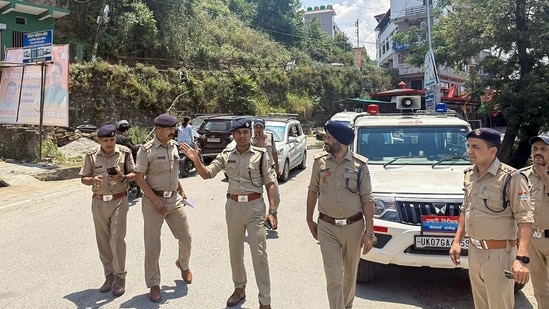
Authorities are currently examining CCTV footage and social media videos to identify the individuals involved in the assault. Senior police officials have stated their commitment to upholding the law and taking appropriate legal actions against the perpetrators. However, the effectiveness of law enforcement in addressing such incidents remains a critical concern, especially for marginalized communities.
Given the political backdrop where Hindu nationalist sentiments are increasingly prevalent, many fear that minority communities may continue to face escalating levels of violence. Such incidents not only affect the individuals involved but also create an atmosphere of fear and exclusion within their communities.
Why It Matters
This incident reveals the pressing social divisions in contemporary India, exacerbated by an environment where mob justice is often tolerated in religiously charged contexts. It raises questions about the security of minority individuals, the adequacy of state protection, and the deep-rooted societal prejudices that manifest in violent acts. For the AI industry, the relevance of understanding such sociopolitical dynamics is paramount. Developers and businesses that engage with these communities must be aware of the larger context, which may influence user engagement, sentiment, and ethical considerations in their technologies and services.
Frequently Asked Questions
What motivated the attack on Shadab?
The attack was motivated by Shadab’s interfaith visit to a Hindu woman, which provoked a violent response from a mob influenced by prevailing communal tensions.
What legal actions have been taken against the mob?
The police have registered a case against the assailants under various sections of the Bharatiya Nyaya Sanhita, and investigations are ongoing.
How has the local community reacted to this incident?
The local community, particularly civil society organizations, has condemned the violence and called for justice, highlighting the ongoing issues of religious discrimination in India.
What does this incident say about the current sociopolitical climate in India?
This incident underscores the rising tensions between religious communities in India, especially under the current government, which many believe fosters a culture of intolerance, affecting the safety and rights of minority groups.