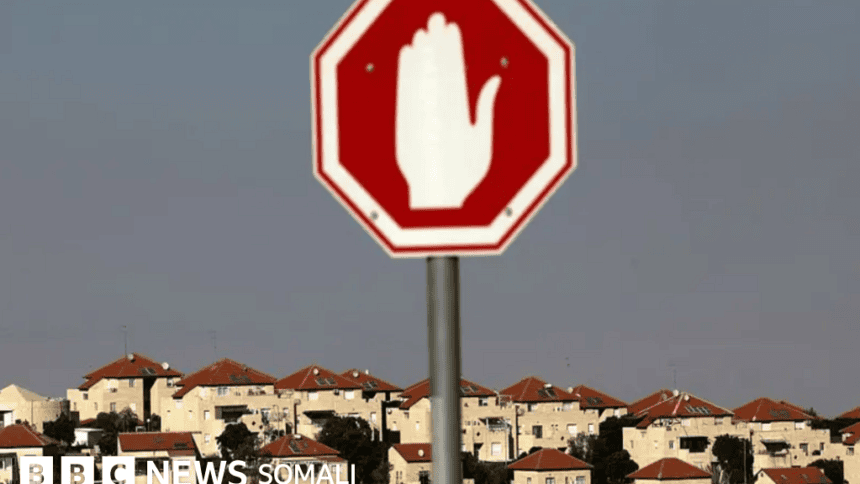

Recent actions by the Israeli government, particularly the announcement of plans for new settlements in the West Bank, have drawn sharp criticism from a coalition of eight predominantly Muslim countries. The initiative has raised concerns about escalating tensions and the viability of a unified Palestinian state amid ongoing territorial disputes.
Global Outcry Against Israeli Settlement Policies
Eight Muslim-majority nations, including Saudi Arabia, Egypt, Pakistan, and Indonesia, have jointly condemned Israel’s proposed settlement plan known as “Y-1.” In a decisive statement, these foreign ministers labeled the development initiative as “dangerous and escalating tensions.” Historically, international response to Israeli settlement policies has been a flashpoint in diplomatic relations, often evoking strong reactions from countries advocating for Palestinian rights.
International Coalition Speaks Out
As part of the global condemnation, a previous coalition of seven other countries, including the UK, France, Germany, and Canada, suggested that companies refrain from engaging in construction contracts associated with these settlements. This unified stance indicates a widespread acknowledgment of the detrimental implications of the Israeli government’s actions in the region. The proposed settlement construction is expected to disrupt the geographical continuity between northern and southern West Bank regions, complicating any future negotiations for a unified Palestinian state.
Historical Context of Settlement Expansion
Recently, Israel’s government announced plans for a new settlement named Y1, set to be built in East Jerusalem, adding thousands of homes aimed at Israeli settlers. This marks a continuation of a trend seen over the past two decades. For instance, twenty years ago, the inhabitants of Kadim, located in northern West Bank, were forcibly removed, only for a new generation of Israeli settlers to reclaim the area. Following the establishment of settlements, the Israeli government has been reasserting control over neighborhoods previously vacated, culminating in the lifting of restrictions imposed in 2005 around areas like Jenin.
Why It Matters
The situation in the West Bank is crucial for understanding broader geopolitical dynamics in the Middle East. The establishment of Israeli settlements is viewed by many international observers as a violation of international law. Still, the Israeli government refutes this interpretation. As these developments unfold, they can further polarize opinions globally and impact diplomatic ties between Israel and other countries. The construction of settlements not only affects Palestinian communities but also poses significant challenges to peace processes aiming to resolve long-standing conflicts in the region.
Frequently Asked Questions
What is the Y-1 settlement plan?
The Y-1 settlement plan is a proposed Israeli initiative to build thousands of new homes for Israeli settlers in East Jerusalem, which has drawn widespread international condemnation.
Why are countries opposing the settlement expansion?
Countries are opposing the expansion because it threatens to increase tensions in the already volatile region, undermines peace efforts, and complicates the possibility of establishing a contiguous Palestinian state.
How does international law view Israeli settlements?
Under international law, Israeli settlements in occupied territories are considered illegal; however, Israel disputes this interpretation and continues to expand settlements.
What has been the response from the Israeli government?
The Israeli government has proceeded with its plans for settlement expansion despite international criticism, framing the developments as necessary for national security and historical claims to the land.