
Summary
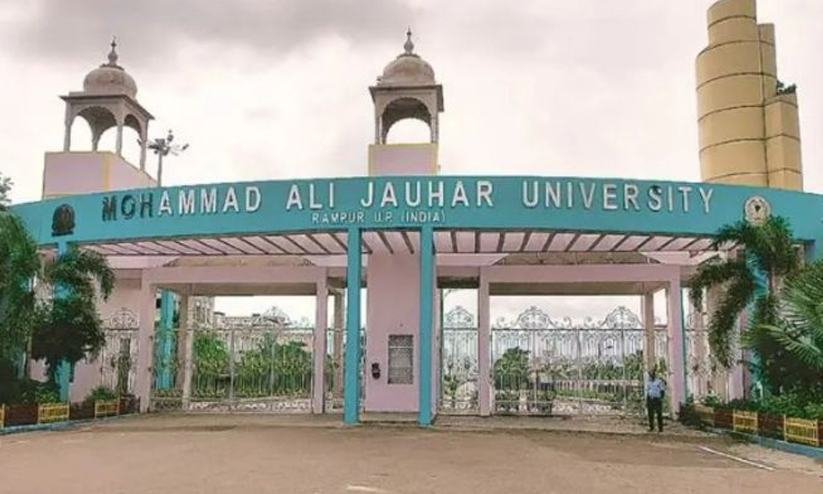
The recent decision by the Uttar Pradesh government to demolish 38 of the 40 buildings at Mohammad Ali Jauhar University has sparked outrage among Muslim organizations, who are labeling it as an act of political discrimination and marginalization of the Muslim community. Critics argue that this move undermines educational progress and is a direct attack on the founder, Azam Khan, a prominent leader in the Samajwadi Party.
Condemnation from Muslim Organizations
In response to the demolition initiative, the All India Muslim Personal Law Board (AIMPLB) has issued a strong condemnation, accusing the Uttar Pradesh government and the Rampur Development Authority (RDA) of waging a vindictive campaign masked as regulatory enforcement. S.Q.R. Ilyas, the AIMPLB spokesperson, emphasized that the university was established with public backing to combat the educational backwardness faced by Muslims and should thus be safeguarded rather than targeted. He characterized the demolition actions as part of a broader political vendetta against university founder Azam Khan, questioning the motivations behind the state’s regulatory measures.
Legal and Jurisdictional Controversies
The RDA claims that the university constructed 38 of its buildings without obtaining the mandatory approvals. However, Ilyas disputes this assertion, arguing that the area in question was not under the RDA’s jurisdiction at the time of construction, thereby nullifying any legal obligation to seek permission. The AIMPLB has called for the Uttar Pradesh government to promptly retract the demolition notices and resolve any existing legal or administrative issues through proper channels instead of dismantling educational infrastructure. This plea underscores the broader concern among Muslim organizations regarding the legal and regulatory frameworks being weaponized against minority institutions.
Impact on Students and Education
The Student Islamic Organisation (SIO) of the Uttar Pradesh West Zone has added its voice to the condemnation, labeling the demolition order as an assault on education and constitutional values. The SIO points out that Mohammad Ali Jauhar University plays a crucial role in providing education to thousands of students, particularly from historically marginalized communities. They warn that the demolitions could jeopardize the academic futures and aspirations of countless young scholars, further reinforcing societal inequities. While the RDA has mandated the removal of the allegedly unauthorized structures within a 15-day period, district administration efforts have emerged to minimize disruptions to students through counseling camps and other academic support programs, though skepticism remains about the efficacy of these measures.
Why It Matters
The ongoing tensions surrounding Mohammad Ali Jauhar University highlight significant societal fractures in India and the impact of political agendas on educational institutions, particularly those serving minority communities. This scenario serves as a microcosm of broader discrimination and exclusion faced by Indian Muslims, which can hinder their social mobility and educational advancement. Such developments raise questions regarding the separation of educational institutions from political interference, emphasizing the need for a more equitable approach to governance and regulatory oversight that protects rather than undermines local communities.
Frequently Asked Questions
What is Mohammad Ali Jauhar University?
Mohammad Ali Jauhar University is an educational institution established to address the educational backwardness of Muslims in India, founded by Azam Khan, a prominent political figure.
What was the reason for the demolition order?
The Rampur Development Authority claims that 38 buildings on the university campus were constructed without mandatory approvals, constituting a legal violation.
How have Muslim organizations responded to the demolition order?
Muslim organizations, including the AIMPLB and SIO, have condemned the action as politically motivated and discriminatory, arguing that it jeopardizes the educational opportunities of marginalized communities.
What measures are being taken to support students during this crisis?
Despite the demolition orders, the district administration is attempting to minimize disruptions to student education by organizing counseling camps and providing academic support measures.