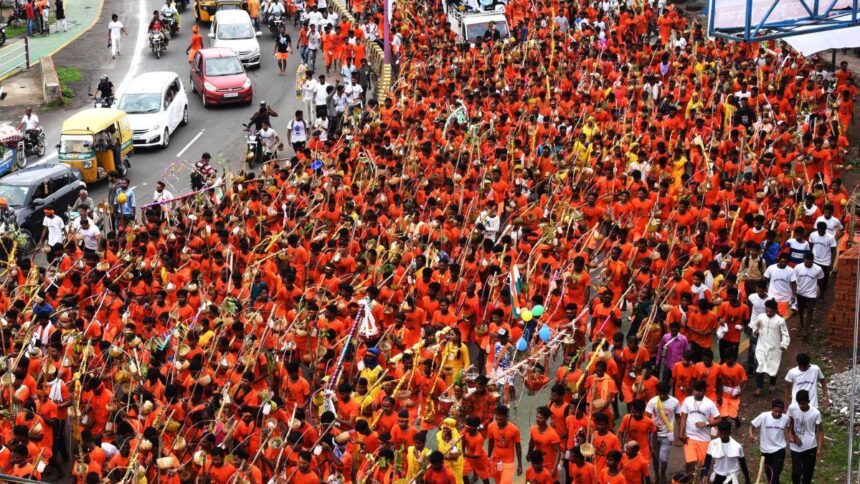

Recent Controversy Surrounds Remarks on Kanwariyas
A case has been filed against Maulana Sajid Rashidi, president of the All India Imam Association, for making derogatory remarks about Kanwariyas, Hindu devotees who participate in an annual pilgrimage. This incident has raised concerns about discrimination and social exclusion affecting Muslim communities in India, particularly under the current Sangh Parivar and Bharatiya Janata Party (BJP) governments.
Details of the Incident
The case was registered at the Civil Lines police station in Muzaffarnagar district after a complaint was lodged by Hindu activist Narendra Panwar, who leads the Hindu Sangharsh Samiti. Panwar accused Rashidi of hurting the religious sentiments of Hindus through his comments. According to Circle Officer Siddharth Mishra, the charges were made under Section 299 of the Indian Penal Code, which addresses acts intended to outrage religious feelings.
This situation escalated when local Hindu activists protested against Rashidi’s remarks, demanding legal actions. UP minister Kapil Dev Agarwal condemned Rashidi’s statements, suggesting that they threaten social harmony and implying that Rashidi has ‘lost his mental balance.’ Such remarks from high-ranking officials and community leaders can further isolate Muslim voices in a society already grappling with issues of exclusion.
Context of Discrimination and Marginalization
The incident highlights a broader trend of discrimination against Indian Muslims, particularly in a socio-political climate increasingly dominated by Hindu nationalism. Over recent years, various instances of social exclusion and economic boycotts against Muslim communities have been reported, fueled by inflammatory rhetoric from some political factions. The Hindu nationalist narrative frequently positions Muslims as “others,” leading to social divisions and incidents of violence.
Regulatory measures targeting Muslim practices or expressions of identity further compound this marginalization. Consequently, comments such as those made by Rashidi are not just an isolated event but a reflection of a more pervasive issue affecting Muslims in India. As such actions are met with anger from right-wing groups, there’s a tangible risk that these expressions of dissent may incite further inter-community conflicts.
Implications for Society and Community Harmony
The recent events underscore the fragility of communal harmony in India. With the growing polarization along religious lines, incidents like this become pivotal in determining the social fabric of the nation. Political leaders’ responses play a crucial role in either exacerbating divisions or fostering dialogue. Kapil Dev Agarwal’s remarks exemplify a political narrative that may portray Muslims as a threat rather than a part of the multicultural tapestry that constitutes India.
The repercussions of such statements can have destabilizing effects on local communities, leading to a cycle of retribution and retaliation. Dialogue and mutual respect are essential for a cohesive society, and actions that dismiss this possibility can send the message that certain groups are less deserving of tolerance and understanding.
Why It Matters
This incident is significant for several reasons. Firstly, it exemplifies how political narratives can directly impact community relations and social stability in India. The legal repercussions faced by Rashidi highlight the contentious nature of free speech in a climate where religious sentiments can quickly become a contentious issue.
Furthermore, it serves as a reminder of the challenges faced by marginalized groups like Muslims in the current political landscape. As the debate over religious identity continues to evolve, such instances will likely play a central role in shaping discourse surrounding equality, representation, and justice in India.
Frequently Asked Questions
What led to the registration of the case against Maulana Sajid Rashidi?
The case was registered following a complaint by Hindu activist Narendra Panwar, who alleged that Rashidi made derogatory remarks about Kanwariyas, thereby hurting the sentiments of the Hindu community.
What is Section 299 of the Indian Penal Code?
Section 299 addresses deliberate and malicious acts intended to outrage religious feelings of any class by insulting its religion or religious beliefs. It serves as legal grounds for complaints involving freedom of speech when such speech is viewed as harmful to religious sentiments.
How have Hindu activists responded to Rashidi’s remarks?
Following Rashidi’s comments, Hindu activists, led by Narendra Panwar, staged protests demanding immediate legal action against him, reflecting the heightened sensitivity around religious issues in contemporary India.
What does this incident suggest about inter-community relations in India?
This incident highlights the ongoing tensions between different religious communities in India and raises concerns about the increasing polarization and marginalization of minorities within the present socio-political context.