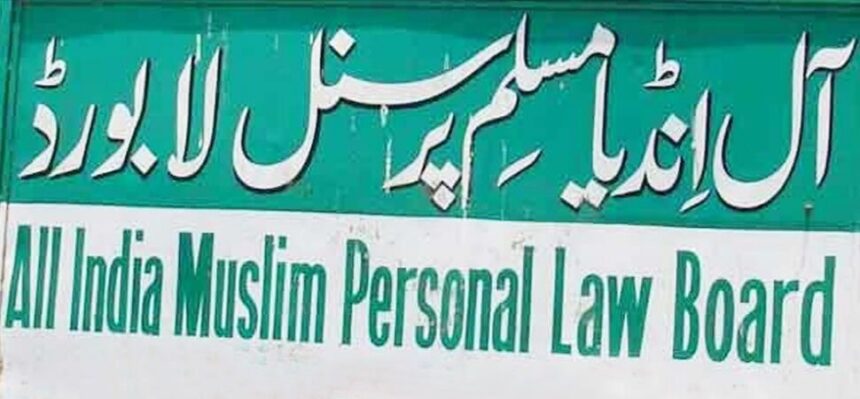

AhlulBayt News Agency (ABNA): The All India Muslim Personal Law Board (AIMPLB) has raised concerns over the potential legal enforcement of the national song Vande Mataram. The Board argues that such a move would infringe on the fundamental rights enshrined in the Indian Constitution and impose religious beliefs on citizens, particularly Muslims who may find certain lyrics incompatible with their faith.
Constitutional Rights vs. National Identity
AIMPLB spokesperson Dr. S. Q. R. Ilyas emphasized that making Vande Mataram compulsory for all citizens contradicts the Constitution’s spirit. He pointed out that when the Constitution was formulated, the assembly only accepted the first two stanzas of the song at the national level, leaving out portions deemed unsuitable for India’s secular framework. This historical context highlights an ongoing tension between national identity and individual religious freedoms.
Dr. Ilyas further noted that certain lyrics in Vande Mataram portray the motherland as a goddess deserving worship. He argued that this portrayal conflicts with the Islamic tenet of Tawheed, which mandates the recognition of one God. For Muslims, obligatory participation in practices laden with religious significance that contradict their beliefs is unacceptable, thereby infringing upon constitutional protections designed to uphold religious freedom.
Legal Precedents on Freedom of Expression
In his statements, Dr. Ilyas referenced Supreme Court rulings that reinforce the importance of individual rights under the Constitution. He cited the landmark case of Bijoe Emmanuel v. State of Kerala, in which the court ruled that individuals could not face penalties for declining to participate in the national anthem due to religious convictions. This case underscores a broader legal principle that respects the right to abstain from participating in actions that conflict with personal or religious beliefs, including songs and slogans.
The protection of freedom of expression is pivotal, as Dr. Ilyas noted that Articles 19 and 25 of the Indian Constitution safeguard citizens’ rights to express their beliefs freely and practice their religion. These constitutional guidelines suggest that no one should be compelled to participate in a public expression that might violate their conscience.
The Call for Unity and Addressing Core Issues
The AIMPLB’s statement also included a call to action for the Indian government, urging a focus on pressing socio-economic issues, such as unemployment, inflation, and poverty. The Board argued that pursuing legally enforced nationalistic expressions like Vande Mataram distracts from vital matters affecting the populace. By prioritizing these foundational issues, the government could better serve the nation’s interests and promote unity among diverse communities.
“Patriotism should not be assessed through participation in any particular song or slogan but should be grounded in adherence to the Constitution and respect for individual rights,” Dr. Ilyas concluded. This sentiment reflects a growing concern among many Indians that nationalism should not equate to religious or cultural conformity.
Why It Matters
This issue is significant as it encapsulates the broader challenges faced by the Muslim community in India under the current political climate. The potential imposition of specific religious narratives through state mechanisms raises critical questions about secularism and democracy in a diversely populated nation. The controversies surrounding national symbols can lead to a greater societal divide, detracting from essential communal harmony and the overarching national interest.
Furthermore, as governments around the world navigate similar tensions between nationalism and inclusivity, India serves as a key case study. The successful creation of a cohesive national identity that encompasses varying beliefs and practices remains a critical challenge and a pressing need.
Frequently Asked Questions
What is Vande Mataram, and why is it controversial?
Vande Mataram is a national song in India that has been adopted as a symbol of patriotism. However, its lyrics, which portray the motherland as a goddess, are controversial for some religious communities, particularly Muslims, who find them incompatible with their beliefs.
What legal rights protect religious freedoms in India?
The Indian Constitution guarantees religious freedom through Articles 25 and 19, allowing individuals to profess, practice, and propagate their religion without obligation to participate in acts contradictory to their beliefs.
Can individuals be punished for not singing the national anthem or songs like Vande Mataram?
No, according to the Supreme Court’s ruling in Bijoe Emmanuel v. State of Kerala, individuals cannot be punished for respectfully abstaining from participating in such activities if it conflicts with their religious beliefs.
How can the Indian government better address issues of national unity?
The government can focus on socio-economic challenges affecting citizens, such as poverty and inequality, rather than imposing divisive measures related to national symbols. Encouraging dialogue and inclusivity across communities can also foster a cohesive national identity.