
Summary
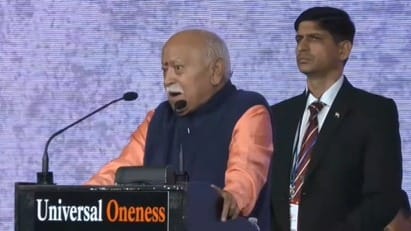
In a recent address at the ‘One World One Humanity’ event in New York, Rashtriya Swayamsevak Sangh (RSS) chief Mohan Bhagwat emphasized the intrinsic dignity of all individuals, urging that the core of Hindu thought includes acceptance of different religious paths. He firmly stated that a true Hindu cannot advocate for the exclusion of Muslims from India, highlighting the need for unity and respect among diverse communities.
Bhagwat’s Call for Inclusivity
Mohan Bhagwat’s statements revolve around the principle of unity amidst diversity, illustrating that the essence of Hindu ideology encompasses recognition of human dignity across all religions. “If any Hindu thinks that there should be no Muslim in Bharat, he will not remain Hindu,” he declared, referring to the traditional Indian belief in the “unity of humanity.” This assertion challenges prevailing narratives that often depict the RSS and the Bharatiya Janata Party (BJP) as advocates of divisive ideologies.
Critique of Political Self-Interest
Bhagwat criticized current political landscapes, which he viewed as driven by self-interest rather than collective well-being. He voiced concerns about how such motivations could detract from meaningful, long-lasting societal changes. “Politics has now become a game of self-interest,” he stated, advocating instead for grassroots movements centered on selfless service and public participation. He urged communities to mobilize locally to cultivate atmospheres of unity that challenge the status quo in political spheres.
Historical Context and Community Efforts
During his address, Bhagwat contextualized his ideology by recalling the humanitarian efforts of RSS volunteers during crises, such as the 1996 Charkhi Dadri mid-air collision that primarily affected Muslim passengers. He recounted how volunteers provided assistance without regard for religious identities, exemplifying the spirit of service that transcends sectarian lines. “We never thought at that time that these are Muslims,” he remarked, underscoring a narrative of unity in action.
Why It Matters
Bhagwat’s remarks illuminate a critical dialogue surrounding religious identity and nationalism in India, particularly relevant in a rapidly diversifying world. As the RSS and BJP grapple with their public personas amid global scrutiny, their approach to inclusivity and community relations could significantly shape India’s socio-political landscape. This discourse is especially pertinent for technology and AI sectors, as social cohesion and collective identity influence innovation, market acceptance, and ethical considerations in developing solutions that resonate across varied cultural contexts.
Frequently Asked Questions
What is the RSS and its role in Indian society?
The Rashtriya Swayamsevak Sangh (RSS) is a right-wing Hindu nationalist organization founded in 1925, focusing on social service, cultural organization, and promoting Hindu values. It has been a significant influence on Indian politics through its ideological ties to the BJP.
How have RSS and BJP been perceived regarding religious minorities?
Both organizations have faced criticism for fostering an atmosphere of intolerance toward religious minorities, particularly Muslims. However, leaders like Mohan Bhagwat are attempting to reshape narratives, emphasizing unity and mutual respect among different faiths.
What did Bhagwat emphasize about political engagement?
Bhagwat called for a shift away from self-interested politics towards a community-centered approach. He urged for grassroots involvement and unity, stating that meaningful change results from collective public opinion rather than solely political maneuvering.
How does Bhagwat’s ideology align with traditional Indian philosophy?
Bhagwat’s statements align with India’s longstanding philosophical view that recognizes the inherent unity of humanity. His call for dignity and respect across religions reflects this traditional thought, presenting a counter-narrative to divisive practices and ideologies.