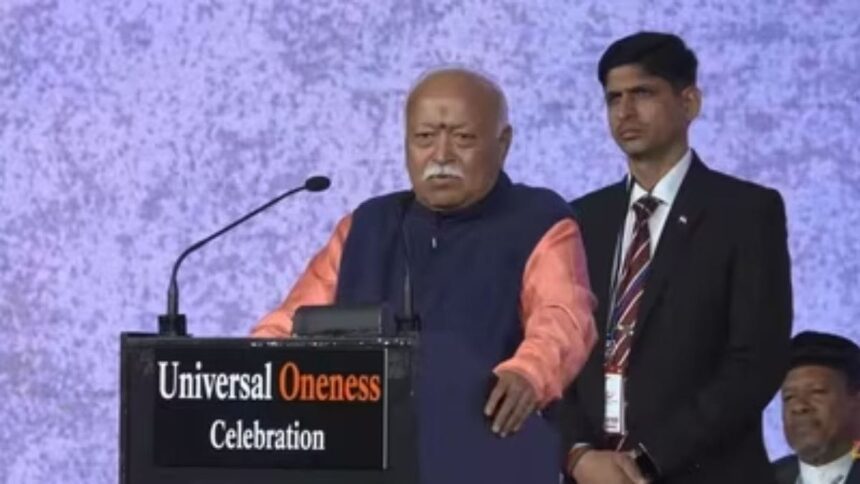

Summary: RSS Sarsanghchalak Mohan Bhagwat’s recent remarks about inclusion and diversity at an interfaith summit have sparked discussions on the intricate relationship between Hindu identity and the presence of Muslims, Sikhs, and Christians in India. While he emphasized the acceptance of diversity, the underlying implications reveal a pattern of exclusion and marginalization concerning Indian Muslims, raising significant concerns about socio-political dynamics in the country.
Historical Context and Current Climate
The backdrop of Bhagwat’s statements is instrumental in understanding their impact. Over the last decade, Indian elections have increasingly deployed divisive rhetoric, labeling Muslims as ‘infiltrators’ while promoting a narrative of Hindu supremacy. This framing has led to tangible consequences, including social exclusion and economic boycotts against Muslims. The author notes that the rhetoric of ‘infiltrators’ combines with violent incidents, where bulldozing properties—often of Muslim communities—has become a symbolic representation of state-sanctioned marginalization.
Community Reactions: Diverse Perspectives
Bhagwat’s remarks elicited varied responses from different religious communities. For Indian Muslims, the perception of safety is intricately tied to Hindu definitions of identity. The idea that their place in India depends upon Hindu sentiment presents an unsettling reality; it suggests that their citizenship is contingent rather than guaranteed. This is concerning, given the historical significance of Muslims in Indian heritage, wherein their contributions to jurisprudence and culture have been foundational.
Sikhs expressed discontent as they felt neglected in Bhagwat’s address. The absence of any reference to their community can be interpreted as exclusion from the broader narrative of Indian identity. Historical injustices and struggles, particularly during periods of communal strife, have created a legacy of distrust that continues to shape Sikh perspectives on their place within the nation.
Christian communities were perhaps offered the most cordial overture. However, the contrast between Bhagwat’s conciliatory language at the summit versus the realities of anti-conversion laws and incidents of social hostility reveals a troubling discrepancy that undermines the authenticity of the dialogue. Activists affiliated with the Sangh Parivar, despite the Sarsanghchalak’s reassurances, often create an atmosphere of fear among Christians, especially during public assemblies or religious activities.
Systematic Challenges Faced by Indian Muslims
The issues of marginalization have deep roots within India’s social fabric. Discrimination against Muslims manifests through various facets: access to education, employment opportunities, and political representation often lean heavily against them. Rising communal tensions have led to a climate where Muslim businesses face boycotts, while financial resources for community development remain scant. The societal perception of Muslims as inherently suspicious or as outsiders only exacerbates their exclusion from essential civic participation.
Moreover, through contentious legislation and selective enforcement of laws, the possibility of social mobility for many Muslims diminishes. The failure to acknowledge historical contributions and the assertion that they need protection from the Hindu majority further illustrates systemic oppression. As these dynamics play out, it’s crucial to not only recognize the ostensible attempts at inclusion but to scrutinize their underlying implications.
Why It Matters
The ongoing marginalization of Indian Muslims highlights critical societal fractures that can destabilize the broader socio-political landscape. Understanding these dynamics is essential for developers, policymakers, and tech industry leaders, particularly those concerned with social justice and equity in tech. Platforms that facilitate civil discussions around these issues must recognize the biases that can exacerbate discrimination. Additionally, awareness can drive better resource allocation and the development of inclusive programs that promote understanding and cooperation among diverse communities. Proper engagement on these matters can lead not only to improved community relations but can also foster a more stable and prosperous India.
Frequently Asked Questions
What impact do Bhagwat’s statements have on the Muslim community in India?
Bhagwat’s statements create fear and uncertainty regarding Muslims’ place in India, suggesting that their rights may depend on Hindu approval, further marginalizing them socially and politically.
How have Sikhs responded to the exclusion in Bhagwat’s remarks?
Sikhs have expressed concern over their absence in Bhagwat’s address, indicating a pattern of exclusion that perpetuates feelings of neglect and historical injustices within the community.
What challenges do Indian Muslims face in contemporary society?
Muslims face systemic discrimination in areas such as education, employment, and political representation, compounded by social boycotts and a climate of suspicion that limits their opportunities for advancement.
How does this discourse affect India’s socio-political landscape?
The tension between religious identities and the portrayal of Muslims and other minorities can lead to instability and social unrest, necessitating better dialogue and engagement across communities.