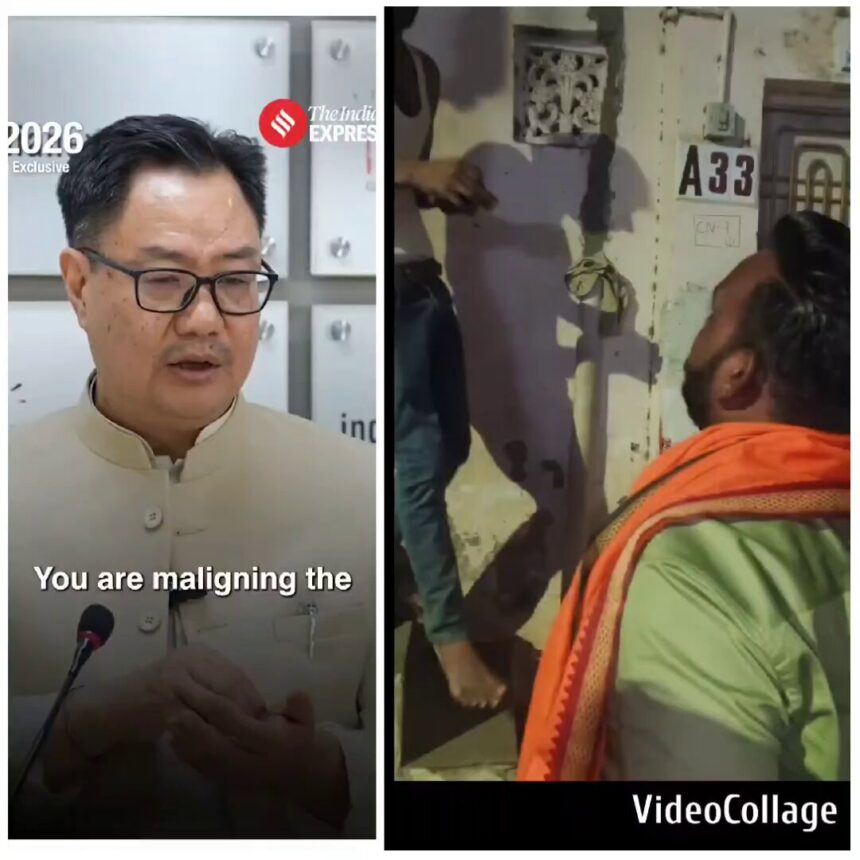

Recent statements by Indian Minister Kiren Rijiju have stirred controversy, particularly regarding the safety of Muslims in India. Prominent political commentator Mohammed Zubair has called attention to alarming incidents of intimidation against Muslims, challenging Rijiju’s assertions and highlighting a troubling trend in communal relations.
Background of the Controversy
Kiren Rijiju, the Union Minister of Law and Justice, took to social media stating that claims of Muslims being unsafe in India were damaging to the nation’s image. He emphasized that such statements malign the character of the country and undermine its foundations. However, critics like Mohammed Zubair argue that such denials disregarding real incidents point to a larger, systemic issue regarding the safety and rights of minorities, especially in a diverse country like India.
Zubair’s critique is particularly significant given his experience as a nodal officer for the Prime Minister’s New Point Programme for the Welfare of Minorities from 2006 to 2011. In his response to Rijiju, he reminded the Minister of an important tenet: the trust and faith of minorities in a state’s impartiality are essential indicators of a just society.
Incidents of Intimidation
Zubair highlighted a specific incident involving a member of the Bajrang Dal, Ganesh Vanzara, who was seen on video intimidating a Muslim migrant in Naroda, Ahmedabad. The video, which Vanzara shared on social media, showed him and his associates ordering the individual to vacate his rented accommodation. This act of intimidation was met with cheers from onlookers, signifying a disturbing normalization of such behavior.
The lack of police action against Vanzara, coupled with the inaction from local authorities and the media’s silence, paints a grim picture. Zubair points out that local politicians often avoid addressing these issues for fear of alienating their constituencies, reflecting a concerning trend in communal dynamics.
Political Ramifications
The exchange between Rijiju and Zubair encapsulates the larger debate around minority rights in India. On one hand, Rijiju’s defense of the nation reflects a sentiment among some political leaders who prioritize national unity over addressing minority fears. On the other hand, Zubair’s claims illustrate the frustrations felt by many regarding the perceived neglect of minority issues.
This dynamic is not merely about rhetoric; it impacts policy, public sentiment, and community relations across the country. Leaders often find themselves balancing between the commitment to uphold a secular and just society and the pressures of populism and electoral politics, which can lead to further marginalization of minority groups.
Why This Matters
This controversy sheds light on the increasing polarization within Indian society. As communal tensions rise, the state’s role in maintaining impartiality and justice becomes crucial. If the voices of minorities remain sidelined, it may lead to disenfranchisement, further social unrest, and potential conflicts. As India navigates its complex social fabric, understanding and addressing these issues will be vital to maintaining the country’s democratic principles.
Frequently Asked Questions
What is Kiren Rijiju’s role in the Indian government?
Kiren Rijiju is the Union Minister of Law and Justice in India. He has been a prominent figure in the Bharatiya Janata Party (BJP) and has often addressed issues related to law and governance.
Who is Mohammed Zubair?
Mohammed Zubair is a well-known journalist and political commentator in India, recognized for his activism and criticism of government policies, particularly concerning minority rights and freedoms.
What incident did Zubair highlight to support his claims?
Zubair referred to an incident involving Ganesh Vanzara, a member of the Bajrang Dal, who was recorded intimidating a Muslim tenant in Ahmedabad and ordering him to vacate his home, showcasing rising communal tensions.
Why are statements about minority safety important in India?
Statements regarding the safety of minorities are crucial as they reflect the government’s commitment to secularism and justice. A decline in trust among minorities can affect social stability, electoral outcomes, and the overall integrity of the nation.