
Unlocking the Mysteries of Life’s Origins
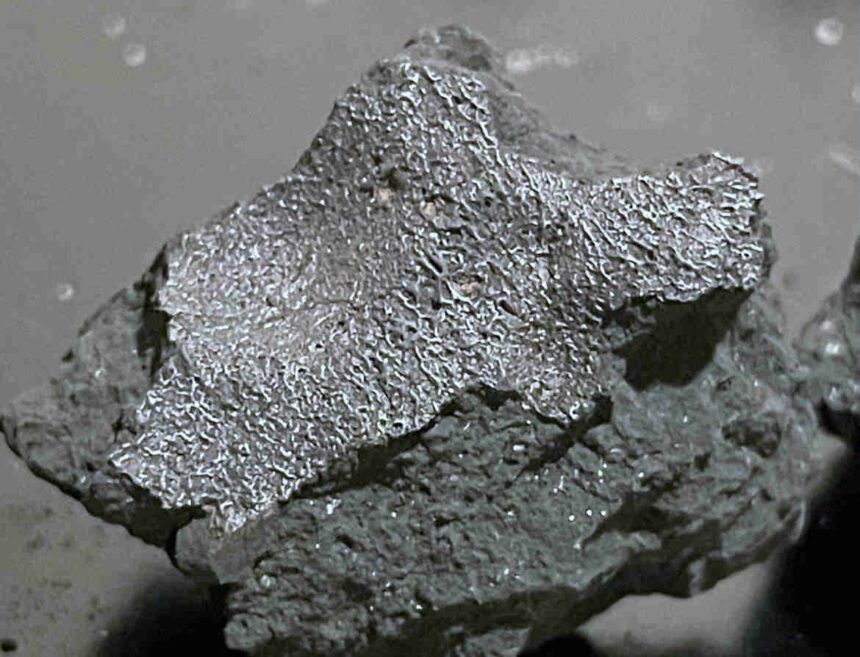
Recent research has revealed that high-salinity brine could have played a crucial role in the emergence of life on Earth. The Hillsborough meteorite, recently analyzed by scientists, provides vital clues about the organic compounds that may have contributed to the prebiotic conditions on our planet.
Briny Waters: The Birthplace of Life?
The Hillsborough meteorite’s analysis highlights a high concentration of salt in its briny fluid. This unique environment may facilitate essential chemical reactions, helping to form complex organic molecules. Researchers, including cosmochemist Queenie Chan and biogeochemist Nana Ogawa, emphasize that phosphate’s ability to remain in solution within brines could be pivotal for life’s origins.
In their findings, the meteorite contained 1.8% carbon and 0.07% nitrogen, with isotopes consistent with other primitive carbonaceous chondrites. The presence of various soluble organic compounds suggests that the Hillsborough meteorite was significantly altered by liquid water, unlike many other CM-type meteorites.
The Impact of Organic Compounds
Further investigations revealed that a significant fraction of the meteorite’s compounds resulted from organic chemistry interactions with minerals. Phil Schmitt-Kopplin, an expert in organic mass spectrometry at Technical University Munich, commented on the uncertainty surrounding the formation of magnesium organic compounds, questioning whether they originated from brine chemistry or earlier impacts.
Notably, amino acids were found among these compounds, mirroring those in more moderately altered CM2 chondrites. Danny Glavin, an astrobiologist at NASA’s Goddard Space Flight Center, suggests that the amino acids and carboxylic acids delivered by CM-type bodies likely enriched the prebiotic inventory on Earth, setting the stage for life.
A Global Scientific Endeavor
The Hillborough meteorite serves not just as a scientific discovery but as a source of collaboration across international research institutions. A portion of the meteorite will be housed at the American Museum of Natural History in New York City, highlighting its significance in the broader understanding of astrobiology.
Denton Ebel, a curator at the museum, expressed his excitement about receiving such a valuable sample, underscoring the collaboration between research institutions like the SETI Institute and the Japan Agency for Marine-Earth Science and Technology (JAMSTEC).
Why This Is Trending
The recent revelations from the Hillsborough meteorite have caught global attention, including in India, as people become increasingly curious about the origins of life beyond Earth. In an era where space exploration is gaining traction, Indians are particularly interested in understanding how celestial bodies may have influenced life on our own planet. Moreover, the connection between astrobiology and environmental science resonates deeply with the ongoing discussions about biodiversity and climate change in India.
Frequently Asked Questions
What is a carbonaceous chondrite?
A carbonaceous chondrite is a type of meteorite that is rich in carbon and other organic compounds. These materials are believed to have played a significant role in delivering the building blocks of life to Earth.
How do brines help in the formation of organic compounds?
Brines maintain high concentrations of essential elements like phosphorus in solution, which can facilitate chemical reactions necessary for forming complex organic molecules, potentially essential for life.
What were the primary findings from the Hillsborough meteorite?
The Hillsborough meteorite contained essential organic molecules, including amino acids and carboxylic acids. Its unique isotopic signatures suggest that it was influenced significantly by water, providing valuable insights into the conditions that may have fostered life.
Why is international collaboration important in this field of research?
International collaboration allows for shared expertise, resources, and findings, which are crucial in comprehensively understanding complex phenomena such as the origins of life. Joint efforts enhance research quality and expedite discoveries in fields like astrobiology.