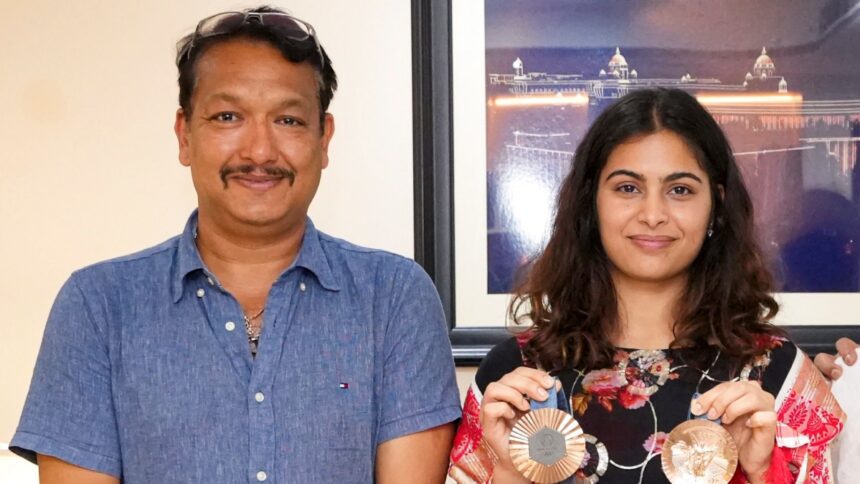

In a tragic turn of events, double Olympic medallist Manu Bhaker’s long-time coach, Jaspal Rana, passed away unexpectedly on Thursday, sending shockwaves through the sports community. Rana, a celebrated figure in Indian shooting and a multiple-time Asian Games and Commonwealth Games medallist, succumbed to illness just after returning from the ISSF World Cup in Munich.
Jaspal Rana’s Illustrious Career
Jaspal Rana was a prominent name in the Indian shooting arena, renowned for his achievements in various international competitions, including the Asian Games and Commonwealth Games. His contributions to Indian shooting were not only in the form of medals but also through inspiring and coaching a new generation of shooters. Rana’s legacy includes not just his own accolades but the successes of his disciples, such as Bhaker.
Rana fell ill during the return journey from the ISSF World Cup in Germany and required urgent medical treatment upon landing in India. His passing has raised concerns regarding athletes’ health and the importance of medical support during international competitions, highlighting a critical aspect often overlooked in the rush to secure medals and accolades.
Manu Bhaker’s Tribute and Personal Connection
In the wake of Rana’s death, Manu Bhaker visited his residence in Dehradun, Uttarakhand, to pay her respects. Overcome with emotion, Bhaker described Rana not just as a coach but as a mentor and a ‘father-figure.’ She lamented the loss, stating, “I still can’t believe it… He was a friend who understood me better than most people.”
Bhaker’s emotional reflection on their relationship reveals the depth of their bond, which included both strict coaching and compassionate support. “Looking back now, every lesson he taught me had a purpose,” she said, emphasizing how Rana played a pivotal role in her journey as an athlete. This emotional connection can be inspiring for young athletes who aspire to build a rapport with their coaches, showcasing the importance of a healthy mentor-mentee relationship.
Impact on Indian Sports and Future of Shooting
Rana’s death comes at a crucial time for Indian shooting as it gears up for upcoming international competitions, including the 2024 Paris Olympics. His mentorship had been instrumental in Bhaker achieving historic feats, like her record-setting two medals at a single Olympic Games, a milestone that resonates deeply within Indian sports history.
The loss of Rana raises questions about the future direction of Bhaker’s career and the Indian shooting landscape. The community is now left pondering who will fill Rana’s shoes as a mentor for emerging talents. As the nation mourns the loss, sporting institutions may need to reassess their support systems for coaches and athletes alike to ensure such talents continue to flourish in a conducive environment.
What This Means
Jaspal Rana’s passing is not merely a personal loss for Bhaker but a significant blow to Indian shooting. He represented a generation of athletes who had fought to bring recognition to shooting as a sport in India. His absence leaves a gap that will be felt not just by his immediate circle, but throughout the sports community. As discussions arise about mental health and athlete well-being, Rana’s death can serve as a catalyst for addressing these issues more broadly.
Frequently Asked Questions
Who was Jaspal Rana?
Jaspal Rana was a celebrated Indian shooter and coach, noted for his achievements in the Asian Games and Commonwealth Games. He was instrumental in mentoring several young athletes, including Manu Bhaker.
What caused Jaspal Rana’s death?
Rana passed away due to health complications he experienced after returning from the ISSF World Cup in Munich, Germany. He required emergency medical attention upon landing back in India.
How did Manu Bhaker honor Jaspal Rana after his passing?
Manu Bhaker visited Rana’s residence to pay tribute and mourned deeply over the loss, describing Rana as not just a coach but a mentor and a father-figure.
What impact might Jaspal Rana’s death have on Indian shooting?
His passing raises questions about the future of coaching and mentorship within Indian shooting, affecting emerging talents and their development as athletes. It emphasizes the need for robust coaching frameworks to support upcoming shooters.