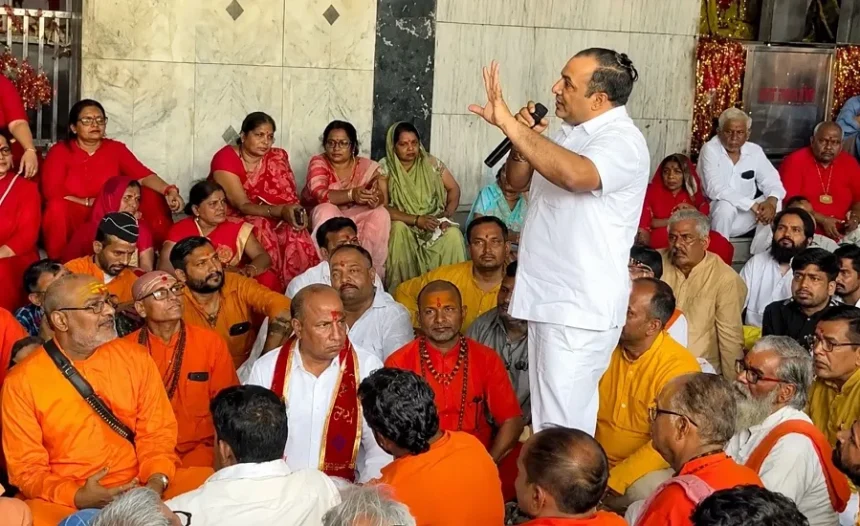

Summary: A recent inflammatory video from Ghaziabad, Uttar Pradesh, featuring Hindutva advocate Anil Yadav calling for the genocide of Muslims, has provoked outrage and criticism, reinvigorating discussions about hate speech and communal tensions in India. Critics assert that invoking the traumatic legacy of the 1947 Partition in this context is dangerous and exacerbates existing social divides.
Incitement to Violence in Public Discourse
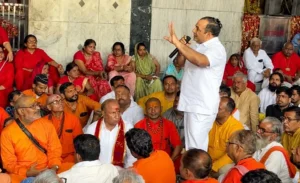
In a video that has garnered substantial attention on social media, Anil Yadav, an individual known for his anti-Muslim stance, has made alarming remarks suggesting that “Islam’s end will come through genocide.” This statement, resonating with extremist ideologies, has been universally condemned by civil rights activists and citizens alike, who label it as a blatant act of hate speech. Yadav’s comments are viewed as not merely provocative but as direct incitement to violence against a marginalized community in India.
Contextualizing the 1947 Partition
Yadav’s reference to the 1947 Partition—a historically traumatic event that resulted in widespread violence and the displacement of millions—has drawn particular ire. Critics argue that invoking such a sensitive topic to target present-day Muslims is perilously incendiary and poses significant risks to communal harmony in a country already rife with sectarian tensions. Many users on social media have questioned why no action has been taken against Yadav, highlighting a potential double standard in the application of law against hate speech in the current sociopolitical climate.
The Digital Backlash and Call for Action
Following Yadav’s statements, there has been an avalanche of responses on social media, with critics urging law enforcement to consider Yadav’s rhetoric as tantamount to terrorism. Tweets calling for immediate legal action cited provisions like the National Security Act (NSA) and the Unlawful Activities (Prevention) Act (UAPA) as appropriate responses to these incendiary provocations. Activists have emphasized the necessity for officials to confront such alarming statements seriously, underlining the potential implications for communal peace and social stability.
Why It Matters
This incident underscores the escalating climate of hate speech and social exclusion faced by minority communities in India, particularly Muslims, amid rising Hindutva nationalism. Yadav’s remarks are not an isolated occurrence but part of a broader pattern of increasing normalization of hate rhetoric within public discourse. Such incidents can lead to real-world violence, perpetuating a cycle of discrimination and social exclusion. For developers and actors in the AI industry, this situation raises crucial questions about the responsibilities of social media platforms in moderating hate speech and promoting healthy discourse. Failure to address such issues can have damaging repercussions for societal cohesion and trust in technology.
Frequently Asked Questions
What specific comments did Anil Yadav make?
Anil Yadav suggested that “Islam’s end will come through genocide,” explicitly calling for violence against Muslims and presenting a dangerous ideology around communal conflict.
How has the public reacted to Yadav’s comments?
The public reaction has been overwhelmingly negative, with multiple social media users, civil rights activists, and organizations condemning Yadav’s remarks as hate speech and incitement to violence.
What historical context is invoked by Yadav’s remarks?
Yadav invoked the 1947 Partition, which was marked by significant violence and suffering, to justify contemporary hostility towards Muslims, raising concerns over the dangerous implications of invoking such a traumatic historical event in modern discussions.
What actions are being called for in response to Yadav’s statements?
Activists and netizens are urging law enforcement agencies to treat Yadav’s inflammatory speech as a serious issue, advocating for the application of stringent laws like the NSA and UAPA against him.