
The Khairlanji Massacre: A Remembrance of Caste-Based Violence
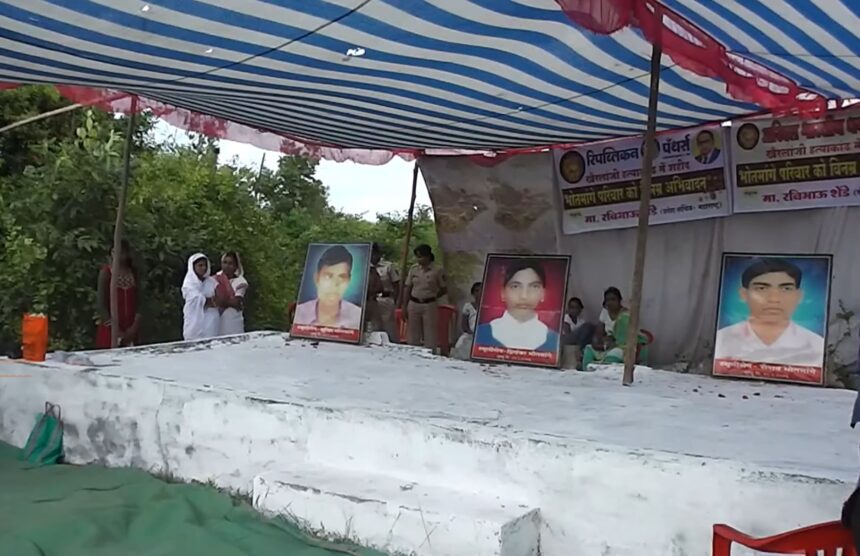
On September 29, 2006, the Dalit Bhotmange family of Khairlanji, Maharashtra, experienced one of the most tragic instances of caste-based violence in modern India. The family included mother Surekha, daughter Priyanka (17), and sons Roshan (21) and Sudhir (19), who was visually impaired. While their father, Bhayalal Bhotmange, narrowly escaped, he was forced to witness the brutal lynching of his family at the hands of a mob composed of upper-caste men from their own village.
The Khairlanji massacre serves as a painful reminder that caste discrimination remains a persistent issue in India. It challenges the narrative that caste is a relic of the past, revealing significant social hierarchies masked by claims of progress and equality. The Bhotmange family’s “crime” was their refusal to accept the low social status dictated by dominant castes, as they sought to live with dignity.
As one of only three Mahar Dalit families in Khairlanji, the Bhotmanges faced systemic exclusion. They were denied electricity, discriminated against at the village well, and restricted in their access to irrigation water. Surekha, described as outspoken and influenced by the Ambedkarite movement, actively resisted casteist insults and encroachments on their land.
Despite their modest means, the family prioritized education and self-reliance. Roshan pursued a computer degree, Priyanka excelled in her studies, and Sudhir assisted with farming. In 2004, a revenue officer ordered a road to be built through their land, favoring OBC farmers. Though the decision was later overturned, it left tensions simmering in the village.
Weeks before the massacre, a dispute arose involving local upper-caste individuals that drew in Surekha and Priyanka after they intervened. Their testimony against one of the aggressors led to the arrest of several men, further angering the dominant castes. On the evening of September 29, the aggressor returned with a mob, and the violence that ensued resulted in the horrific deaths of the Bhotmange family.
Reports indicate that, in an attempt to divert the mob, Surekha set fire to a cowshed but was ultimately caught, along with her daughter. Both women were subjected to sexual violence before being brutally murdered. Roshan and Sudhir were also attacked, forced to witness a grotesque violation of their family’s dignity, followed by their own deaths. The bodies were disposed of in a canal from which they had previously been denied access to water.
The attack highlighted deep-rooted caste and gender hierarchies, with several observers noting that Surekha’s actions significantly contributed to the violence against her family. By participating in public life and challenging patriarchal norms, she symbolized a defiance that was intolerable to the local dominant castes.
Initially overlooked, the massacre drew attention when activist-led investigations exposed its anti-Dalit nature. Media coverage played a pivotal role in reframing the violence from a mere local conflict to a significant caste atrocity. The incident warranted prosecution under the Scheduled Castes and Scheduled Tribes (Prevention of Atrocities) Act, 1989, intended to protect Dalits against discrimination and violence. However, it was not initially applied.
Public outrage erupted, culminating in protests in Mumbai and other cities. The response from the Maharashtra government included financial aid for Bhayalal Bhotmange and promises for a thorough investigation. Notably, Anand Teltumbde, in his 2010 book, positioned the massacre within the framework of post-liberalization India’s socio-economic landscape, arguing that it illustrated how caste violence is often ignored in pursuit of a “shining India” narrative.
The case was brought to a Fast Track Court, but integral evidence, such as timely examinations of the victims’ bodies, was lacking due to police negligence. The trial ultimately treated the case as revenge rather than a severe atrocity targeting Dalits.
A verdict was reached on September 15, 2008, resulting in life sentences for ten of the accused, although the Scheduled Castes and Scheduled Tribes (Prevention of Atrocities) Act was not invoked. The lack of caste considerations in sentencing, along with subsequent appeals, reduced the sentences for some defendants.
After years of legal battles, the convictions were upheld by the Bombay High Court in 2010 and later by the Supreme Court in 2019. However, Bhayalal Bhotmange passed away in January 2017, never witnessing a final resolution of the case.
Human rights advocate Priyadarshi Telang emphasized that the Khairlanji case underscores systemic failures at every level of institutional response to atrocities against Dalits. Over a decade after the massacre, caste-based violence remains pervasive in India, evidenced by recent incidents of discrimination and mob violence against Dalits. The Khairlanji tragedy continues to serve as a grim reminder of the ongoing struggles against caste oppression in contemporary society.
Tags: Khairlanji massacre, caste system, social justice, India, discrimination
Hashtags: #Nineteen #years #Khairlanji #massacre #shattered #myth #caste #longer #exists