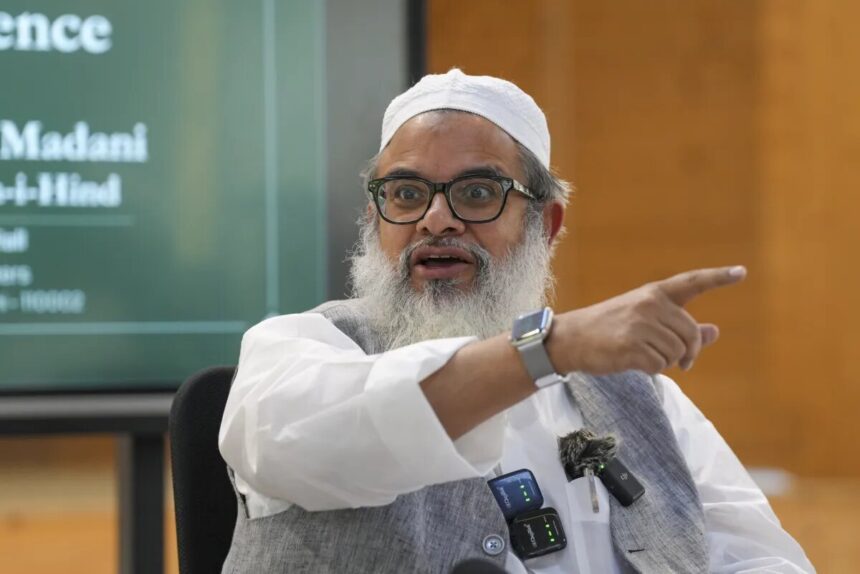

AhlulBayt News Agency (ABNA): The Jamiat Ulama-i-Hind (Mahmood Madani faction) has raised alarms regarding the Uttar Pradesh government’s recent directive to demolish 38 buildings at Mohammad Ali Jauhar University in Rampur. This decision not only threatens the educational future of thousands of students but also poses serious questions about the rule of law and the state’s obligations to uphold natural justice.
Background of the Concern
The directive from the Uttar Pradesh administration comes against a backdrop of growing concerns over discrimination and marginalization of minority communities, particularly Muslims, under the BJP-led government. Mohammad Ali Jauhar University serves as a significant educational institution for many, providing vital resources and opportunities for Muslim students. The potential ramifications of the demolition are extensive, as it compromises access to education and violates fundamental rights.
Legal Framework for Building Regulations
Maulana Mahmood Madani, the leader of the influential Muslim organization, contends that the proposed demolition lacks legal justification. He points to Section 27(1) of the Uttar Pradesh Urban Planning and Development Act, 1973, which allows for alternative measures rather than demolition in instances of planning violations. According to this provision, authorities may approve revised building plans, regularize existing structures, or impose financial penalties rather than opting for demolition.
Madani’s argument highlights that such alternatives have been employed successfully in other regions across India, where development authorities have resolved similar disputes without resorting to extreme measures. This calls into question the motive behind this particular directive, suggesting a potentially discriminatory basis for targeting a Muslim educational institution.
Judicial Precedents and Call for Justice
The call for justice doesn’t stop at legal arguments. Maulana Madani has invoked judicial precedents from cases involving various development authorities in India, where courts consistently favored alternative corrective measures over demolition. Notable cases include decisions related to engineering colleges in Kanpur and various development authorities in regions like Varanasi, Jhansi, and Allahabad. These examples showcase a judicial inclination towards fairness and the rule of law, further emphasizing the need for the Uttar Pradesh government to reconsider its stance.
In making this plea, Madani has not only highlighted the current crisis but has also reminded the government of its constitutional obligations to protect educational rights and foster inclusivity among all communities. The Jamiat’s call for the reconsideration of the demolition order encapsulates a broader struggle against systemic discrimination and social exclusion faced by Indian Muslims under the current political regime.
Why It Matters
The situation surrounding Mohammad Ali Jauhar University is emblematic of larger societal and political challenges faced by Muslims in India, particularly under the BJP regime. The demolition order signals a trend towards marginalization, where educational institutions serving minority communities are at risk. This not only affects students and their families but also undermines the integrity of India’s educational landscape. Such actions may lead to broader societal discord, affecting community relations and national cohesion. The prioritization of lawful alternatives could set a precedent that reaffirms the importance of inclusivity and justice in a diverse society.
Frequently Asked Questions
What is Mohammad Ali Jauhar University known for?
Mohammad Ali Jauhar University is recognized as an important educational institution for Muslim students in India, offering a range of academic programs and opportunities for higher education.
What are the legal implications of the demolition order?
The demolition order raises serious legal concerns regarding compliance with the Uttar Pradesh Urban Planning and Development Act, which allows for alternative measures in cases of building violations, rather than immediate demolition.
What has been the reaction from the Muslim community regarding this decision?
The Muslim community, notably through leaders like Maulana Mahmood Madani, has expressed deep concern, viewing the demolition order as part of a broader pattern of discrimination and marginalization of minorities under current governance.
What alternatives to demolition are available under the law?
Under the relevant legal framework, alternatives include the approval of revised building plans, regularization of existing structures, payment of development charges, or other statutory penalties rather than demolition.