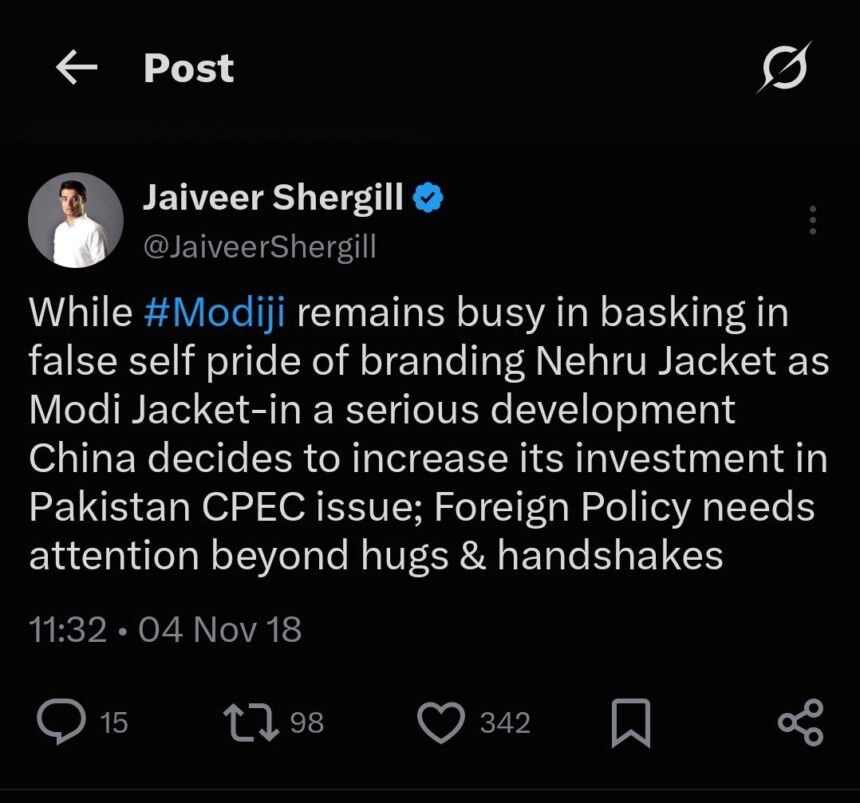

Indian political commentator Jaiveer Shergill has sparked debate with a recent tweet regarding Prime Minister Narendra Modi’s international accolades. Shergill criticizes Rahul Gandhi for allegedly insulting foreign leaders while juxtaposing this with Modi’s impressive record of 35 international honors.
Context of the Controversy
Jaiveer Shergill’s recent tweet references Prime Minister Modi’s global standing, highlighting the apparent respect and recognition he has garnered internationally. The tweet comes in a period of heightened political discourse in India, where leaders often scrutinize each other’s diplomatic engagements. Shergill emphasizes that Gandhi’s behavior—perceived as disrespectful towards foreign dignitaries—is not becoming of a national leader, framing the debate in the context of national pride and diplomacy.
Background on Modi’s International Honors
Over the years, Prime Minister Narendra Modi has actively engaged on the global stage, expanding India’s diplomatic reach. His administration has secured numerous international honors, a point Shergill uses to bolster his argument. These accolades range from recognition in international forums to bilateral agreements that enhance India’s global reputation. Modi’s foreign policy initiatives and efforts to position India as a key player in international politics have contributed to this commendation.
Criticism of Rahul Gandhi
On the other hand, Shergill’s comments regarding Rahul Gandhi signify ongoing tensions within the Indian National Congress and the broader opposition. His accusations of Gandhi insulting leaders reflect a strategy to paint the Congress party as ineffective and misaligned with national interests in foreign affairs. This approach aims to solidify the BJP’s narrative, portraying itself as the party capable of upholding India’s image abroad.
Why This Matters
This exchange is significant as it touches on themes of national identity and the capability of leadership in India. The comparison between Modi’s accolades and Gandhi’s perceived gaffes feeds into the larger narrative concerning competence in governance. As the next election approaches, these discussions can influence voter sentiments, and how political parties choose to define each other’s credibility on the international stage will likely play a crucial role in shaping public opinion. Furthermore, these references to diplomacy may resonate with younger voters who are more attuned to global issues.
Frequently Asked Questions
What prompted Jaiveer Shergill’s tweet?
His tweet was prompted by the contrasting images of Prime Minister Modi receiving international honors and Rahul Gandhi’s comments perceived as disrespectful to foreign leaders.
What are the implications of Modi’s international honors for his administration?
Modi’s honors can enhance his administration’s standing both domestically and abroad, portraying India as a respected nation on the global stage, potentially influencing public support for his policies.
How does this controversy reflect broader political dynamics in India?
The controversy underscores the ongoing rivalry between the BJP and Congress, showcasing how foreign relations are leveraged in domestic political attacks and narratives.
What reaction can be expected from the opposition parties?
The opposition might counter Shergill’s view by emphasizing their own perspectives on Modi’s foreign policies and highlighting issues they believe the government is neglecting while focusing too much on diplomatic honors.