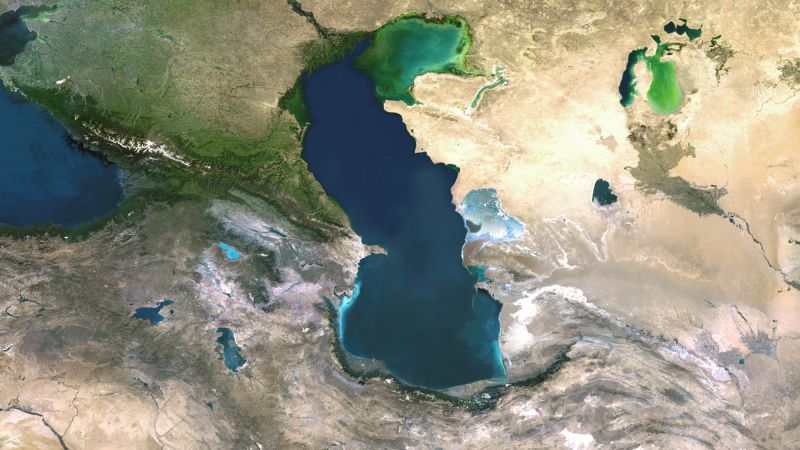

The Caspian Sea has emerged as a critical focal point in the escalating conflict between Ukraine and Russia, involving Iran in an increasingly complex geopolitical landscape. The strategic significance of this region is underscored by its role in military logistics and trade routes that serve as lifelines for both Iran and Russia.
The Caspian Sea: A Strategic Launchpad
The recent military engagements in the Caspian Sea highlight its rising importance in global geopolitics. Ukraine’s claims that its drones successfully targeted Russian vessels transporting military cargo from Iran emphasize not only the ongoing conflict but also the collaborative ties between Iran and Russia. Ukrainian President Volodymyr Zelensky stated that the targets included a warship and vessels involved in transporting military supplies, marking a significant escalation.
Iran has retaliated by alleging that one of its commercial vessels was attacked, resulting in casualties among its crew. This tit-for-tat exchange emphasizes the precarious balance of power in a region that has become a conduit for both military and trade activities. Iranian officials described the Caspian Sea as a “safe and reliable corridor” for commerce with Russia, underlining its dual role as a trade and military artery.
The Growing Military Nexus Between Iran and Russia
The geopolitical dynamics in the Caspian have expanded beyond mere trade routes; they encapsulate a burgeoning military alliance. The relationship between Iran and Russia has been defined through collaboration in military logistics and defense technology, as well as economic exchanges. Iran has reportedly supplied Shahid drones to Russia, which have played a role in Moscow’s military initiatives in Ukraine.
As the U.S. maintains sanctions against Iran, the Caspian route has gained strategic significance due to its relative immunity from Western naval influence. This makes it a vital channel for both Iranian goods and Russian war materials, fostering deeper ties between the two nations amid increasing global isolation.
Implications for India and Global Security
For India, the developments surrounding the Caspian Sea could have far-reaching implications. As a country that relies on stable energy supply routes, the Caspian’s role in oil and gas transportation is crucial. Moreover, India has historically maintained a complex relationship with both Iran and Russia. The strengthening of military and economic cooperation between these two nations may pose new challenges for India’s foreign policy, especially with its relations with the West.
The strategic importance of the Caspian Sea as a transit route for energy supplies also cannot be overlooked. Indian investments in Central Asian energy projects could be at risk if stability in the region deteriorates further, necessitating a reevaluation of India’s engagement strategies in the face of this shifting geopolitical landscape.
Why This Is Trending
The developments in the Caspian Sea are trending in India due to their potential implications for global security and energy supplies. As the country seeks to diversify its energy sources and strengthen its geopolitical stance in a multipolar world, understanding these dynamics is essential. Moreover, with ongoing tensions in the Middle East and shifts in international alliances, many are keen to understand how these changes might affect India’s strategic interests and energy security.
Frequently Asked Questions
What triggered the recent conflict in the Caspian Sea?
The conflict was triggered by Ukraine’s drone strikes on two Russian vessels that were allegedly transporting military cargo from Iran. This incident escalated tensions between Ukraine, Russia, and Iran.
How does the Caspian Sea facilitate military collaboration between Iran and Russia?
The Caspian Sea serves as a strategic conduit for military supplies, including weapons and drones, between Iran and Russia, facilitating their military operations and expanding their bilateral alliance.
What are the implications of this conflict for India?
The conflict poses challenges for India’s energy security as the Caspian Sea is a significant route for oil and gas supplies. Additionally, India’s relations with Iran and Russia could be affected as they deepen their military ties.
Why is the Caspian Sea considered strategically important?
The Caspian Sea is strategically important due to its vast energy resources, its role in international trade routes, and the military logistics it provides amid regional conflicts.