
Summary
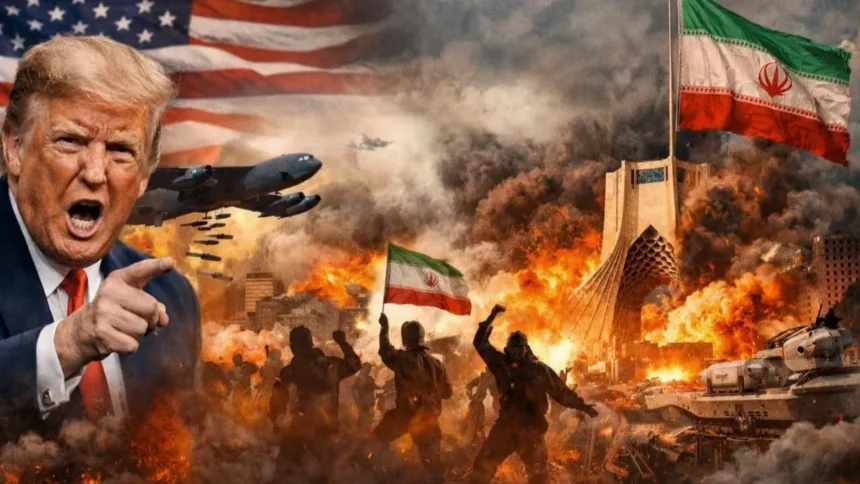
Iran’s Supreme National Security Council has stated that the Strait of Hormuz will remain closed until the United States alters its approach towards Iran. This declaration outlines rigorous conditions that the US must meet, including lifting sanctions and ceasing military threats. Concurrently, tensions have escalated in the region, marked by missile attacks targeting vessels in the strait.
Strait of Hormuz: A Critical Geopolitical Point
The Strait of Hormuz serves as a vital maritime passageway through which a significant portion of the world’s oil supply is transported. Iran’s recent announcement signifies a heightened level of geopolitical tension, particularly related to US-Iran relations. Council secretary Mohammad Bagher Zolghadr, also a Revolutionary Guard commander, articulated precise demands from the US, emphasizing that the strait’s reopening is contingent upon the US permanently withdrawing military presence and lifting economic sanctions against Iran.
Escalating Military Confrontations
Recent reports indicate that Iran has escalated military actions in the region, including a missile strike on a vessel owned by Abu Dhabi’s state oil company, ADNOC. Although there were no casualties reported in this early Saturday attack, it underscores the increasing vulnerability of maritime operations in the area. The UK maritime authorities also reported another incident where a projectile struck a vessel near Khasab, Oman, prompting concerns about safety and security for ships transiting the region.
Regional Implications and Responses
As tensions in the Strait of Hormuz escalate, neighboring countries are reacting decisively. Iran is negotiating a navigation deal with Oman, aimed at ensuring safe passage through the strait, but Iranian Foreign Minister Abbas Araghchi made clear that conditions must be met for reopening the strait. In Yemen, military action against Iran-backed Houthi rebels indicates regional instability, potentially leading to a renewed civil conflict. The ongoing circumstances point towards an increasingly complex web of alliances and conflicts in the Middle East.
Why It Matters
The situation in the Strait of Hormuz is critical for global trade and energy supply chains. Any disruption may lead to significant increases in oil prices, affecting economies worldwide. Furthermore, the political dynamics in the region could influence international relations, particularly between the US, Iran, and their respective allies. Understanding these complexities is essential for stakeholders in the energy market, policymakers, and global investors, as they navigate the implications of geopolitical tensions on economic stability.
Frequently Asked Questions
What are the US conditions for reopening the Strait of Hormuz?
The US insists on an acceptable agreement that addresses sanctions, compensation for damages, and a cessation of military threats against Iran before reopening the strait.
What recent attacks have taken place in the Strait of Hormuz?
Iran reportedly fired a missile at a vessel owned by ADNOC, a state oil company from Abu Dhabi, while another vessel was struck by a projectile, highlighting increased hostilities in the region.
How significant is the Strait of Hormuz for global oil supply?
The Strait of Hormuz is one of the world’s most critical maritime chokepoints, with approximately 20% of the global oil supply passing through it, making stability in the region paramount for international energy markets.
What are the potential consequences of continued tensions in the region?
Prolonged tensions could lead to increased oil prices, heightened military confrontations, and disruptions in international shipping, which would have ripple effects across global economies.