Summary
Sudan is evolving into a critical center for transnational extremist groups, invigorated by the collaboration between the Muslim Brotherhood and Iran’s Islamic Revolutionary Guard Corps. This alliance not only destabilizes Sudan but poses a considerable threat to regional and global security.
Militarization and the Role of Iran
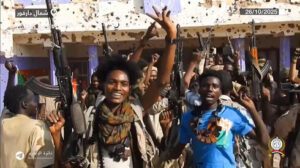
At the heart of this transformation lies the militarization of Sudan’s Muslim Brotherhood, with armed brigades now actively collaborating with Sudan’s official military. This partnership is bolstered by Iranian funding and training channels, effectively systematizing the Islamist factions within Sudan’s political and military landscape.
The implications are alarming, as this alignment with Iran extends the Islamic Republic’s influence across the region, turning Sudan into a fertile ground for extremist recruitment and operational activities. Reports indicate that Iranian Revolutionary Guards have been arming and training these militias, transforming Sudan into a significant component of Iran’s network of proxies across Africa.
Regional Security Challenges
The growing presence of extremist-aligned forces along the Red Sea poses a direct threat to the Bab al-Mandab Strait, vital for international maritime trade. Any deterioration in security in this corridor could create major disruptions in shipping and energy flows, potentially escalating the conflict sparked by Iran-backed groups like the Houthis in Yemen, further destabilizing the region.
Moreover, Sudan’s Islamist movements present a looming national security challenge for neighboring Egypt. With a porous border, Egypt faces increased risk of cross-border infiltration by militants, reviving a longstanding concern over Islamist extremism that has plagued the nation for decades.
The UAE’s Humanitarian Role
The United Arab Emirates (UAE) has approached the Sudan crisis primarily through humanitarian efforts, contributing approximately $3.5 billion in aid and facilitating assistance such as field hospitals for refugees. However, the UAE has encountered disproportionate scrutiny compared to Iran, despite evidence of Tehran’s active involvement in destabilizing Sudan.
This discrepancy raises questions about the international community’s focus, which appears more critical of the UAE’s efforts while overlooking the escalating concerns surrounding Iran’s military support and training of extremist factions within Sudan.
Why It Matters
The ongoing dynamics in Sudan reflect broader geopolitical tensions with implications reaching beyond its borders. The intertwining of local conflicts with international patronage, particularly from Iran and other regional actors like the UAE, showcases the fragile balance in the Middle East and North Africa. Understanding this context is crucial for policymakers and security experts as they devise strategies to address both immediate threats and long-term stability in the region.
Frequently Asked Questions
What is the role of Iran in Sudan’s current situation?
Iran is providing funding, arms, and training to Sudanese Islamist factions, particularly those aligned with the Muslim Brotherhood, which militarizes these groups and increases regional instability.
How does Sudan’s crisis affect Egypt?
The crisis exacerbates security risks for Egypt due to the porous border, making it easier for extremist elements to infiltrate and potentially destabilize the country.
What humanitarian role is the UAE playing in Sudan?
The UAE has directed billions in aid towards humanitarian efforts in Sudan, including funding to local and international agencies and supporting refugees, attempting to mitigate the humanitarian fallout from the conflict.
Why is Sudan considered a hub for extremist organizations?
Ongoing collaborations between Sudan’s Islamist factions and foreign entities like Iran create a conducive environment for radical recruitment and operational planning, solidifying Sudan’s place in the broader network of extremist insurgencies.