Breaking India News Today | In-Depth Reports & Analysis – IndiaNewsWeekBreaking India News Today | In-Depth Reports & Analysis – IndiaNewsWeek
  • Home
  • Nation
  • Politics
  • Economy
  • Sports
  • Entertainment
  • International
  • Technology
  • Auto News
Reading: Indus Water Treaty: Disparities in Obligations and Concessions Amid Rising Tensions with Pakistan
Share
Breaking India News Today | In-Depth Reports & Analysis – IndiaNewsWeekBreaking India News Today | In-Depth Reports & Analysis – IndiaNewsWeek
  • Home
  • Nation
  • Politics
  • Economy
  • Sports
  • Entertainment
  • International
  • Technology
  • Auto News
© 2024 All Rights Reserved | Powered by India News Week
Trending Now: Stay updated with the latest breaking news from India and around the world
Indus Water Treaty: Asymmetric obligations, unequal concessions and Pakistan's aggression
Breaking India News Today | In-Depth Reports & Analysis – IndiaNewsWeek > Nation > Indus Water Treaty: Disparities in Obligations and Concessions Amid Rising Tensions with Pakistan
Nation

Indus Water Treaty: Disparities in Obligations and Concessions Amid Rising Tensions with Pakistan

Indianewsweek By Indianewsweek May 1, 2026 4 Min Read
Share
SHARE

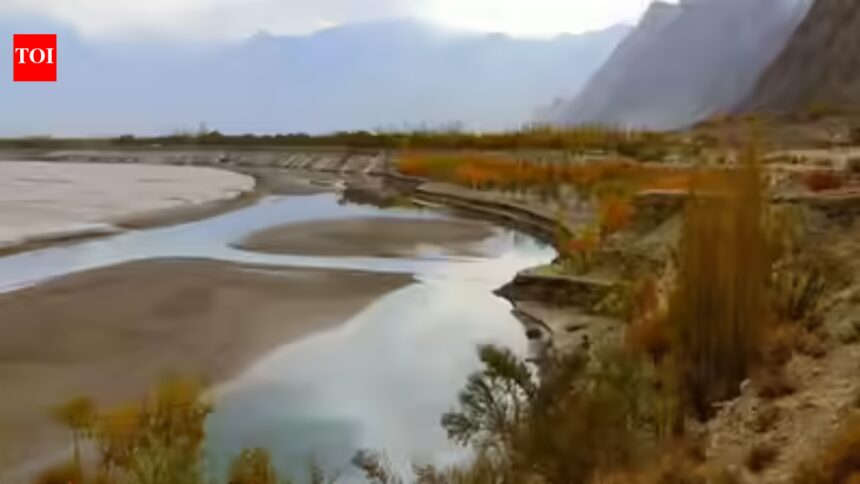
The Indus River System consists of six principal rivers: the Indus, Chenab, Jhelum, Ravi, Beas, and Sutlej, traversing the territories of both India and Pakistan. This river system is vital for drinking water supply, agriculture, and electricity generation across the Indus Basin, supporting millions of people in both nations.

Following the partition of British India in 1947, the Indus River System was divided between the newly established countries. India, as the upper riparian state, controlled the headwaters of most rivers, while Pakistan’s agricultural core, particularly the Punjab plains, was heavily reliant on water flow from the eastern tributaries. Conversely, India required access to these resources to achieve its developmental goals in Punjab and Rajasthan, while also aiming for stability and normalized relationships with Pakistan.

In light of its domestic water needs, India entered into a significant water-sharing agreement with Pakistan on September 19, 1960, facilitated by the World Bank. The negotiations were deeply influenced by the disparity between India’s constructive approach and Pakistan’s maximalist demands. The World Bank’s first proposal on February 5, 1954, exemplifies this imbalance, as it required India to make substantial one-sided concessions. These included halting all planned water developments along the upper reaches of the Indus and Chenab rivers, resulting in considerable benefits for Pakistan.

Under this proposal, India was mandated to forgo the diversion of approximately 6 million acre-feet (MAF) from the Chenab River, with no water available for Indian use at Merala (now in Pakistan). India was also prohibited from developing water resources in Kutch from the river system. Despite these rigorous stipulations, India accepted the proposal swiftly, signaling its intent for resolution. In contrast, Pakistan delayed its acceptance for nearly five years, showing a preference for obstruction over cooperation.

As a compromise, the Treaty allocated India exclusive rights to the three Eastern rivers—Sutlej, Beas, and Ravi—while Pakistan received rights to the Western rivers—Indus, Chenab, and Jhelum. India was allowed certain non-consumptive uses of the Western rivers within its borders, primarily for run-of-river hydropower generation, but faced numerous design and operational restrictions. In terms of volume, the Eastern rivers allocated to India deliver approximately 33 MAF annually, while the Western rivers allocated to Pakistan yield around 135 MAF, effectively providing Pakistan about 80 percent of the total water in the system. India, thus, received 20 percent in return for relinquishing claims on the significantly larger Western rivers.

One notable aspect of the Treaty involves financial compensation. India agreed to pay approximately £62 million (equivalent to about $2.5 billion today) to Pakistan for the construction of water resource infrastructure in Pakistan-occupied Kashmir. This arrangement marked a unique situation in which the upstream nation, already ceding most of the system’s water, compensated the downstream country for the privilege of doing so.

The Treaty is characterized by structural unfairness, as it imposes unilateral and asymmetric restrictions on India. It limits the irrigated cropped area that India can develop and sets stringent caps on water storage volumes in facilities using Western rivers. India must also adhere to specific design criteria for hydropower projects on these rivers, which do not have parallel obligations on Pakistan’s side. Thus, the Treaty effectively constrains India’s resource development while ensuring guaranteed flows for Pakistan, illustrating a lopsided regulatory framework.


TAGGED:National NewsNews
Share This Article
Twitter Copy Link
Previous Article Markets shut today for Maharashtra Day after sharp losses, trading to resume May 4 Maharashtra Day Closes Markets Amid Sharp Losses; Trading Set to Resume on May 4
Next Article Global markets mixed amid May Day closures, oil steady at $111 per barrel Global Markets Show Mixed Trends as May Day Celebrations Impact Oil Stays Steady at $111
Leave a comment Leave a comment

Leave a Reply Cancel reply

Your email address will not be published. Required fields are marked *

Latest News

Global markets mixed amid May Day closures, oil steady at $111 per barrel

Global Markets Show Mixed Trends as May Day Celebrations Impact Oil Stays Steady at $111

May 1, 2026
Indus Water Treaty: Asymmetric obligations, unequal concessions and Pakistan's aggression

Indus Water Treaty: Disparities in Obligations and Concessions Amid Rising Tensions with Pakistan

May 1, 2026
Markets shut today for Maharashtra Day after sharp losses, trading to resume May 4

Maharashtra Day Closes Markets Amid Sharp Losses; Trading Set to Resume on May 4

May 1, 2026
FPIs pull out ₹60,847 cr in Apr; outflows hit ₹1.92 lakh cr in first four months of 2026

FPIs Withdraw ₹60,847 Crore in April; 2026 Outflows Reach ₹1.92 Lakh Crore in Four Months

May 1, 2026
Sri Lankan cricketers arrested for bathroom filming of female doctors at private hotel

Sri Lankan Cricketers Detained for Recording Female Doctors in Hotel Bathroom Scandal

May 1, 2026
Alangulam Assembly Election Results 2026

2026 Alangulam Assembly Election Results: Key Outcomes and Insights Revealed

May 1, 2026

You Might Also Like

Infosys shares fall 7% after Q4, muted guidance weighs
Economy

Infosys Shares Plummet 7% Following Q4 Report and Cautious Future Forecast

3 Min Read
Lingayat religion exists outside Hinduism and Sanatana Dharma, scholars reiterate
Nation

Lingayat Faith: A Distinct Tradition Beyond Hinduism and Sanatana Dharma

3 Min Read
Crude oil futures decline after US industry report indicates inventory increase
Economy

US industry report leads to drop in crude oil futures.

3 Min Read
Job creation, redefining skills most pressing issue globally amid rapid tech changes: Nirmala Sitharaman
Economy

Global Challenge: Job Creation & Skill Redefinition Amid Tech Changes.

2 Min Read

About IndiaNewsWeek

IndiaNewsWeek is your trusted source for breaking news, in-depth analysis, and comprehensive coverage of India and the world. We deliver accurate, timely reporting across politics, economy, sports, entertainment, and technology.

contact@indianewsweek.com

Quick Links

  • Nation
  • Politics
  • Economy
  • International
  • Sports
  • Entertainment

More Sections

  • Technology
  • Auto News
  • Education
  • About Us
  • Contact
  • Privacy Policy

Stay Connected

Follow us on social media for the latest updates and breaking news.

Facebook
X (Twitter)
YouTube
Follow US
© 2026 IndiaNewsWeek. All Rights Reserved.
Welcome Back!

Sign in to your account

Lost your password?