Breaking India News Today | In-Depth Reports & Analysis – IndiaNewsWeekBreaking India News Today | In-Depth Reports & Analysis – IndiaNewsWeek
  • Home
  • Nation
  • Politics
  • Economy
  • Sports
  • Entertainment
  • International
  • Technology
  • Auto News
Reading: India’s PFBR Reaches Critical Stage, Yet Thorium Utilization Remains Distant Reality
Share
Breaking India News Today | In-Depth Reports & Analysis – IndiaNewsWeekBreaking India News Today | In-Depth Reports & Analysis – IndiaNewsWeek
  • Home
  • Nation
  • Politics
  • Economy
  • Sports
  • Entertainment
  • International
  • Technology
  • Auto News
© 2024 All Rights Reserved | Powered by India News Week
Trending Now: Stay updated with the latest breaking news from India and around the world
Despite PFBR going critical, India is still a long way from thorium utilisation
Breaking India News Today | In-Depth Reports & Analysis – IndiaNewsWeek > Economy > India’s PFBR Reaches Critical Stage, Yet Thorium Utilization Remains Distant Reality
Economy

India’s PFBR Reaches Critical Stage, Yet Thorium Utilization Remains Distant Reality

Indianewsweek By Indianewsweek April 27, 2026 4 Min Read
Share
SHARE

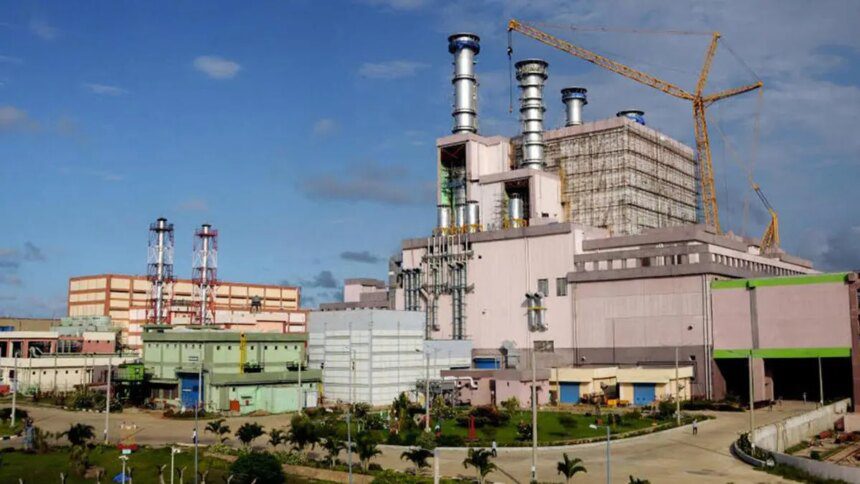
The enthusiastic response on social media following the announcement of India’s prototype fast-breeder reactor (PFBR) reaching a critical state is rooted in its significance as a landmark achievement in the country’s energy sector. However, it is essential to approach this news with a careful assessment of the facts.

The PFBR’s development marks a crucial step towards harnessing thorium for energy production. India possesses approximately a quarter of the world’s thorium reserves, with estimates ranging from 1.07 million tonnes according to the government to 518,000 “extractable” tonnes per the Bhabha Atomic Research Centre (BARC).

To illustrate this potential, one tonne of thorium—once converted into nuclear fuel uranium-233—can provide energy equivalent to about 3 million tonnes of coal. Based on BARC’s estimates, India’s thorium resources could equal 1.3 to 1.5 trillion tonnes of coal, surpassing all currently known coal reserves globally.

This reality suggests that as oil reserves in West Asia diminish, India could emerge as a leader in providing clean, affordable energy, a prospect that has invigorated social media discussions.

Challenges Ahead

While nuclear energy, supported by a series of breeder reactors, is anticipated to play a significant role in India’s commitment to achieving ‘net zero’ by 2070, several critical factors warrant consideration.

Firstly, the commercial deployment of thorium reactors is likely to be several decades away. The 22-year timeline required to construct the PFBR indicates that, although future fast-breeder projects may proceed more swiftly, the initial steps are still a decade in the making. The PFBR is currently a prototype, and as noted by Dr. Anil Kakodkar, a leading nuclear scientist and former chairman of the Atomic Energy Commission, operational learning is crucial. Stabilizing the PFBR is expected to take 12 to 18 months before it can contribute electricity to the grid, requiring further observation of operational details that will extend this timeline.

Secondly, the first generation of reactors will predominantly focus on breeding plutonium-239 rather than converting thorium to U-233. Although both processes can theoretically occur simultaneously, a trade-off exists; prioritizing U-233 production would hinder plutonium-239 breeding. Thus, adequate stocks of plutonium-239 must be secured before initiating thorium conversion.

Even with an expedited timeline of over a decade for the initial breeder reactors, transitioning to the thorium nuclear cycle will remain a distant goal. Developments in nuclear fusion technology could provide a more promising alternative by that time, attracting investor interest.

Additionally, while India is only the third nation to operate a fast-breeder reactor, following Russia and China, it’s essential to contextualize this achievement. Russia currently operates two fast-breeder reactors—BN 600 and BN 800—and has another one under construction (BN 1200), demonstrating advanced expertise in this area. China’s advancements slightly outpace India as well.

It is also important to recognize that India’s commitment to breeder reactors stems from its unique access to thorium resources. Countries like France, Japan, and the United States initially explored breeder reactor technology but ultimately shifted focus, finding it unnecessary given their adequate uranium availability.

India’s construction of an indigenous breeder reactor is a notable achievement; however, it does not imply that India has succeeded where other nations have not.

TAGGED:Economy NewsNews
Share This Article
Twitter Copy Link
Previous Article Mamata cites 'load-shedding', warns against 'EVM capture' Mamata Warns of Load-Shedding and Threats of EVM Manipulation in Upcoming Elections
Next Article Oil-starved industry looks to reignite heat pumps Oil-Dependent Industry Seeks Revival Through Innovative Heat Pump Solutions
Leave a comment Leave a comment

Leave a Reply Cancel reply

Your email address will not be published. Required fields are marked *

Latest News

Oil-starved industry looks to reignite heat pumps

Oil-Dependent Industry Seeks Revival Through Innovative Heat Pump Solutions

April 27, 2026
Despite PFBR going critical, India is still a long way from thorium utilisation

India’s PFBR Reaches Critical Stage, Yet Thorium Utilization Remains Distant Reality

April 27, 2026
Mamata cites 'load-shedding', warns against 'EVM capture'

Mamata Warns of Load-Shedding and Threats of EVM Manipulation in Upcoming Elections

April 27, 2026
Sunil Narine bails KKR out in Super Over, Rinku stars as Knight Riders off from bottom of standings

Narine Saves KKR in Thrilling Super Over as Rinku Sparks Comeback from Last Place

April 27, 2026
Bomb attack on Colombia highway kills 19 ahead of election

Deadly Bombing on Colombian Highway Claims 19 Lives Days Before Election

April 27, 2026
Towards a malaria-free future - The HinduBusinessLine

Paving the Way to a Malaria-Free Future: New Strategies Unveiled

April 27, 2026

You Might Also Like

Pace Digitek shares end marginally lower in market debut trade
Economy

Pace Digitek Shares Experience Modest Decline on Market Debut

2 Min Read
Mcap of four of top-10 most valued firms erode by ₹96,605.66 cr; HDFC Bank hit hard
Economy

HDFC Bank’s Rough Ride: Top Firms Lose ₹96,605.66 cr in Mcap

1 Min Read
Stocks that will see action today: 24 February 2025
Economy

Pharma and Auto stocks surge, IT sector declines in mid-day trade on Feb 24, 2025

2 Min Read
Singapore Airlines renews RateGain partnership for four years
Economy

Singapore Airlines Extends Collaboration with RateGain for Four More Years

2 Min Read

About IndiaNewsWeek

IndiaNewsWeek is your trusted source for breaking news, in-depth analysis, and comprehensive coverage of India and the world. We deliver accurate, timely reporting across politics, economy, sports, entertainment, and technology.

contact@indianewsweek.com

Quick Links

  • Nation
  • Politics
  • Economy
  • International
  • Sports
  • Entertainment

More Sections

  • Technology
  • Auto News
  • Education
  • About Us
  • Contact
  • Privacy Policy

Stay Connected

Follow us on social media for the latest updates and breaking news.

Facebook
X (Twitter)
YouTube
Follow US
© 2026 IndiaNewsWeek. All Rights Reserved.
Welcome Back!

Sign in to your account

Lost your password?