Breaking India News Today | In-Depth Reports & Analysis – IndiaNewsWeekBreaking India News Today | In-Depth Reports & Analysis – IndiaNewsWeek
  • Home
  • Nation
  • Politics
  • Economy
  • Sports
  • Entertainment
  • International
  • Technology
  • Auto News
Reading: India’s Crop Advisory Proposes Gradual Rise in Urea Prices
Share
Breaking India News Today | In-Depth Reports & Analysis – IndiaNewsWeekBreaking India News Today | In-Depth Reports & Analysis – IndiaNewsWeek
  • Home
  • Nation
  • Politics
  • Economy
  • Sports
  • Entertainment
  • International
  • Technology
  • Auto News
© 2024 All Rights Reserved | Powered by India News Week
Trending Now: Stay updated with the latest breaking news from India and around the world
India’s crop advisory body recommends phased hike of urea price
Breaking India News Today | In-Depth Reports & Analysis – IndiaNewsWeek > Economy > India’s Crop Advisory Proposes Gradual Rise in Urea Prices
Economy

India’s Crop Advisory Proposes Gradual Rise in Urea Prices

Economy Desk By Economy Desk October 2, 2025 4 Min Read
Share
SHARE

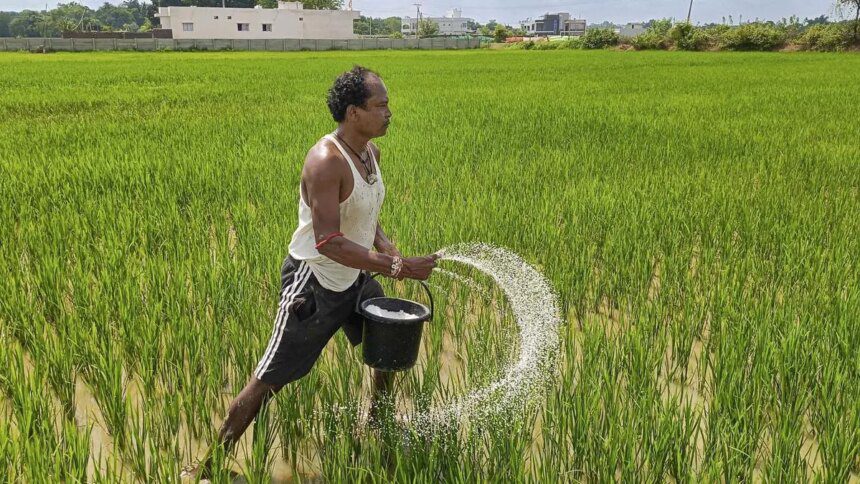
India’s Commission for Agricultural Costs and Prices (CACP) has advised a phased increase in urea prices to rectify the disproportionate use of nutrients by farmers. In its recent report concerning the Price Policy for the Rabi marketing season 2026-27, the CACP noted, “The urea sector in India, which was highly dependent on imports, is now moving towards self-sufficiency due to government initiatives. However, the current fertilizer subsidy structure has led to excessive use of urea, resulting in the imbalanced use of nutrients.”

The CACP emphasized that the savings from increased urea prices be redirected to enhance subsidies for phosphorus (P) and potassium (K) fertilizers, addressing the nutrient imbalance issue. Currently, the Indian government heavily subsidizes urea, selling it to farmers at a maximum retail price of ₹242 per 45-kg bag, excluding neem coating and applicable taxes.

Excessive reliance on subsidized urea has distorted the nitrogen-phosphorus-potassium (NPK) ratio and led to consumption levels exceeding recommended guidelines, with some districts in Andhra Pradesh and Tamil Nadu reporting usage surpassing 500 kg per hectare. The CACP underscored the urgency of corrective measures to alleviate negative impacts on crop yield, soil health, and the environment.

Regarding imports, India depends on foreign sources for both raw and finished fertilizers, with approximately 30% of its demand met through imports. However, over the last decade, India has reduced its urea imports due to enhanced domestic production, driven by government initiatives aimed at achieving atmanirbharta, or self-reliance. Urea production increased from 24.5 million tonnes (mt) in 2015-16 to a record 31.4 mt by 2023-24, though a slight decline to 30.6 mt is projected for 2024-25. Concurrently, urea imports fell from 8.5 mt in 2015-16 to 5.6 mt in 2024-25, following a peak of 9.8 mt in 2020-21. The share of imports in total urea consumption has decreased from 27.7% to 14.6% during the same period.

Despite improvements in production, challenges remain in Indian agriculture, including nutrient imbalances, excessive fertilizer use in certain regions, micronutrient deficiencies, depletion of soil organic carbon, and increasing fertilizer subsidies. The CACP noted, “As problems of micronutrient deficiencies and low organic carbon in Indian soils are widespread, a nationwide intensive awareness campaign on balanced nutrition with a focus on micronutrients and bio-fertilizers should be launched.”

The government has initiated several programs to promote sustainable fertilizer use, including the Prime Minister’s Programme for Restoration, Awareness Building, Nourishment, and Amelioration of Mother Earth (PM-PRANAM), the Galvanizing Organic Bio-Agro Resources Dhan (GOBARdhan) scheme, and the promotion of nano-fertilizers and bio-fertilizers.

The CACP further stressed the importance of balanced fertilizer application based on soil test recommendations for reducing costs and enhancing nutrient efficiency. It recommended strengthening soil testing laboratories by installing modern equipment and providing training for staff on real-time soil analysis and advisory services for farmers.

In the current kharif season, several states have reported urea shortages. Contributing factors include the overuse of urea in response to an early monsoon and rising prices due to geopolitical tensions and export restrictions from China.

Published on October 2, 2025.

TAGGED:Economy NewsNews
Share This Article
Twitter Copy Link
Previous Article 'People-to-people contact': India, China to resume direct flights by late October; engage in technical-level discussions Direct Flights Between India and China Resume This October; Technical Talks Begin
Next Article Anand Teltumbde withdraws appeal to travel abroad as NIA intervenes Anand Teltumbde Cancels Travel Plans Amid NIA Intervention
Leave a comment Leave a comment

Leave a Reply Cancel reply

Your email address will not be published. Required fields are marked *

Latest News

Opposition’s Water Storage Strategy to Criticize BJP Government Revealed

June 10, 2026

Alice Capsey and Heather Knight lead England to series win against India

June 10, 2026

Bengal’s Migration Policy Targets Bangladeshi Muslims, Escalating Religious Tensions in India

June 10, 2026

Controversial Speaker Invited to Modi Government’s 12-Year Celebration at Bharat Mandapam

June 10, 2026

Philippines Earthquake Causes School Structure Collapse, Several Injured

June 10, 2026

AI Technology Analyzes Himachal Pradesh Incident Involving Youths and ‘Love Jihad’ Regulations

June 10, 2026

You Might Also Like

Tata Technologies shares hit 52-week low as Q3 profit declines, revenue sees modest growth 
Economy

Tata Technologies Q3 profit falls, revenue sees slight increase

1 Min Read
Amazon-backed More Retail picks banks for $300-million IPO
Economy

Sudeep Pharma IPO Launched: Price Band Set at ₹563-₹593

7 Min Read
Musi River revival project triggers political row
Nation

Political controversy over Musi River revival project

5 Min Read
MOFSL net loss widens to ₹221 crore in March quarter
Economy

MOFSL Experiences Increased Net Loss of ₹221 Crore in March Quarter 2023

2 Min Read

About IndiaNewsWeek

IndiaNewsWeek is your trusted source for breaking news, in-depth analysis, and comprehensive coverage of India and the world. We deliver accurate, timely reporting across politics, economy, sports, entertainment, and technology.

contact@indianewsweek.com

Quick Links

  • Nation
  • Politics
  • Economy
  • International
  • Sports
  • Entertainment

More Sections

  • Technology
  • Auto News
  • Education
  • About Us
  • Contact
  • Privacy Policy

Stay Connected

Follow us on social media for the latest updates and breaking news.

Facebook
X (Twitter)
YouTube
Follow US
© 2026 IndiaNewsWeek. All Rights Reserved.
Welcome Back!

Sign in to your account

Lost your password?