
Summary
A Muslim man from Bihar, Mohammad Sadaqat, has alleged wrongful accusations from the police linking him to nationwide protests while he has been residing in Russia for four months. This incident raises concerns about the credibility of criminal charges levied during the Indian government’s crackdowns on dissent, particularly against marginalized communities such as Muslims.
Accusations Amid Protests
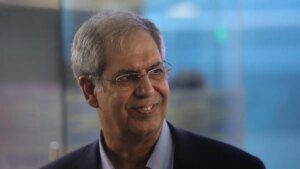
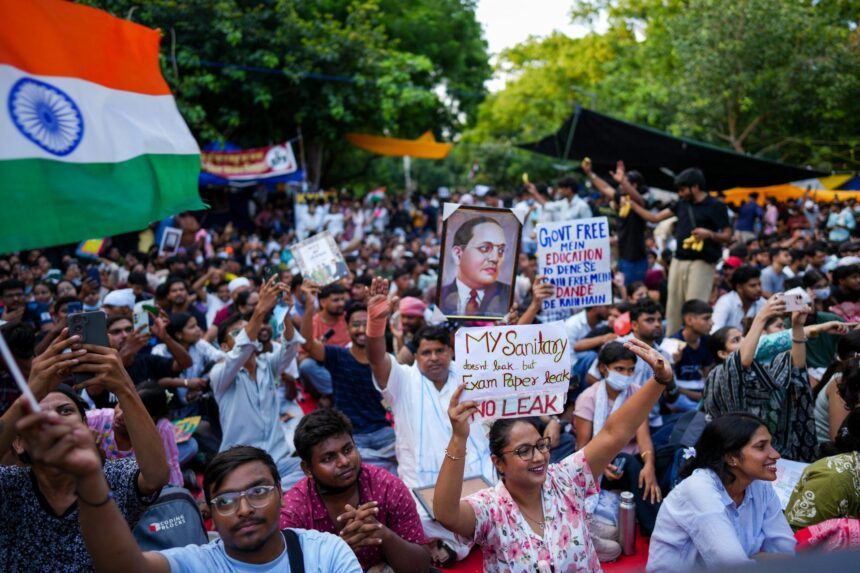
Mohammad Sadaqat, a resident of Kishanganj district in Bihar, has found himself embroiled in a police complaint related to recent student protests sparked by examination paper leaks, including NEET, India’s national medical entrance test. Despite being able to prove his absence from the country through his passport—showing his presence in Russia since March—his name was included among those accused of participating in unlawful assemblies in Bihar.
In a widely distributed video, Sadaqat questioned the plausibility of being part of the protests given his location. “I have been in Russia for four months. How can I be part of a protest in Patna?” he stated, eliciting a notable reaction from Bihar Police, which labeled his case for necessary legal action. However, law enforcement has not publicly clarified whether Sadaqat’s claims will be investigated or if he will remain listed in the police complaint.
The Broader Context of Government Crackdowns
This incident is a microcosm of a growing climate of suspicion and repression, particularly targeting marginalized communities like Muslims in India. Since the rise of the Bharatiya Janata Party (BJP) and its ideological affiliate, the Rashtriya Swayamsevak Sangh (RSS), there have been numerous reports of discrimination against Muslims, including economic boycotts and social exclusion. The ongoing protests reflect deep-seated discontent among youth grappling with systemic issues such as job scarcity and fairness in examination processes.
The protests have mobilized some of India’s largest youth movements in recent years, challenging Prime Minister Narendra Modi’s government to take accountability for perceived injustices. In response, security forces have often resorted to violent measures—using batons, tear gas, and pellet guns. This suppression raises serious human rights concerns, prompting legal scrutiny, including a petition currently before India’s Supreme Court to ban pellet guns against demonstrators.
Concerns over Police Practices
Sadaqat’s situation also highlights the broader issue of police practices in India, where mass complaints can often lead to indiscriminate labeling of individuals based on ethnicity or religion. The trend of implicating multiple individuals without concrete evidence of their involvement poses serious questions about justice and accountability. For many Muslims, these experiences reflect a pervasive atmosphere of fear and scrutiny, deepening their sense of marginalization in an increasingly polarized society.
Why It Matters
The implications of these events extend beyond the individual cases as they serve as a reflection of India’s political landscape and the treatment of its minority communities. It raises critical questions about the rule of law, civil liberties, and the integrity of governmental institutions. The pattern of accusations against marginalized groups lacks transparency and can undermine social cohesion. For developers and pundits in the AI industry, these dynamics are essential to consider as the tech landscape increasingly interacts with social justice issues and community representation.
Frequently Asked Questions
What were the student protests about?
The protests revolved around demands for accountability regarding repeated leaks of competitive examination papers, crucial for many young people seeking government jobs and university admissions.
How has the police responded to the protests?
Police in several states responded forcefully to the protests with batons, tear gas, and pellet guns, leading to discussions about the legality of such measures.
What are the implications for the Muslim community in India?
Many in the Muslim community feel increasingly marginalized and discriminated against due to the government’s actions and the rise in communal tensions during the BJP’s administration.
Is there legal recourse for those wrongfully accused?
Individuals wrongfully accused, like Sadaqat, may seek legal redress, although the process can be complicated by systemic issues within the justice system and social biases.