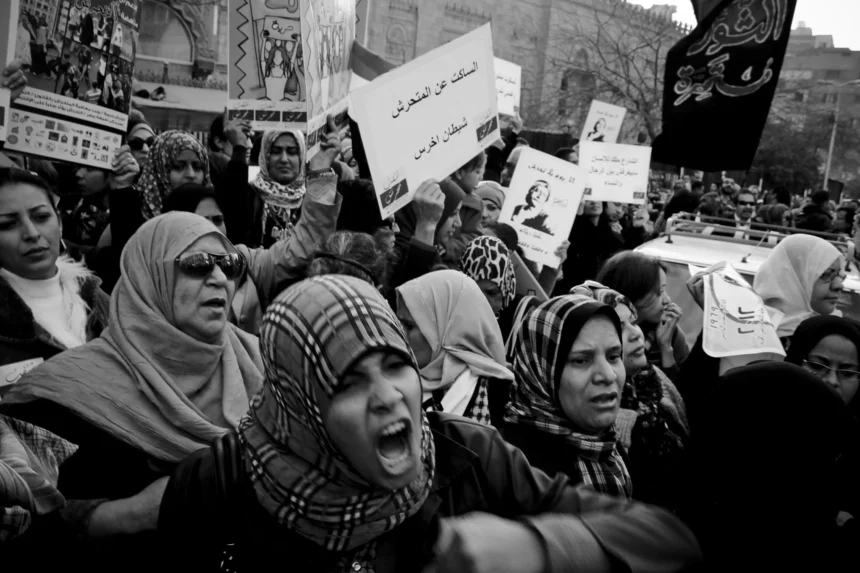

The evolving narrative around Muslim women’s fertility in India illustrates how demographic anxieties are intertwined with political agendas. As government statistics frame Muslim women as symbols of overpopulation, the realities of socio-economic factors driving fertility remain largely unaddressed.
Colonial Legacies and Contemporary Control
In contemporary India, the demographic anxiety surrounding Muslim women’s fertility can be traced back to a colonial obsession with quantifying populations. The colonial state’s fixation with numbers aimed not just at administration but at transforming fluid identities into fixed categories, fundamentally altering social realities. This tendency continues to infiltrate today’s discourse, where the fertility of Muslim women is often reduced to a moral statistic manipulated for political gains.
Recent data from the National Family Health Survey (NFHS) indicates a significant decline in fertility rates among Muslim women—from 4.4 in 1992 to 2.3 in 2019-21. Paradoxically, this shift is left largely unrecognized in mainstream discussions, where Muslim women’s bodies are cast as ideological battlegrounds in a populist narrative of ‘overbreeding.’
Fertility: A Complex Interplay of Factors
The conversation about fertility often simplifies a multifaceted issue into cultural and religious narratives. Observations from NFHS-5 reveal that higher fertility rates persist not only among Muslims but also among Scheduled Castes, Scheduled Tribes, and women from impoverished backgrounds. This data suggests that elevated fertility is more indicative of socioeconomic deprivation than religious identity.
Moreover, one of the starkest findings is the critical role of education in fertility decline. While the median years of schooling for Muslim women stand at a mere 4.3 years, educational outcomes drastically vary across communities. This situation renders discussions about ‘reproductive choice’ almost farcical, as the very foundation for informed choices—knowledge, autonomy, and opportunity—is unevenly distributed.
The Role of Information Access
Media access and exposure to family-planning information play significant roles in shaping reproductive outcomes. NFHS-5 statistics reveal that over 52% of Muslim women lack regular access to any mass media, compared to 39.8% of Hindu women. This information deficit has direct implications on fertility rates: most educationally disadvantaged women are the most likely to have larger families. The lack of exposure to vital family planning messages—reported by nearly one in three Muslim women—is often mischaracterized as resistance to contraception, ignoring deeper issues of accessibility and informational reach.
Additionally, the Sachar Committee Report (2006) highlighted the pressing needs confronting Muslim women, linking their health to factors like poverty, inadequate sanitation, and lack of access to healthcare. Women in Muslim-majority regions face significant barriers to obtaining reproductive health services, a situation exacerbated by the acute shortage of female healthcare providers.
Why It Matters
This discourse transcends mere statistics; it reflects a critical understanding of gender dynamics within sociopolitical contexts. Addressing the multiple layers that shape Muslim women’s reproductive choices informs broader debates about women’s rights, autonomy, and social justice. Progress in these areas is essential for dismantling stereotypes and fostering inclusive policies that empower marginalized communities. Recognizing fertility not as a cultural decree but as a socio-economic issue can guide more equitable resource distribution and enhance women’s health outcomes in the future.
Frequently Asked Questions
What does the NFHS reveal about Muslim women’s fertility rates?
The National Family Health Survey shows a significant decline in fertility rates among Muslim women, from 4.4 in 1992 to 2.3 in 2019-21, nearly aligning with the national average.
How does education affect fertility among Muslim women?
Research indicates a clear correlation between women’s education and reduced fertility rates. Higher educational attainment empowers women with knowledge and autonomy, leading to delayed and reduced childbearing.
What barriers do Muslim women face in accessing healthcare?
Barriers include poverty, inadequate healthcare infrastructure, and discriminatory treatment in hospitals, making access to quality reproductive health services a significant challenge.
How is the narrative around Muslim women’s fertility shaped politically?
The portrayal of Muslim women as hyper-fertile is often politically motivated, utilized as a tool to perpetuate ideological agendas and distract from the socio-economic factors that influence reproductive health.