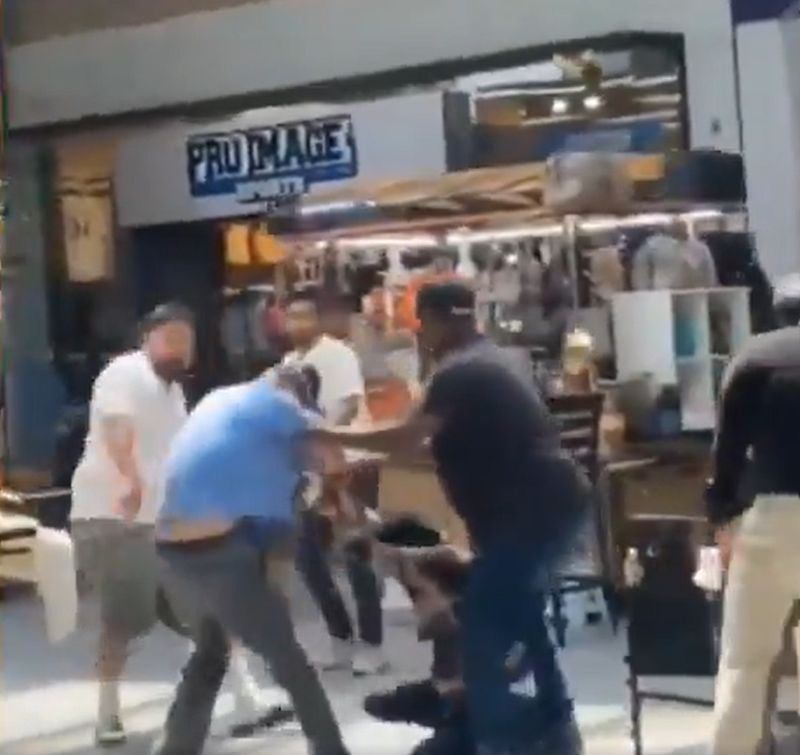

On July 13, 2026, a 38-year-old Indian Muslim man was stabbed 15 times in a shopping mall in Salt Lake City, Utah, in what police have confirmed as a hate crime. The suspect, Peter Larsen, allegedly targeted the victim due to his religion and expressed intentions to carry out further attacks against Muslims.
Incident Details and Victim’s Condition
The victim, identified as Sohail, was attacked while he was out to get a bottle of water. While police apprehended Larsen shortly after the incident, reports indicate that Sohail was heavily bleeding and taken to the hospital in critical condition, where he underwent surgery. As of now, he is undergoing treatment and his family is seeking public support to cover medical expenses since Sohail does not have health insurance. His family is particularly distressed, as Sohail is the sole breadwinner, supporting a wife and two young children.
Suspect’s Admission and Charges
Authorities have reported that Peter Larsen, the 48-year-old suspect, confessed to targeting Sohail specifically because of his Muslim faith. A court filing revealed details of Larsen’s criminal history and his admission to police concerning plans for additional attacks against Muslims. Officials noted that he poses a substantial danger to the public if released, citing his violent tendencies and pre-meditated intentions for mass harm. Larsen has since been charged with attempted murder and possession of dangerous weapons, and he remains in Salt Lake County Jail as the investigation continues.
Community Response and Government Involvement
The local and broader Muslim community has expressed outrage over the incident, highlighting the increasing concern around anti-Muslim sentiment in the United States. Nihad Awad, executive director of the Council on American-Islamic Relations, condemned the attack as a reflection of harmful anti-Muslim rhetoric that has pervasive real-world consequences. He stated that when Muslims are routinely demonized, it enables individuals like Larsen to act on their hatred.
In the wake of the violent event, the Indian consulate in San Francisco announced its intention to monitor the situation closely and provide assistance to Sohail’s family. This response reflects broader geopolitical concerns regarding the safety and treatment of Muslims globally, particularly those of Indian descent living abroad.
Why It Matters
The attack on Sohail serves as a critical reminder of the consequences of discrimination and social exclusion faced by Indian Muslims, both in India and internationally. Incidents like this highlight the urgent need for social reforms and protective measures to safeguard minority communities. Additionally, they underscore the impact of political rhetoric on societal attitudes, bringing into question the responsibilities of governments and leaders in fostering an inclusive environment. For tech companies and AI developers, such incidents emphasize the necessity of ethical considerations in communication algorithms and the importance of combating hate speech online.
Frequently Asked Questions
What happened during the stabbing incident in Utah?
On July 13, 2026, an Indian Muslim man named Sohail was stabbed 15 times in a shopping mall in Salt Lake City by Peter Larsen, who admitted to targeting him based on his religion.
What are the charges against the suspect, Peter Larsen?
Peter Larsen has been charged with attempted murder and possession of a dangerous weapon. He has confessed to targeting the victim because he was Muslim and expressed intentions for further attacks.
How is the victim’s family responding to the incident?
Sohail’s family has sought public assistance to cover his medical expenses, as he does not have health insurance. They are particularly worried as he is the primary earner in the family.
What has the community’s reaction been to this attack?
The local Muslim community and organizations like the Council on American-Islamic Relations have condemned the attack, highlighting the dangers posed by systemic anti-Muslim sentiment and the need for protective measures for marginalized communities.