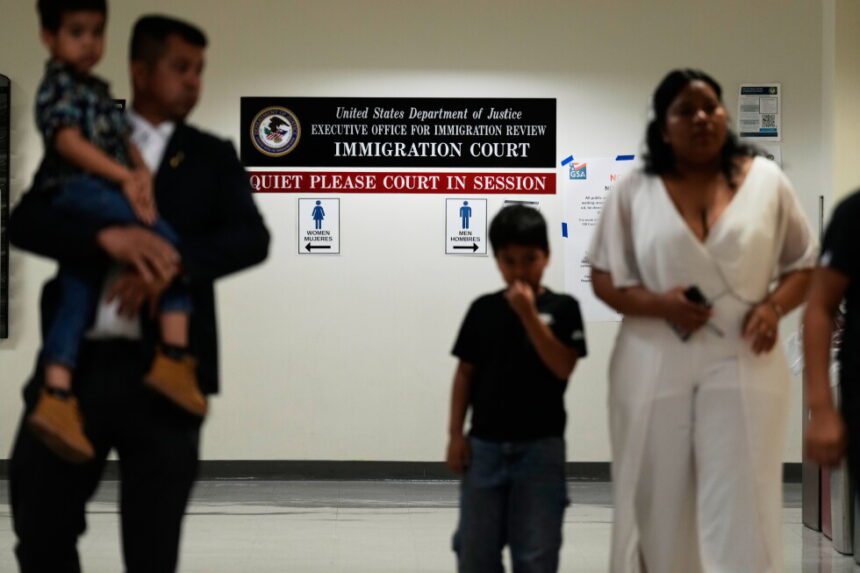

The current surge in immigration court cases in the United States is overwhelming judges and leading to unprecedented rates of missed court dates and immediate deportation orders. As the Trump administration intensifies efforts to clear longstanding backlogs, advocacy groups raise alarms about the potential for unjust outcomes and violations of due process within the immigration system.
Challenges in Immigration Courts
The U.S. immigration courts are facing a crisis as “mega” master hearings become the norm. In June, more than 1,300 of these hearings were conducted, representing a nearly threefold increase from the previous year. Individual courts are now assigning multiple cases—sometimes upwards of 50 in a single day—to judges, leaving little time for each case to be adequately evaluated. Bartlomiej Skorupa, chief operating officer of Mobile Pathways, remarked, “The combination of collapsed lead times and packed hearing blocks is a schedule designed for people not to have their case heard.”
Implications for Immigrants
With the preparation time for complex immigration proceedings slashed from six months to just over a month, many immigrants are finding themselves unable to present their cases effectively. This rapid turn of court dates has resulted in a staggering increase in “no-shows,” causing deportation orders to rise substantially. As of June, the no-show rate had doubled to 40%, leading to nearly 79,000 deportation orders this June compared to about 33,000 just a year prior.
For those who cannot attend their hearings due to valid reasons—like medical emergencies—there is little room for appeal or recourse. In one instance, a Chicago resident missed a hearing after a vehicle accident left him wheelchair-bound and was ordered for immediate deportation, highlighting the inflexibility and harshness of the current system.
Contrasting Perspectives
Proponents of stricter immigration laws argue that these speedier hearings are necessary for addressing a chronic backlog that has plagued the system for years. Andrew Arthur from the Center for Immigration Studies noted, “There’s no credibility in a system that never reaches an end.” However, this opinion is met with opposition from many legal advocates who fear that rushing cases could endanger due process rights. Jaime Diez, an experienced immigration lawyer, expressed his concerns: “Due process is being thrown out the window. It’s very worrisome.”
Why This Is Trending
Interest in U.S. immigration dynamics has recently surged among Indian audiences, primarily due to the substantial Indian diaspora in America. Many Indians are concerned about how these changes might affect immigration policies and processes, especially in light of the increasing complexity and challenge of securing legal status. Social media discussions underscore the urgency as families contemplate immigration paths and the potential implications for those trying to navigate the turbulent U.S. immigration system. As news of deportation orders and rushed hearings spread, Indians looking to build a future in the U.S. feel compelled to stay informed about these developments.
Frequently Asked Questions
What are “mega” master hearings in immigration courts?
“Mega” master hearings are days when judges handle a significantly high number of cases, often exceeding 50 in a single day. This scheduling practice has increased recently, leading to concerns about adequate case evaluation.
What happens if an immigrant misses their court date?
If an immigrant fails to appear for their scheduled court date, they are often issued deportation orders and may lose their right to contest their case, increasing the likelihood of being removed from the United States.
What are the implications of the current immigration court backlog?
The current backlog and expedited hearings have heightened the risk of valid asylum claims being discarded as abandoned, affecting many individuals who may have legitimate reasons to remain in the country.
How are legal advocates responding to these changes?
Legal advocates are raising alarms about potential violations of due process, noting that the swift hearing schedules and increased no-show rates could lead to unjust deportations and deny individuals the opportunity for proper legal representation.